Introduction
The gemstone trust and verification lessons found in modern cinema can offer surprisingly practical advice for jewelry buyers. Martin Scorsese’s Casino (1995) tells a gripping story about money, power, loyalty, and betrayal in Las Vegas. Although the film centers on organized crime, its characters actually offer useful metaphors for anyone navigating a high-value market, including the international diamond and colored gemstone trade.
That said, this comparison has clear limits. Indeed, the legitimate gemstone industry includes miners, cutters, dealers, laboratories, and regulators who operate within strict professional standards. Therefore, nobody should treat the gemstone trade as a criminal enterprise. However, Casino still shows how people use expertise, charm, and deception to chase money. Because these patterns appear across many industries, they can help ordinary buyers understand why gemstone trust and verification lessons matter whenever large sums change hands. Consequently, this article treats the film’s characters as behavioral archetypes to help you navigate your next purchase safely.
Sam Rothstein and Gemstone Trust and Verification Lessons
In fact, Sam “Ace” Rothstein represents the obsessive manager who tracks every detail. In many ways, he mirrors the disciplined side of professional gemology. For example, a serious gem professional examines color, clarity, cut, and treatment before assigning any value. Just as Ace demands perfection in his casino, a buyer must demand perfection in their data.
Similarly, diamond professionals study small quality differences because those differences can shift the price by thousands of dollars. In colored gemstones, treatment and origin likewise shape how the market perceives value. Modern gemology therefore combines scientific testing with hands-on experience. Specifically, GIA’s colored-stone services can identify a gemstone and confirm whether it formed naturally or in a lab.
However, Ace also reveals a danger: even a brilliant manager cannot control every circumstance. As a result, technical skill must work alongside verification. If you do not have a grading report, you do not have control. Therefore, one of the primary gemstone trust and verification lessons is to never buy a significant stone based solely on a verbal promise.
Applying Gemstone Trust and Verification Lessons to Sales Tactics
By contrast, Nicky Santoro relies on intimidation and speed to get what he wants. For gemstone buyers, though, the real lesson has nothing to do with aggression. Instead, it concerns letting short-term greed override sound judgment. Because high-value trading depends heavily on reputation, a dealer who pressures a buyer usually has something to hide.
Furthermore, aggressive sales tactics often create an environment where the buyer feels rushed. In the gemstone world, speed is the enemy of accuracy. For instance, if a seller insists that a “deal of a lifetime” will vanish in an hour, they are likely trying to bypass your due diligence process. In short, speed may create a temporary sale, but transparency creates longevity. You should always insist on a cooling-off period to verify the stone’s credentials. For more on how to vet sellers, read our guide to gemstone identification.
Ginger McKenna: Emotional Gemstone Trust and Verification Lessons
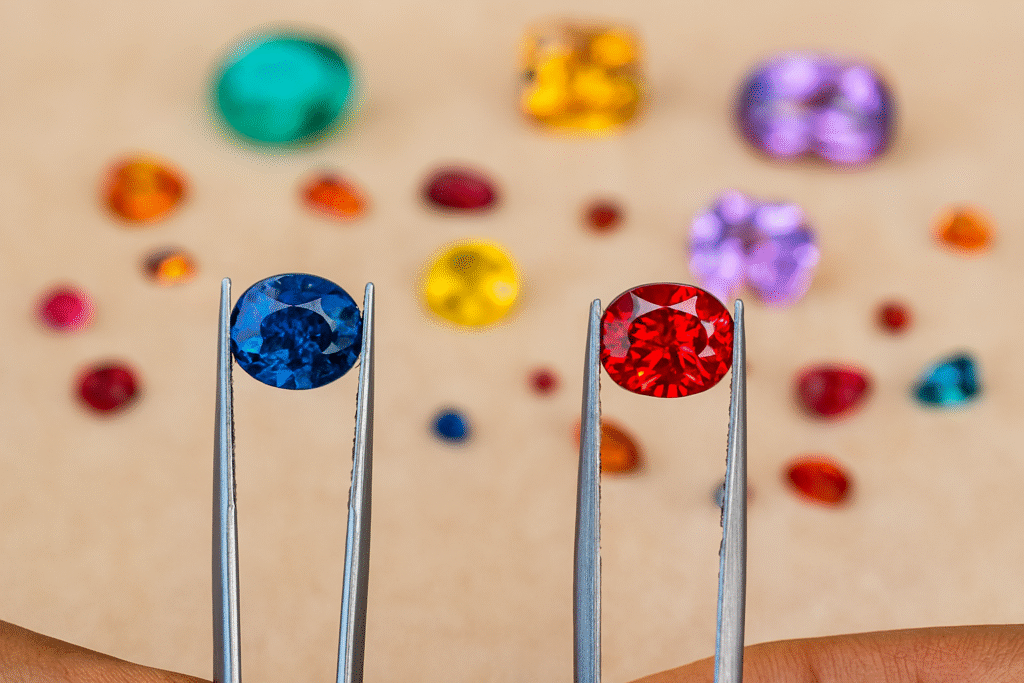
Ginger uses charm and appearance to pursue financial security. Accordingly, she works best as a metaphor for perceived value and emotional decision-making. Rare gemstones can command extraordinary prices because beauty and scarcity combine to create desire. Nevertheless, emotional excitement can distort judgment just as easily.
A spectacular ruby or sapphire may indeed be beautiful, yet beauty alone never automatically justifies every asking price. Therefore, while a stone should attract your attention, scientific evidence must support the purchase. In the gemstone trust and verification lessons framework, Ginger represents the “romance” of the stone, while the lab report represents the “reality.” You must balance both to avoid overpaying for a gem that may be heavily treated or lab-grown.
Lester Diamond: Risk Awareness and Gemstone Trust and Verification Lessons
Meanwhile, Lester Diamond survives by exploiting trust and vulnerability. This makes him a fitting warning for gemstone buyers. Since the market includes natural stones, treated stones, and imitations, fraud occurs when someone deliberately hides information. For example, treatment itself does not make a gemstone fraudulent; rather, the lack of disclosure does.
Most colored stones undergo some form of enhancement. For instance, emeralds are often oiled, and sapphires are frequently heat-treated. GIA explains that treatments can alter color or clarity and may affect durability. This is exactly why disclosure matters so much. Consequently, you should never rely solely on a seller’s storytelling. Instead, ask direct questions and request an independent laboratory report. This remains one of the most vital gemstone trust and verification lessons for any consumer.
Supply Chain Gemstone Trust and Verification Lessons
The unseen bosses in Casino illustrate how power operates through intermediaries. Likewise, modern diamond supply chains involve miners, cutters, and wholesalers spread across several countries. Because of this complexity, documentation matters enormously to ensure you are not buying “conflict” minerals.
For instance, the Kimberley Process regulates international trade in rough diamonds to keep conflict diamonds out of legitimate commerce. Its participants currently represent 99.8 percent of worldwide rough-diamond trade. Additionally, the World Diamond Council ensures accountability for polished diamonds. Together, these systems show that trustworthy trading depends on formal compliance, not personal trust alone.
Furthermore, buyers should look for “Chain of Custody” documentation. This is especially true for high-value items like Golconda diamonds or Kashmir sapphires. Without a clear paper trail, the “origin” of a stone is merely a guess.
Final Summary of Gemstone Trust and Verification Lessons
Notably, you do not need to be a professional gemologist to benefit from these lessons. In fact, ordinary buyers may gain the most by simply slowing down. First of all, never let excitement replace verification. If someone claims a stone is exceptionally rare, ask for the lab data that proves it. Second, if someone says a stone is untreated, ensure that the report explicitly states “no indications of heating.”
Third, if someone cites a specific origin like “Burma” or “Colombia,” ask whether a qualified laboratory confirmed it through trace-element analysis. Finally, if a seller insists you must buy immediately, take that as a sign to walk away. Ultimately, a high price never proves high quality. The smartest buyer is the one who knows when to pause and seek independent evidence.
FAQ: Gemstone Trust and Verification Lessons Explained
Is the gemstone trade really like the movie Casino?
No. The comparison is purely metaphorical. The legitimate industry runs on licensed businesses and scientific laboratories, whereas the movie simply offers a way to examine risk and persuasion.
Which character best represents a disciplined gem professional?
Ace Rothstein comes closest because of his focus on detail and control. Real gemologists must be equally obsessed with data, inclusions, and chemical signatures to provide accurate grading.
Does a treatment mean a gemstone is a fake?
No. Treatments are common and perfectly acceptable throughout the market. However, the seller must disclose them. Disclosure is the foundation of the gemstone trust and verification lessons taught by experts.
Does the Kimberley Process cover colored gemstones like rubies?
No. The Kimberley Process applies specifically to rough diamonds. For colored gemstones, buyers should look for reputable lab reports from organizations like GIA, SSEF, or Gübelin.
Can a lab always confirm exactly where a stone came from?
Not always. Origin determination is an expert opinion based on inclusions and chemistry. If the evidence is not clear, a reputable lab will state that the origin is indeterminable.
Disclaimer
This article uses characters from Casino purely as metaphors for business behavior. It does not suggest that the legitimate gemstone trade resembles organized crime. Readers should conduct independent due diligence and consult qualified professionals before making significant gemstone purchases. The author has no financial affiliation with the labs mentioned.