
Introduction to the Rapaport Diamond Trade
Most people know very little about the complex journey between a dark diamond mine and a bright jewelry store window. In fact, the global diamond trade was once one of the most secretive and guarded industries in the world. Specifically, a small circle of dealers controlled all pricing information, and outsiders rarely had access to real market values. However, that situation changed dramatically when the Rapaport Group entered the picture during the late 1970s. Since then, the company has reshaped how the world prices, buys, and sells precious gems. Today, millions of professionals in the Rapaport Diamond Trade rely on these tools every single day. You should also read our guide on gemstone buying mistakes to understand how standardized pricing protects you from overpaying.
History of the Rapaport Diamond Trade
Martin Rapaport launched the Rapaport Group in New York in 1976. He developed his expertise as an apprentice cleaver in Antwerp, Belgium, starting in 1975. At that time, dealers closely guarded their secrets and relied on personal connections to conduct business. Consequently, newcomers struggled to obtain fair deals because they lacked a way to check real-time market values.
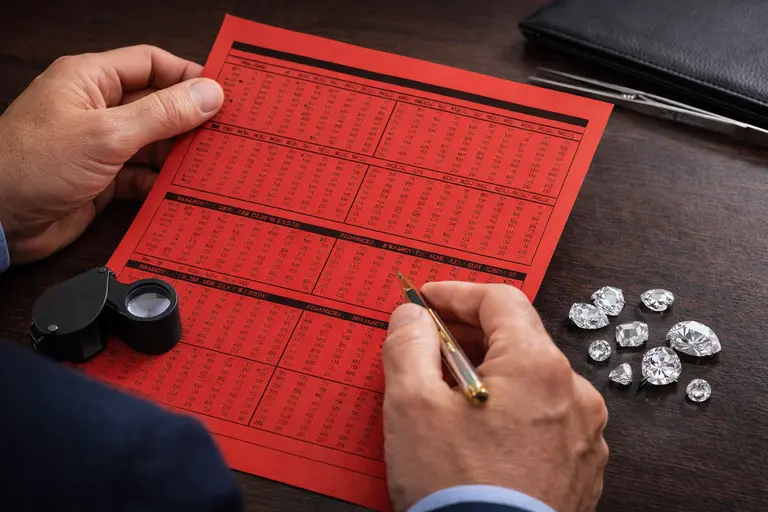
In 1978, Rapaport published the first Rapaport Diamond Report, now known simply as the “Rap Sheet.” Initially, many established dealers mocked the report. They believed a public pricing guide would destroy the closed trading culture they had meticulously built. Nevertheless, the report slowly earned trust because it offered something the industry had never seen: a consistent benchmark. Then, the diamond market crashed in 1980. Because prices fell sharply and inventories became unstable, dealers desperately needed a reliable reference point. As a result, the Rapaport Diamond Trade standards became the industry norm almost overnight.
Global Influence of the Rapaport Diamond Trade
Before the Rapaport era, dealers in different countries used completely different pricing systems. Therefore, international negotiations often failed over basic disagreements on value. Rapaport solved this problem by creating a universal pricing language. Because of this system, dealers from Mumbai, Antwerp, and Dubai could sit at the same table and negotiate using the same data.
Digital Tools in the Rapaport Diamond Trade
Furthermore, Rapaport entered the technology sector earlier than most of itscompetitors. In 1991, the company launched RapNet as a peer-to-peer computer trading network. This platform eventually grew into a full internet-based marketplace. In addition, the company expanded into the recycled diamond market. They organized large-scale auctions in major trading cities to handle pre-owned stones. Because of this high-volume system, Rapaport became a leader in recycling natural diamonds. Instead of sitting locked inside old jewelry, diamonds now flow back into the global market through professional grading and resale. For more on the technical side of the industry, you can visit the Gemological Institute of America.
Grading and the Rapaport Diamond Trade
The Rapaport Diamond Trade pricing system could not have grown without the rise of standardized diamond grading. Before laboratories became common, diamond quality was highly subjective. Consequently, this inconsistency created widespread distrust across the trade.
The GIA solved this problem by introducing the famous 4Cs: carat, color, clarity, and cut. This gave everyone a shared language for evaluation. You can also explore grading standards through the International Gemological Institute (IGI). Rapaport built its entire pricing matrix around these specific GIA standards. Therefore, a certified diamond now carries a clear, consistent value that dealers in any country can understand immediately. Today, GIA-certified stones dominate international wholesale trading because the pipeline trusts the scientific process behind the grade.
Business Model of the Rapaport Diamond Trade
Rapaport does not sell jewelry directly to the public. Instead, the company earns money by selling professional services to businesses within the supply chain. First, diamond dealers and manufacturers pay subscription fees to access the price list. Second, members pay transaction fees to use the RapNet marketplace.
Third, the company earns commissions from its global diamond auctions. Finally, Rapaport generates income through logistics coordination and partnerships with grading laboratories. Because the company controls the data and the connectivity, it operates across multiple revenue streams simultaneously. This diversified model ensures that the Rapaport Diamond Trade remains stable even when luxury markets fluctuate. You may also read our article on Understanding BIS Hallmark to see how certification standards work in the Indian gold market.
Rapaport Diamond Trade in the Indian Market
India plays a central role in the global diamond business. Specifically, the country cuts and polishes roughly 90% of the world’s natural diamonds. Over several decades, the Rapaport Diamond Trade became deeply woven into the Indian manufacturing landscape.
Manufacturers in Surat and traders in Mumbai use the Rapaport price list daily during international negotiations. Moreover, Rapaport maintains a strong presence near the Bharat Diamond Bourse in Mumbai. Although Indian trade organizations sometimes disagree with sudden pricing corrections, the system remains the most influential tool in the country. This influence ensures that Indian artisans receive fair market value for their skilled labor when exporting to the West.
Lab-Grown Stones and the Rapaport Diamond Trade
In 2026, the company continues to favor natural diamonds aggressively. Specifically, Rapaport excludes lab-grown diamonds from its primary pricing and trading platforms. Martin Rapaport has publicly argued that lab-grown diamonds lack rarity because factories can produce them in unlimited quantities.
The company does allow treated natural diamonds on its platform; however, sellers must fully disclose every enhancement. Even then, these stones sell at steep discounts compared to untreated diamonds. As a result, the brand continues to position natural and synthetic diamonds as entirely separate product categories. This decision protects the “rarity narrative” that the natural diamond trade depends on for high-value sales.
FAQ: Rapaport Diamond Trade
Is the Rapaport Price List a guide for retail shoppers?
No. The list reflects wholesale benchmarks, not the retail prices you see in stores. Retailers mark up these prices to cover their overhead, marketing, and profit margins.
How often does Rapaport update the price list?
The company typically updates the “Rap Sheet” every Friday to reflect changes in global market sentiment and demand.
Does Rapaport control the actual price of diamonds?
No. While it provides a benchmark, actual transaction prices fluctuate based on market conditions, cut quality, and individual dealer negotiations.
Why is GIA grading essential for Rapaport pricing?
Rapaport uses GIA standards as the foundation for its pricing tiers. Without a standardized grading report, a dealer cannot accurately apply the Rapaport price to a stone.
Can I use RapNet if I am not a jeweler?
Generally, RapNet is a business-to-business platform. You must be a registered jewelry professional or dealer to access the full trading network.
Disclaimer
This article is for educational and informational purposes only. Diamond prices, grading standards, and trade practices fluctuate regularly. Always consult a certified gemologist or a trusted financial professional before making significant investment decisions. The author has no financial affiliation with the Rapaport Group.