Introduction to Gemstone Quality vs Origin
Today, most buyers ask one question first when they shop for a blue sapphire, ruby, or emerald: where did this stone come from? In fact, dealers, auction houses, and lab reports often treat geographic origin as the single most important feature of a gemstone. However, should everyday buyers pay steep premiums simply because a stone comes from Kashmir, Mogok, or Colombia? Or does gemstone quality vs origin actually represent the more important metric for value?
Overall, the honest answer sits somewhere in the middle. Certainly, origin matters in the global gem trade, especially for rare, collector-grade stones. Still, for most shoppers, beauty, durability, treatment history, and overall value matter far more than a famous mine. At the same time, real science backs up origin claims, since different geological environments leave distinct chemical signatures inside gemstones. Therefore, gemological labs compare these signatures against large reference databases to estimate where a stone formed. To understand how these labs operate, you can read our guide on how gemological laboratories determine gemstone origin. Ultimately, these findings should guide smart decisions rather than push buyers toward unnecessary spending.
Rarity Factors in Gemstone Quality vs Origin
Historically, certain mining regions have produced gems with exceptional color, rarity, and consistency. As a result, names like Kashmir and Paraíba became prestigious brands in their own right. Collectors now pay large premiums for stones from these storied sources. In exceptional cases, a top-quality gem with verified historic origin can sell for hundreds of percent more than a similar-looking stone from a newer region.
More importantly, origin only adds real value when a gemstone already shows outstanding color, clarity, and cut. Indeed, a poorly colored or heavily included stone from a famous locality rarely sells for a premium. This distinction matters enormously for everyday buyers because it prevents them from overpaying for a “name” rather than a “gem.” This level of scrutiny is similar to the oversight provided by industry sheepdogs in tech and jewelry who protect market standards.
Science Behind Gemstone Quality vs Origin
Fundamentally, a gemstone holds far more than a simple chemical formula. Each geological environment introduces its own trace elements and microscopic inclusions over millions of years. Today, labs rely on tools like spectroscopy and careful microscopic study to read these clues. Specifically, these techniques identify chemical patterns and growth structures rather than a stone’s literal passport.
Consequently, origin remains an expert opinion, backed by evidence, rather than an absolute fact. For instance, a sapphire from Madagascar can exhibit identical chemical properties as a stone from Kashmir. In such cases, the lab might issue an “inconclusive” origin report. Therefore, relying solely on origin is risky if the stone’s physical quality does not stand on its own. For official research on stone composition, you can visit the Gemological Institute of America (GIA).
Sapphire Selection: Gemstone Quality vs Origin
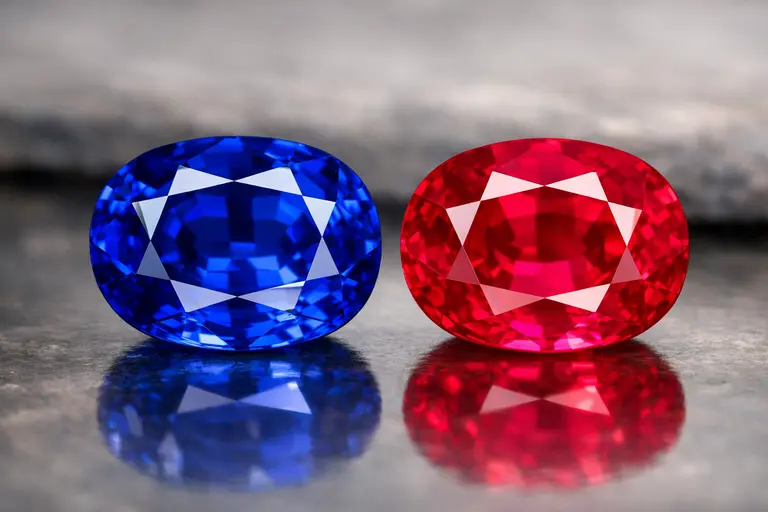
Blue sapphire shows the connection between the environment and beauty clearly. Many Kashmir and Sri Lankan sapphires formed in low-iron metamorphic environments. As a result, their blue often looks brighter and more vivid. Furthermore, many classic Kashmir stones contain fine rutile “silk” that softly scatters light. This creates the velvety look collectors’ prize.
By contrast, many Australian sapphires formed in iron-rich basaltic rock. Higher iron levels often cause their color to shift toward darker or slightly greenish tones. Even so, buyers should judge every sapphire individually. Exceptional stones also come from Madagascar, Montana, and beyond. If a stone displays the perfect “cornflower blue,” its origin becomes secondary to its visual perfection. This focus on natural character is why Indian designers choose raw diamond and Polki jewelry.
Ruby Brilliance: Gemstone Quality vs Origin
Similarly, ruby tells a comparable story regarding gemstone quality vs origin. Chromium gives ruby its red color; notably, classic Mogok rubies from Myanmar usually contain very little iron. Since iron suppresses chromium’s glow, these rubies often display striking fluorescence under ultraviolet light.
By contrast, many Mozambican rubies formed in higher-iron settings, so their fluorescence often appears milder. Nevertheless, many Mozambican rubies offer outstanding color and real brilliance. This proves that origin alone never guarantees beauty. If a buyer prioritizes a “pigeon’s blood” red, they should find it in the stone itself, not just on a certificate. For a deeper look at European grading standards, visit the SSEF Swiss Gemmological Institute.
Beryl and Tourmaline: Gemstone Quality vs Origin
Emerald formation requires beryllium paired with chromium or vanadium. Specifically, many Colombian emeralds grew in low-iron hydrothermal environments, which explains their famously vivid green. In contrast, Zambian emeralds formed in iron-rich schist, so they often show deeper bluish-green hues alongside better clarity. As a result, experienced buyers increasingly choose Zambian emeralds for their superior durability and value.
Meanwhile, Paraíba tourmaline gets its electric color from copper and manganese. Although Brazil made the original discoveries, Mozambique now produces spectacular copper-bearing tourmaline too. Many smart buyers focus on the “neon” appearance rather than the country of origin. This shift is similar to gold demand shifting from jewelry to investment, as buyers become more focused on intrinsic value factors. You can also consult the Gübelin Gem Lab for origin-specific research.
Choosing Between Gemstone Quality vs Origin
Above all, most people shopping for gemstones are not museum curators. They simply want beautiful jewelry that holds lasting value. Therefore, you should start by examining the stone itself instead of the paperwork. Color usually drives beauty more than any other factor; from there, you should weigh clarity and brilliance.
Additionally, always ask about chemical treatments in colored gemstones. An untreated stone from a new mine in Ethiopia often delivers better long-term value than a heavily treated stone from a famous locality. Furthermore, insist on an independent lab report whenever a seller charges a premium for origin. Respected labs offer far more confidence than a verbal claim from a dealer. By prioritizing gemstone quality vs origin, you ensure that your jewelry collection remains a source of pride and a stable asset.
FAQ: All About Gemstone Quality vs Origin
Does origin always increase a gemstone’s price?
No, it does not. Origin only increases the price if the stone is already of high quality. A low-grade stone from a famous mine does not command a premium.
Can a lab be wrong about a gemstone’s origin?
Labs provide an expert opinion based on data. While they are highly accurate, geological overlaps between regions can sometimes make a definitive origin determination difficult.
Is “Kashmir Blue” a color or an origin?
Originally, it referred to the origin; however, the trade now uses it to describe a specific velvety cornflower blue color, regardless of whether the stone was mined in Kashmir.
Which is more important: no heat or origin?
For most collectors, a “no heat” (untreated) status is more important than origin because it represents a higher level of natural rarity.
Should I buy a gemstone as an investment?
You should buy a gemstone primarily for its beauty. While high-quality stones can appreciate, they are generally considered long-term “passion assets” rather than liquid financial instruments.
Disclaimer
This article serves educational and informational purposes only. The author has no financial affiliation with the labs or mining regions mentioned. Gemstone prices vary based on market demand and individual stone characteristics. Always consult a qualified gemologist and request an independent laboratory report before making a significant purchase. Readers should treat gemstone buying as a personal choice rather than financial advice.