
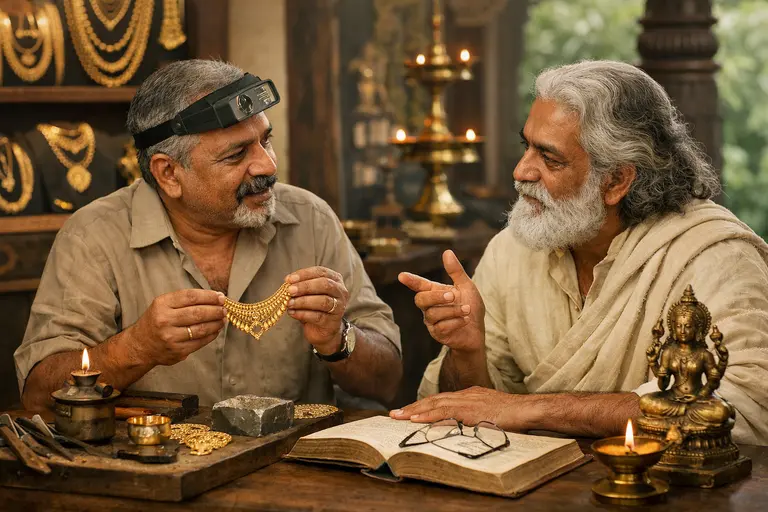
Introduction: Philosophy can strengthen Keralam’s jewelry trade
Many industry leaders now believe that philosophy can strengthen Keralam’s jewelry trade by introducing ethical frameworks and meaningful design principles into the market. While Keralam has a world-class reputation for gold, integrating philosophical inquiry allows businesses to explore deeper questions about beauty, ethics, and human values. As a result, this intersection of thought and trade offers perspectives that traditional business management cannot provide alone.
For the state of Keralam, this discussion carries immense weight because gold jewelry represents family traditions and savings passed across generations. At the same time, the industry faces growing questions about ethical sourcing and environmental responsibility. Therefore, experts argue that philosophy can strengthen Keralam’s jewelry trade by deepening ethical thinking alongside technical expertise. This collaboration does not replace the artisan; instead, it strengthens the values already woven into the local culture. For more on this, you can read our article on ethical gemstone sourcing in India.
Why Philosophical Ethics Support Keralam’s Jewelry Trade
Every successful jewelry business in Keralam depends entirely on consumer trust. Although buyers compare price, purity, and craftsmanship, many now also want to know where their gold actually originates. Because of this growing awareness, philosophers who specialize in applied ethics can help businesses develop clearer standards for responsible sourcing.
Specifically, a company could go beyond the minimum legal requirements by improving supply-chain transparency through digital tracking. Moreover, ethical thinking actively promotes fairer treatment of miners and artisans throughout the entire supply chain. Furthermore, businesses could start evaluating environmental responsibility alongside profitability. Consequently, more businesses might expand their use of recycled precious metals and responsibly sourced gemstones. This shift ensures the industry remains stable, much like the oversight provided by industry sheepdogs in tech and jewelry. You can explore these standards further through the World Gold Council’s Responsible Gold Mining Principles.
Redefining Value: Philosophy can strengthen Keralam’s jewelry trade
Traditionally, the jewelry industry has defined luxury through rarity, exclusivity, and high prices. However, a philosopher might ask a more searching question: what truly makes a piece of jewelry valuable to the individual wearer? While precious metals carry financial worth, most Keralite families treasure jewelry because of the memories attached to the metal.
A wedding ring holds the weight of a lifelong commitment, while an heirloom necklace carries a grandmother’s life story. Therefore, jewelry businesses could actively highlight emotional and cultural significance alongside technical purity. As a result, jewelry becomes more than a simple status symbol. Instead, it genuinely reflects the values and milestones that matter most to real people. This approach resonates deeply with younger buyers who value authenticity as much as they value biohacking for healthy aging and natural living.
Narrative Design: Philosophy can strengthen Keralam’s jewelry trade
Philosophy has always been concerned with the fundamental meaning of beauty. Therefore, thoughtful collaboration between philosophers and jewelry designers can inspire fresh creative directions. For example, designers might pay closer attention to balance and the way a piece interacts with light.
In addition, some collections could celebrate the natural inclusions found in gemstones rather than treating every imperfection as a flaw to hide. This mindset is already visible in how Indian designers choose raw diamond and Polki jewelry. Consequently, each piece carries a distinct identity rooted in natural authenticity. At the same time, designers can create collections built around ideas such as hope, gratitude, or wisdom. As a result, each piece tells a meaningful story while retaining its commercial value.
Ancient Wisdom for Keralam’s Jewelry Trade
Fortunately, India already carries one of the world’s richest philosophical heritages. Therefore, introducing philosophical thinking would not require abandoning tradition. Instead, it could strengthen values that have guided Keralite families for generations. For example, Navaratna jewelry could be explored within a modern ethical framework.
Philosophers might argue that gemstones believed to bring protection should also come from sources that adhere to fair labor practices. Similarly, philosophy encourages honest conversations about the role of astrology in jewelry marketing. This helps consumers distinguish respected cultural traditions from exaggerated commercial claims. In fact, foundational Indian values such as Dharma (duty) and Satya (truth) naturally support honesty and transparency. As a result, these principles align directly with the Chow Tai Fook business model of maintaining trust through vertical integration.
Adopting Philosophy in Keralam’s Jewelry Trade
The transition will likely happen in phases, but it is clear that philosophy can strengthen Keralam’s jewelry trade by aligning it with global sustainable trends. While many buyers still focus primarily on daily gold rates, younger consumers in Keralam increasingly value transparency.
At the same time, businesses must continue delivering certified quality and excellent craftsmanship to remain competitive. Ultimately, companies that combine traditional values with ethical leadership will strengthen customer trust. This is a critical step in building India’s global brands for the next century. By accepting that philosophical inquiry has a place in the showroom, the state can lead the global shift toward “conscious luxury.”
FAQ: Philosophy can strengthen Keralam’s jewelry trade
How exactly can philosophy strengthen Keralam’s jewelry trade?
It strengthens the trade by providing an ethical compass for sourcing and marketing. By prioritizing truth (Satya) in disclosures and duty (Dharma) in labor practices, businesses build unbreakable trust with their clients.
Would philosophers replace trained gemologists?
No, they would not. Gemologists would continue to evaluate gemstones scientifically. Meanwhile, philosophers would contribute to ethics and corporate responsibility. Consequently, both roles would complement each other.
Does ethical sourcing make jewelry more expensive?
Not necessarily. While some ethical practices may increase initial costs, greater transparency builds stronger consumer trust. This trust creates long-term commercial value that typically offsets the initial investment.
How does philosophy improve jewelry design?
It encourages designers to think about “Aesthetics”—the branch of philosophy dealing with beauty. This leads to designs that are more comfortable, symbolic, and timeless rather than just trendy.
Disclaimer
This article is for educational purposes only and does not constitute formal financial or legal advice. The author has no financial affiliation with any philosophical institutions or jewelry brands mentioned. Readers should evaluate all jewelry purchases using certified quality standards and consult with professionals before making major investments.