Introduction to Moussaieff Red Diamond Lessons
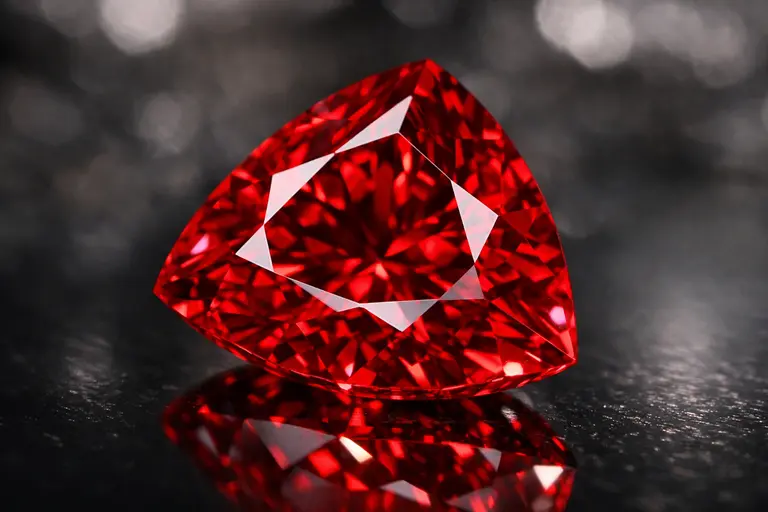
Most people believe that bigger always means better. However, the Moussaieff Red Diamond Lessons tell a completely different story. This gem weighs only 5.11 carats—tiny compared to massive colorless diamonds like the Cullinan. Yet it remains the largest known natural Fancy Red diamond in the world as of May 2026. Specifically, its importance does not come from sheer mass. Instead, it comes from extraordinary rarity, deliberate sacrifice, and a geological uniqueness that scientists still find remarkable today. Experts estimate that fewer than 30 true natural Fancy Red diamonds exist worldwide. Furthermore, its story carries five practical lessons that apply far beyond the world of gemstones. Consequently, understanding this stone helps you evaluate value in your own life and investments. You should also read our guide on gemstone buying mistakes to see how quality standards apply to any high-value acquisition.
Rarity in the Moussaieff Red Diamond Lessons
Many people assume that larger automatically means more valuable. However, the diamond market proves otherwise. Colorless diamonds can weigh hundreds of carats. In contrast, red diamonds are so rare that even a stone under one carat can command a staggering price. A 5.11-carat Fancy Red, therefore, represents a geological miracle.
Unlike blue or pink diamonds, true red diamonds do not get their color from trace chemical elements like nitrogen or boron. Instead, gemologists believe that immense pressure deep within the earth causes rare distortions in the crystal lattice structure. As a result, red diamonds are not simply beautiful; they are statistically extraordinary. For everyday life, this lesson is equally clear: uniqueness often creates more value than sheer volume. Therefore, a rare skill or a niche expertise can outperform something far larger but widely available. To explore the science behind this color, the Gemological Institute of America (GIA) provides a detailed guide to fancy color diamonds.
Sacrifice in Moussaieff Red Diamond Lessons
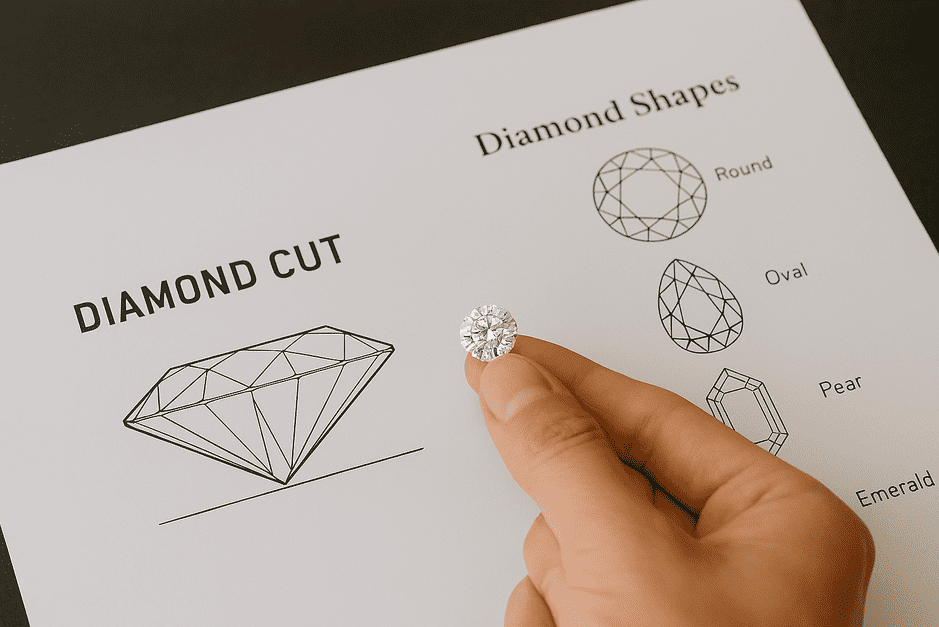
In 1989, a Brazilian miner named Ze Tatu discovered the Moussaieff Red in an artisanal mining area in Minas Gerais, Brazil. At that point, the rough stone weighed approximately 13.9 carats. However, raw size alone could not unlock its full potential. The William Goldberg Diamond Corporation then made a bold decision. They cut the rough stone down to 5.11 carats, removing more than half its original mass.
Without that precise and painful cutting process, the gem could have lost its vivid red intensity. In short, reduction created refinement. This principle applies directly to your personal and professional goals. Whether you are building a business or developing a skill, excellence often requires cutting away the unnecessary. Moreover, focusing on what truly matters—even when it means letting go of something significant—is what separates ordinary outcomes from extraordinary ones. You can see this same commitment to quality in our article on Understanding BIS Hallmark.
Identity Evolution and Moussaieff Red Diamond Lessons
Originally, this diamond carried the name “The Red Shield.” However, after Moussaieff Jewellers acquired it in 2001, it became known globally as the Moussaieff Red Diamond. Physically, the stone changed nothing. Yet its identity transformed completely through ownership, branding, and a new global platform.
Many people experience this same pattern in their careers. For instance, a product or a talent can remain fundamentally the same, yet the right opportunity or platform dramatically increases how others perceive its worth. Therefore, identity is not fixed. In fact, context, positioning, and visibility all shape your ultimate legacy. If you want to understand more about how branding elevates value, the Harvard Business Review regularly publishes practical insights on luxury positioning.
Measuring the Moussaieff Red Diamond Value
Many investors want a precise number for every asset. However, unique assets rarely fit neat financial equations. Moussaieff reportedly purchased the diamond for around $8 million in 2001. Even so, experts today describe its current value as difficult to estimate rather than simply “expensive.” This happens because no true comparable exists on the open market.
This distinction matters for your everyday life, too. For example, some forms of value—such as trust, experience, and deep relationships—simply do not reduce to a number. As a result, people often underestimate the assets they carry because they look for a price tag where none exists. In the world of rare gems, “priceless” is not just a marketing term; it is a technical reality.
Visibility in Moussaieff Red Diamond Lessons
Experts frequently note that the Moussaieff Red’s vivid brilliance becomes most dramatic under the right lighting. In other words, even the rarest gem requires the correct setting to reach its full impact. The same principle applies to people and businesses.
For instance, high skill without visibility often goes unnoticed in a crowded market. Whether you run a small business or build expertise in a niche field, others can only recognize your value when they can clearly see it. Therefore, investing in presentation and communication is not an act of vanity; instead, it is a core strategy for success. The Smithsonian National Museum of Natural History has showcased this diamond precisely to maximize this impact for the public.
The Rarity of the Fancy Red Diamond
Red diamonds hold a special place in gemology because they combine mystery and resilience. Because they likely owe their hue to structural distortion caused by extreme geological pressure, they carry a powerful symbolic message. Specifically, intense pressure sometimes creates something truly remarkable.
Furthermore, that message resonates far beyond the elite collector circles. For most people, it reflects a universal truth—that hardship and constraint, when navigated well, can produce something impossible to duplicate. Consequently, this public visibility helps ordinary people connect with why certain natural creations become legendary. By studying the Moussaieff Red Diamond Lessons, we learn to appreciate the “pressure” in our own lives as a potential source of brilliance.
FAQ: Moussaieff Red Diamond Lessons
Is the Moussaieff Red Diamond still the largest in the world?
Yes. As of May 2026, it remains the largest known natural Fancy Red diamond at 5.11 carats. Specifically, no other red diamond has surpassed its documented size in a major laboratory report.
Where was this diamond originally found?
A miner named Ze Tatu found it in 1989 in the Minas Gerais region of Brazil. Interestingly, it was found in an alluvial deposit, meaning it had traveled through riverbeds over time.
How many red diamonds exist globally?
Most experts agree that fewer than 30 true natural Fancy Red diamonds are documented. This makes them significantly rarer than blue, pink, or green diamonds.
Why did the cutters remove so much of the rough stone?
The cutters prioritized color intensity and clarity over weight. Consequently, they sacrificed over 8 carats of rough material to achieve the perfect “vivid” grade.
What is the second-largest red diamond?
The Kazanjian Red Diamond is the second-largest, weighing 5.05 carats. However, it features an emerald cut and originated in South Africa.
Disclaimer
This article is for educational purposes only. Diamond valuations and rarity estimates fluctuate based on new discoveries and private sales. Always consult a certified gemologist or an independent appraiser before making significant jewelry investments. The author has no financial affiliation with Moussaieff Jewellers.