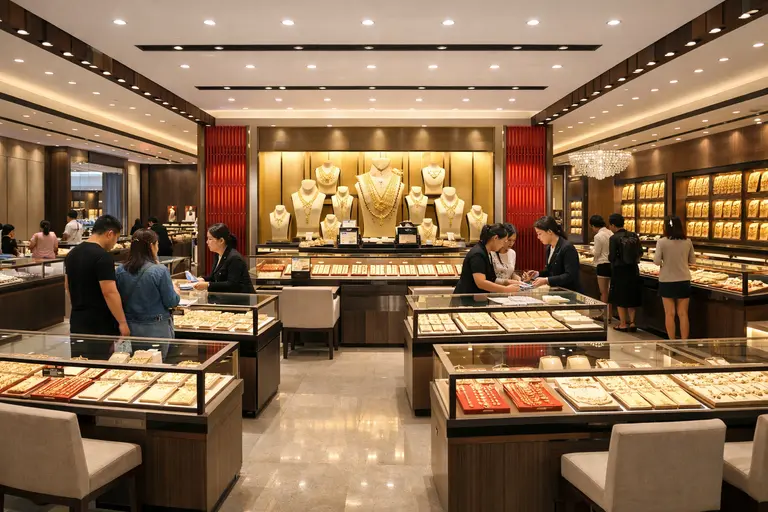
Introduction to the Chow Tai Fook Business Model
Most people recognize luxury names like Tiffany & Co. or Cartier, but the Chow Tai Fook business model has allowed one company to build a jewelry retail network that dwarfs them all. Today, this Hong Kong-based giant stands as the world’s largest jewelry retailer by both revenue and store count. Furthermore, it serves as a global benchmark for large-scale retail across Asia and beyond.
The company did not rise to the top by accident. Instead, decades of disciplined expansion, smart supply chain decisions, and a deep understanding of everyday shoppers drove its massive success. Consequently, the Chow Tai Fook business model has become a case study in how to dominate a cultural niche while scaling globally. The answer to their success lies in four specific pillars: mass-market gold jewelry, rapid retail expansion, total supply chain control, and aggressive digital investment. Therefore, understanding these pillars explains how they outpaced traditional Western luxury houses.
From a Small Shop to a Global Empire
Chow Tai Fook opened its doors in China during the early twentieth century. At first, it served local customers who wanted trusted gold products at fair, transparent prices. However, as the Chinese economy grew, the company expanded with it. Rising middle-class incomes and rapid urbanization created enormous demand for luxury and investment-grade jewelry. As a result, Chow Tai Fook expanded steadily, opening thousands of stores across mainland China, Hong Kong, and Macau.
Over time, millions of shoppers came to recognize the brand as a symbol of reliability. Moreover, the company benefited from the central role of gold in Chinese culture. Families buy gold jewelry to mark weddings, births, and festivals. This cultural connection is a key part of building India’s global brands as well. Therefore, demand for gold products stayed strong even during uncertain economic periods, providing a reliable foundation that many Western brands lacked.
Scale: Why the Chow Tai Fook Business Model Prioritizes Reach
Most luxury jewellers focus on building a small number of prestigious flagship stores in major cities like Paris or New York. The Chow Tai Fook business model, however, took the opposite approach. Instead of limiting itself to elite hubs, the company opened stores in a wide range of locations, including lower-tier cities and rural towns. Consequently, shoppers across China could walk into a branded store even when international luxury labels were nowhere to be found.
This strategy built enormous brand visibility and customer loyalty across a huge geographic area. Furthermore, a large store network generates valuable data. Because the company could observe buying habits across thousands of locations, it responded quickly to shifting trends. As a result, the company developed the most responsive jewelry retail network in the world. This focus on market presence mirrors the strategy used by Sotheby’s, Christie’s, and Phillips auction houses to dominate the high-end secondary market.
Vertical Integration and Supply Chain Control
One of the most powerful advantages of the Chow Tai Fook business model is vertical integration. Rather than depending entirely on outside suppliers, the company manages multiple stages of the jewelry process—from diamond sourcing and manufacturing through to distribution and retail. Consequently, the company controls quality more effectively than retailers who rely on third-party manufacturers.
Furthermore, this supply chain control allowed Chow Tai Fook to respond faster to changing market demand. Since the company oversees the process itself, it reduced delays and kept costs in check. For example, if a particular gold design becomes popular on social media, the company can ramp up production in its own factories within days. As a result, it maintained consistent quality across thousands of stores simultaneously. Therefore, vertical integration remains a primary reason why they continue to outperform rivals who struggle with fragmented supply chains.
Smart Retail and the Digital Shift
In recent years, the jewelry industry has changed significantly due to the rise of e-commerce. Therefore, companies that ignore digital retail risk are falling behind. The Chow Tai Fook business model recognized this shift exceptionally early. As a result, it invested in “Smart Retail” tools, such as the “Cloud Sales 365” platform and specialized vending machines.
Moreover, digital tools allowed the company to collect detailed data on customer preferences. Consequently, Chow Tai Fook delivered more personalized experiences both online and in-store. They even use radio-frequency identification (RFID) tags to track every piece of jewelry in real-time across their network. Furthermore, these investments helped the company stay competitive with tech-savvy younger shoppers. For more information about their specific operational data, visit the official Chow Tai Fook Jewellery Group website.
Can Indian Jewellers Challenge the Chow Tai Fook Business Model?
India’s jewelry industry is currently undergoing a similar transformation. As a result, companies like Tanishq and Malabar Gold & Diamonds now compete on a global stage. Moreover, they serve millions of Indian shoppers both at home and within the global diaspora. These companies have invested heavily in branding and international expansion.
Therefore, they are closing the gap with the Chow Tai Fook business model faster than many industry watchers expected. Although the Hong Kong giant currently leads in terms of total store count, Indian jewellers are becoming formidable rivals. They are adopting similar vertical integration strategies and focusing on high-purity gold as a core product. Consequently, the global jewelry landscape is becoming more competitive, with Asian brands leading the way in innovation and scale.
FAQ About the Chow Tai Fook Business Model
How many stores does Chow Tai Fook have?
As of 2026, the company operates over 7,500 points of sale, primarily in mainland China. This massive footprint makes it the largest jewelry retailer by store count in the world.
Is the Chow Tai Fook business model purely about gold?
While gold jewelry accounts for a significant portion of their revenue, they also have a strong presence in the diamond market. In fact, they own several diamond cutting and polishing facilities.
Why is their business model considered “Smart Retail”?
They use AI and data analytics to manage inventory. By knowing exactly what is selling in which city, they can optimize their stock levels and reduce waste.
Does Chow Tai Fook operate outside of Asia?
Yes. Although their main focus is Greater China, they have a presence in Southeast Asia and the United States, targeting both local consumers and the Chinese diaspora.
What is the most important lesson from their success?
The most important lesson is that scale and supply chain control are vital. By owning the process from factory to store, a business can maintain quality while offering competitive prices.
Disclaimer
This article is for educational and informational purposes only. The author has no financial affiliation with the companies mentioned. Business strategies and market rankings change over time; therefore, readers should consult official reports before making investment decisions.