
Introduction
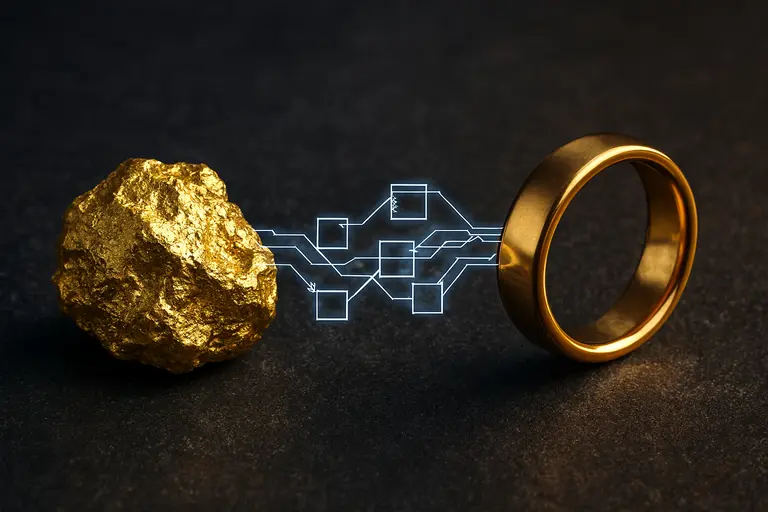
The global gold jewelry industry stands at a critical turning point. Unfortunately, opacity has shrouded the sourcing of gold for decades. Once gold is melted, its history disappears. However, the Future of Single Mine Origin Gold (S.M.O.) promises a revolution of full transparency.
Consumers in 2026 now demand proof of ethical practices, fueled by ESG (Environmental, Social, and Governance) standards. Currently, only a tiny portion of the global gold supply offers complete traceability. Yet S.M.O. emerges as a game-changer. It tracks gold from one specific, audited mine directly to your final necklace. As a Gemologist and industry analyst, I believe this shift will redefine “Luxury.” In this article, we will explore how technology and market forces are propelling this trend forward, and why Indian jewelers need to pay attention.
The Future of Single Mine Origin Gold Standard
First, let’s define the concept. Single Mine Origin gold is exactly what it sounds like. It is gold that has been kept segregated from the moment it was mined until it was turned into a ring. It certifies that the metal comes from a legitimate, large-scale operation with high social standards—no child labor, no mercury pollution.
Moreover, this approach builds trust. Brands like those I discuss in North vs South Indian Jewelry can use S.M.O. to appeal to eco-conscious Gen-Z buyers in Kerala and Bangalore. Unlike scattered small-scale mines, which are hard to police, S.M.O. focuses on verifiable sources. For instance, imagine scanning a QR code on a wedding ring to see the specific mine in Australia or Canada where the gold was born. According to the World Gold Council, demand for traceable gold rose 20% in 2025. Therefore, S.M.O. isn’t just trendy—it’s becoming essential.
The “Recycled Gold” Myth vs. S.M.O. Reality
Next, we must address a controversial topic: Recycled Gold. For years, brands have marketed “Recycled Gold” as the ultimate sustainable choice. However, as an expert, I must tell you the truth. “Recycled” does not always mean “Ethical.” Unethical refineries can melt down dirty gold and label it as ‘Recycled’. The melting pot washes away the crime.
In contrast, the Future of Single Mine Origin Gold guarantees freshness. Specifically, it creates a “Chain of Custody” that cannot be broken. “Not all recycled is superior to mined,” argue industry experts. Consequently, responsible virgin gold (S.M.O.) offers superior accountability. If you are interested in ethical choices, compare this to the sustainability of Pearl Meat.
Technology driving the Future of Single Mine Origin Gold
Furthermore, technological integration drives this rise. Notably, you cannot have S.M.O. without Blockchain or Distributed Ledger Technologies (DLTs). Technically, these create unbreakable records. Each gold bar gets a “Digital Passport.”
For example, platforms like IBM’s Food Trust are being adapted for precious metals. Additionally, QR codes simplify consumer access. In India, we are already seeing the first steps of this with the BIS HUID (Hallmark Unique Identification) system, which tracks the purity of each piece. Moving forward, the Future of Single Mine Origin Gold will link that HUID not just to the purity center, but back to the mine itself. Read more about Indian regulations in my BIS Standard for Diamonds update.
Market Demand and Investment
Significantly, demand is surging as 2026 regulations tighten. In fact, investors are pouring money into products like the S.M.O. Physical Gold ETC (Exchange Traded Commodity), valued at over $1.25 billion. This marks a milestone in traceable investments.
Regulators amplify this pressure. Currently, the European Union’s supply chain laws mandate traceability. In India, similar ESG rules loom for exporters. Consequently, major luxury houses are integrating S.M.O. into collections. Specifically, brands like Tiffany & Co. now tout mine-specific gold. This inspires smaller jewelers to follow suit. If you are an investor, you might see parallels with the Rolex Business Model—value based on control and scarcity.
Challenges for the Future of Single Mine Origin Gold
Despite the momentum, real hurdles remain.
1. Supply Chain Complexity
Unfortunately, gold’s traditional opacity resists quick fixes. Refineries often mix gold from hundreds of sources to create standard bars. Technically, segregating a specific mine’s gold requires shutting down the refinery line to process only that batch. This is expensive.
2. The Cost Factor
Second, costs add friction. Notably, premium labels like Fairmined charge 10-20% more. For markets like India, where gold is bought as a savings tool, paying a premium for “Ethical Origins” is a hard sell. However, as awareness grows, the “Peace of Mind” premium will become acceptable.
3. Verification Rigor
Third, independent audits are crucial. Organizations like the Responsible Jewellery Council (RJC) must verify the mines. In fact, scaling these audits globally strains resources. Even so, solutions like AI monitoring are emerging to cut costs.
Conclusion on the Future of Single Mine Origin Gold
In summary, the Future of Single Mine Origin Gold shines bright. Eventually, it transforms an industry defined by secrecy into one defined by trust. Ultimately, it allows you to wear your jewelry with a clear conscience, knowing exactly where it came from. Jewelers embracing it now will lead tomorrow’s market.
FAQ: Future of Single Mine Origin Gold
What defines the Future of Single Mine Origin Gold?
It is gold that can be traced back to a specific, audited commercial mine. It is never mixed with gold from other sources during refining, ensuring full transparency.
Is S.M.O. gold better than recycled gold?
In terms of transparency, yes. In reality, recycled gold masks the source (which could be unethical). S.M.O. proves that the original mining provided jobs and followed environmental laws.
How does Blockchain help S.M.O. gold?
Blockchain creates an immutable (unchangeable) digital record. It acts as a digital ledger that tracks the gold from the mine to the refiner to the jeweler, preventing tampering.
Will S.M.O. gold cost more?
Yes, slightly. Admittedly, the cost of segregating the gold and auditing the mine adds a small premium. However, for luxury buyers, this cost is worth the assurance of ethics.
When will S.M.O. become the standard?
By 2030, experts predict widespread use. The push from regulations in the EU and US, combined with the technology of HUID in India, is accelerating the timeline.
Credits
This article draws on reporting originally published by Robb Report.
Credit to Jill Newman for first sharing How Traceable, Responsibly Sourced Gold Could Reshape the Future of the Industry.
This story is adapted from Robb Report, a premier American luxury-lifestyle magazine and digital media brand that serves as a definitive authority on the global luxury market, with additional SEO and contextual research by Saju Elizamma.