
Introduction
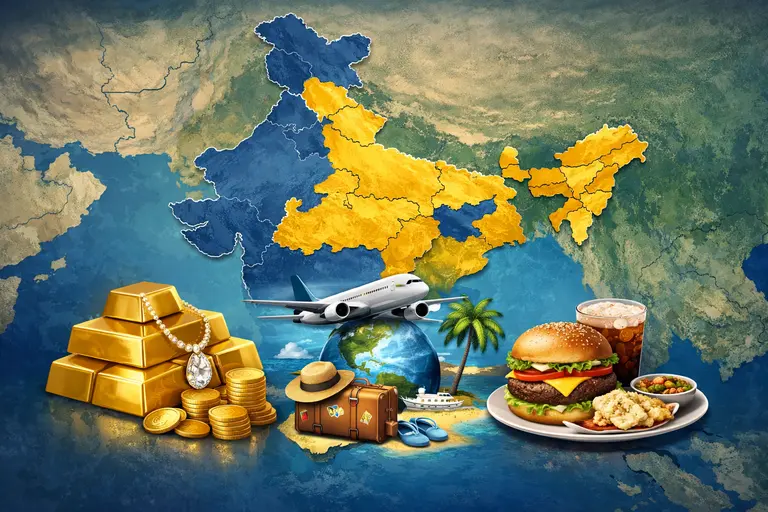
When I talk about India’s 99 percent business lessons, I am not referring to a rigid statistical figure found in a census. Instead, I use this phrase to describe the artisans, micro-entrepreneurs, and family-run shops that sustain India’s everyday economy. These individuals form the backbone of the nation, yet their stories rarely make it into high-level corporate boardrooms.
Specifically, over the years, I have spoken with workers across the gem and jewelry, food, watch, technology, hospitality, and travel sectors. As a result, these conversations reveal patterns that formal economic reports often overlook. Most workers focus on immediate concerns like rent, wages, and basic survival. However, a much larger narrative sits behind these daily struggles: the story of how Indian grassroots business is evolving in a digital age. Therefore, this article blends ground-level observations with available research to highlight the resilience of the common professional.
Jewelry Industry India’s 99 Percent Business Lessons
The Indian jewelry industry remains heavily fragmented, and independent retailers still hold massive sway even as large corporate chains expand. In fact, artisans create the majority of India’s gold jewelry by hand. According to the World Gold Council, the skill of the individual goldsmith is what truly drives the domestic market.
Trust Factors in India’s 99 Percent Business Lessons
Furthermore, small jewelers possess a unique advantage: generational trust. A customer often returns to the same neighborhood jeweler for decades simply because the jeweler understands the family’s history and taste. Consequently, these businesses survive not by offering the lowest price, but by providing emotional security. In addition, the Bureau of Indian Standards (BIS) hallmarking system now allows every buyer to verify purity through a unique ID. Therefore, even the smallest shop can now compete through total transparency.
Food Sector India’s 99 Percent Business Lessons
In the current landscape, small restaurants reach thousands of new customers through delivery apps. This shift allows a tiny neighborhood eatery to gain visibility that once required a massive advertising budget. However, this growth comes with significant pressure, as platform commissions vary and can eat into slim margins. Therefore, one of the vital India’s 99 percent business lessons is to calculate profit per channel rather than focusing purely on sales volume.
Safety and India’s 99 Percent Business Lessons
Similarly, customers now prioritize cleanliness more than ever before. Because online reviews make a kitchen’s practices visible instantly, hygiene has become a core pillar of brand identity. As a result, small eateries that invest in visible food safety standards often gain an edge over larger, less transparent competitors. For more on the technical side of food safety, see our guide on FSSAI compliance.
Digital India’s 99 Percent Business Lessons
Undoubtedly, India’s digital economy has created enormous opportunities, but different groups experience this growth in vastly different ways. Specifically, delivery and gig workers often face shifting demand and sudden changes in platform policy. Consequently, digital convenience for the consumer does not always translate into financial security for the worker.
Furthermore, the rise of artificial intelligence adds a new layer of uncertainty for those in repetitive digital roles. However, AI rarely erases every job outright; instead, it reshapes the nature of the work. Therefore, workers who pair their digital literacy with hands-on expertise—such as hardware repair or specialized consulting—often find new openings. Similarly, the market for refurbished devices offers a sustainable way for students to access technology at a lower cost.
Hospitality-Based India’s 99 Percent Business Lessons
Instead of trying to match the scale of massive hotel chains, small guesthouses and homestays compete through personal attention. Often, a simple home-cooked meal or a personalized local tip becomes the most memorable part of a traveler’s journey. Therefore, small hospitality businesses do not need to copy every luxury amenity found in five-star resorts.
Sustainable India’s 99 Percent Business Lessons
However, frontline staff carry the weight of this guest experience. Understaffing during peak holiday periods increases pressure considerably. Consequently, a strong guest experience depends on a workforce that has the mental and physical capacity to deliver it. Furthermore, as travel expands into smaller towns, the strain on local resources like water and roads becomes evident. Therefore, sustainable growth in the travel sector requires responsible planning and active local participation. You can explore more about Keralam’s responsible tourism model for practical examples.
Core Synthesis: India’s 99 Percent Business Lessons
Overall, one contradiction repeats across all six sectors: digital access does not always equal digital power. Specifically, platforms can change their algorithms or fees overnight, leaving small businesses vulnerable. Therefore, the 99 percent must use technology as a tool while avoiding total dependence on any single third-party platform.
Likewise, trust keeps growing as a premium currency. While technology can strengthen credibility through digital footprints, it rarely replaces the human connection required for high-value transactions. Similarly, value does not always mean the lowest price point. Many Indian customers are willing to pay a premium for authenticity, whether it is a hand-stitched garment or a traditionally prepared spice blend.
Above all, resilience matters more than blind optimism. The 99 percent rarely hold unlimited capital, so they cannot absorb every external price shock. Nevertheless, they adapt constantly by learning new digital tools and building direct, localized relationships.
FAQ: Guide to India’s 99 Percent Business Lessons
What exactly does “India’s 99 percent” represent?
It is an editorial expression referring to the vast majority of workers and small-scale entrepreneurs who drive India’s everyday economy. This includes everyone from village artisans to city gig workers.
Are digital delivery apps beneficial for small restaurants?
Yes, they provide massive reach. However, businesses must be careful about high commission rates. Successful owners often use apps to find customers but try to build direct relationships for repeat orders.
How can small shops compete with global brands?
They compete through “niche” expertise and localized trust. A global brand offers consistency, but a local shop offers a personal relationship and customized service that big corporations cannot replicate.
What is the most important lesson for a new entrepreneur?
The most important of India’s 99 percent business lessons is adaptability. You cannot control the global economy, but you can control your skills and your relationship with your customers.
Disclaimer
This article combines personal observations, industry conversations, and publicly available research. The phrase “India’s 99 percent” is an editorial description rather than a statistical category, and individual experiences vary across regions and occupations. Additionally, industry conditions and platform policies can change, so readers should verify current information before making business or financial decisions. The author has no financial affiliation with the brands or organizations mentioned.