Introduction
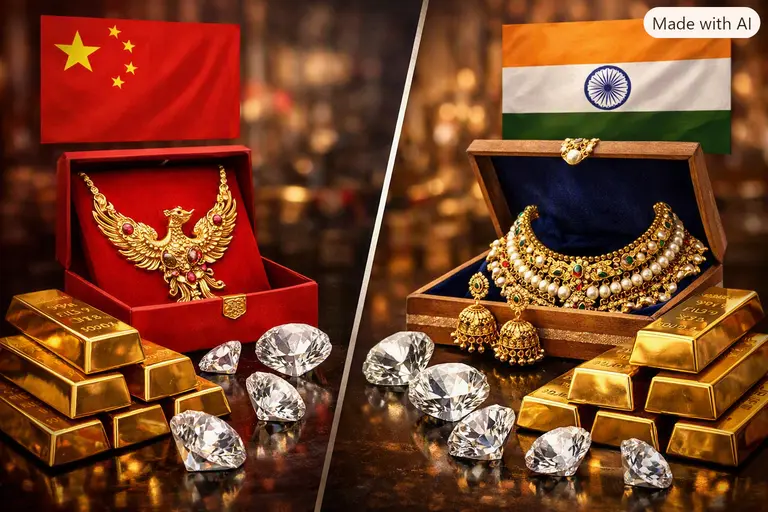
China and India both shape the global industry, yet a Jewelry Leadership Comparison proves that each country reaches its position through a different path. While China builds enormous manufacturing scale and an integrated domestic supply chain, India develops deep expertise in diamond cutting and traditional craftsmanship. Consequently, leadership in this industry is more nuanced than a simple ranking of annual sales figures would suggest.
Therefore, the real question is not simply whether China outpaces India in every single metric. Instead, readers should ask what each country does best and whether India can eventually challenge China’s overall industrial manufacturing dominance. For the 99% of consumers and industry followers, this Jewelry Leadership Comparison matters because the future of luxury goods will increasingly depend on these two Asian giants. As we examine data from 2025 and early 2026, the contrast between these powerhouses becomes even more fascinating.
China’s Role in the Jewelry Leadership Comparison
First of all, China’s greatest advantage in the global market comes from its massive industrial scale. Over the last few decades, the country has successfully connected manufacturing, trading, gemstone processing, and logistics into one tightly linked ecosystem. This vertical integration allows for a level of efficiency that few other nations can match.
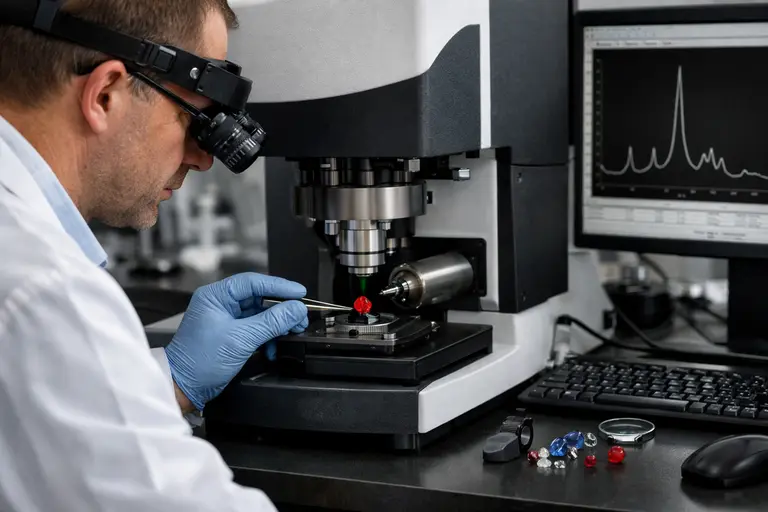
For instance, Shenzhen has grown into one of China’s most important jewelry centers. According to the Gemological Institute of America (GIA), Shenzhen has developed into China’s largest jewelry manufacturing and trading hub. Furthermore, its Shuibei district has become a dense concentration of thousands of jewelry companies, trading floors, and laboratories.
As a result, businesses can complete many stages of production within one connected industrial zone. This proximity gives Chinese manufacturers a significant edge in speed and cost efficiency. Furthermore, China’s huge domestic market lets companies test and refine products at home before expanding. Consequently, this manufacturing prowess is a primary pillar of the Jewelry Leadership Comparison.
India’s Role in the Jewelry Leadership Comparison
India, however, should never be viewed merely as a country chasing China’s industrial model. In fact, India already holds a commanding position across several parts of the global gem chain. Specifically, India dominates the “midstream” of the market, where raw stones are transformed into polished goods.
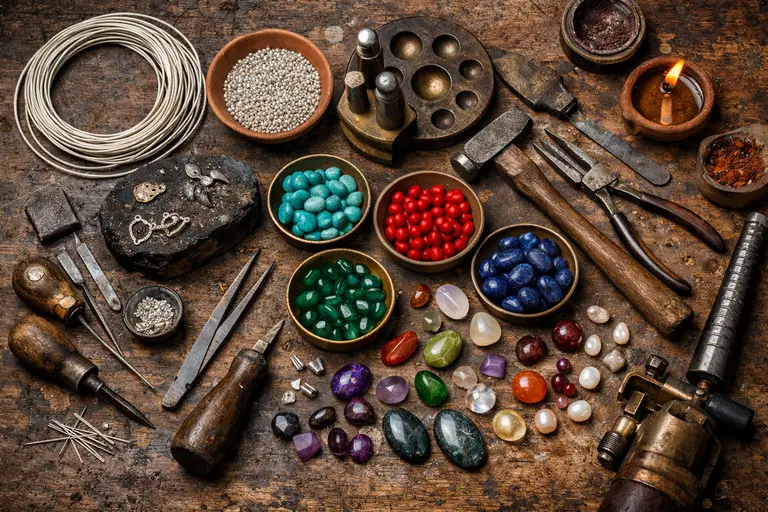
Most notably, Surat has become the world’s leading diamond cutting and polishing center. This city processes the vast majority of the world’s diamonds by volume, while Mumbai serves as a major international trading hub. India also has deep-colored gemstone expertise. For example, Jaipur has earned a global reputation for gemstone cutting and traditional jewelry craftsmanship.
Readers who want to explore how specific regions pair their local culture with gemstone traditions can check our guide to gemstone identification for further technical context. By focusing on high-value processing, India ensures that it remains indispensable to every luxury brand on Earth. This specialized expertise is a key factor in any Jewelry Leadership Comparison.
Gold Demand and the Jewelry Leadership Comparison
China and India remain the world’s two dominant gold jewelry markets, though the figures require careful interpretation. In any Jewelry Leadership Comparison, gold demand is often the most cited metric of success. According to the World Gold Council, mainland China’s gold-jewelry demand reached 360.1 tonnes in 2025, while India’s demand reached 430.5 tonnes.
So, India actually exceeded China in annual gold jewelry demand for 2025. Nevertheless, China remains an enormous gold market overall, since Chinese buyers purchase gold both as jewelry and as a vital investment vehicle. Similarly, quarterly rankings often shift based on economic sentiment. During the first quarter of 2026, China’s gold jewelry demand reached roughly 85 tonnes, staying ahead of India’s demand for that specific period.
This occurred even though record-high prices pressured both markets. Consequently, analysts should call China a global gold powerhouse rather than automatically labeling it the world’s single largest consumer. Both nations are essentially neck-and-neck in this Jewelry Leadership Comparison category.
Comparing Different Industrial Models
The two countries operate through quite different industrial models. China generally pursues large-scale industrial coordination among government agencies, infrastructure projects, and manufacturing. Consequently, Chinese companies can build huge production ecosystems very quickly.
India, however, follows a decentralized model shaped by many different states, languages, and business communities. Therefore, development can look slower and less uniform to an outside observer. However, this diversity also fuels intense entrepreneurial competition. Small businesses grow alongside large corporations, and traditional family firms operate alongside new technology-driven companies. This “thali” model of competition often creates a high degree of resilience in the Indian market.
The Contrast in Luxury Watch Consumption
Indeed, the contrast in this Jewelry Leadership Comparison becomes especially clear in the watch sector. China maintains a huge consumer market and remains a vital destination for Swiss exports. Yet, Switzerland still dominates the prestige end of mechanical watchmaking by a wide margin.
According to the Federation of the Swiss Watch Industry (FHS), Swiss watch exports to China declined slightly in 2025, even though China remained a top three market. Meanwhile, Switzerland exported watches worth CHF 24.4 billion globally in 2025. Therefore, China carries enormous weight as a consumer market, while Switzerland retains its strength as the lead producer. This proves that a country can dominate consumption without necessarily owning the brand heritage.
Future Outlook for the Jewelry Leadership Comparison
Ultimately, the competition benefits ordinary consumers through more choice, better technology, and stronger craftsmanship at every price point. China often operates with a sharp national industrial focus. When the central government targets a strategic sector, it can mobilize capital and manufacturers around that single goal.
India, however, offers variety and long-term resilience. If one part of the market struggles, another can keep growing. Therefore, India does not need to become another China to achieve success. Instead, it can become a different kind of global power by pairing its heritage with modern technology. As 2026 progresses, the Jewelry Leadership Comparison dynamic will continue to define the luxury landscape across the globe.
FAQ: Jewelry Leadership Comparison Insights
Which country leads in jewelry manufacturing?
China currently leads in manufacturing scale and speed, particularly through its hub in Shenzhen. India leads in the specialized field of diamond cutting and polishing.
Is India’s gold demand higher than China’s?
In 2025, India’s annual gold-jewelry demand was higher than China’s. However, rankings often shift quarterly based on local festivals and economic conditions.
How does Shenzhen affect the Jewelry Leadership Comparison?
Shenzhen provides China with a massive, integrated supply chain. This allows companies to design, manufacture, and lab-test products all within the same city district, giving them a speed advantage.
Can India compete with China’s scale?
India is narrowing the gap by investing in infrastructure and jewelry parks. However, India’s strength lies in its processing power and artisanal craftsmanship rather than mass-market manufacturing alone.
Disclaimer
This article offers general educational and industry analysis based on publicly available information from the World Gold Council, the GIA, and the FHS. Market rankings and demand figures shift with gold prices and reporting updates. Readers should verify current figures with the relevant organizations before making investment or business decisions. The author has no financial affiliation with the brands mentioned.