Introduction
Can travellers see more of India by visiting less? A new movement called Tiny Tourism India suggests that they can. Specifically, a groundbreaking report from It’s Nice That Insights introduces the “Tiny Tourist” approach as a vital response to global overtourism, careless rental practices, and poor visitor behaviour. Consequently, experts argue for smaller, more thoughtful ways to travel and market destinations. By focusing on the micro rather than the macro, this trend aims to fix the damage caused by algorithm-driven travel. (It’s Nice That — The Tiny Tourist Report, published April 2026).
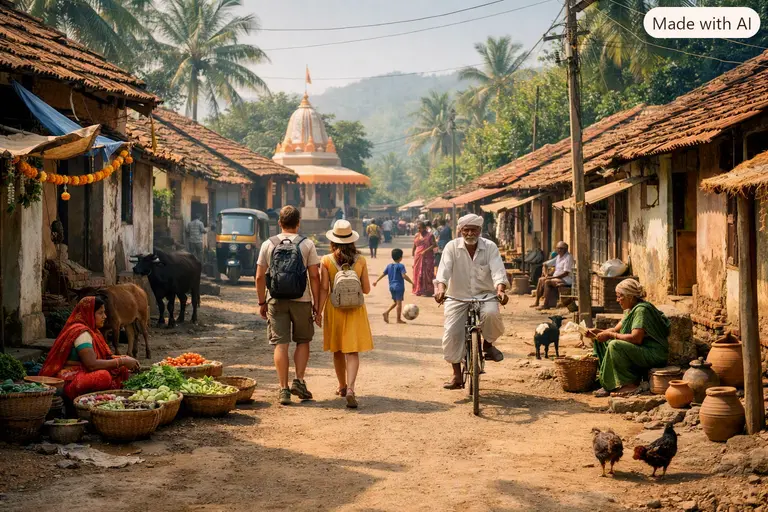
India, in particular, offers the perfect setting for this innovative idea. Because the country spans 28 states and 8 Union Territories, it holds an extraordinary range of landscapes, communities, and everyday traditions. As a result, Tiny Tourism India does not mean travelling less overall. Instead, it means travelling deeper into the heart of a single location. For example, rather than rushing through five cities in a week, a traveller could spend that same week in one village. There, they can eat local food, meet residents, and truly learn a local craft.
Furthermore, India does not need to build responsible tourism from scratch. Indeed, the Government of India’s Swadesh Darshan 2.0 programme already promotes sustainable destination development and local employment. (Swadesh Darshan 2.0 Official Site). By aligning with these national goals, the tiny tourist can help preserve cultural and natural resources for future generations.
Integrating Athithi Devo Bhava with Tiny Tourism India
India’s ancient tradition of Athithi Devo Bhava, or treating guests as honoured visitors, provides a natural foundation for Tiny Tourism India. However, modern hospitality must work in both directions to remain sustainable. Therefore, local communities should welcome visitors without giving up their own quality of life. Simultaneously, visitors should equally respect local customs, resources, and daily routines.
Keralam, for instance, already demonstrates this delicate balance remarkably well. Specifically, the Government of Kerala formed the Responsible Tourism Mission Society in October 2017. Their primary goal is to make places better for residents to live in and better for visitors to explore. (Kerala Responsible Tourism Mission Society). If you wish to learn more about this, you can read our detailed guide on Keralam Responsible Tourism explained.
Kumbalangi: A Tiny Tourism India Success Story
Kumbalangi stands out as a strong example of this philosophy in action. It holds the proud distinction of being India’s first model tourism village. Here, the backwaters, mangroves, and traditional fishing life sit at the absolute centre of the visitor experience. Consequently, travellers do not just watch the lifestyle; they participate in it. For a deeper look, check our Kumbalangi village tourism guide. Therefore, Tiny Tourism India should not simply ask communities to serve visitors. Instead, it should let communities help shape the tourism narrative themselves.
Choosing Stories Over Checklists in Tiny Tourism India
Often, social media platforms push travellers toward the same overcrowded beaches and viewpoints. Consequently, once-quiet places can suddenly attract large, unmanageable crowds that destroy local charm. In response, Tiny Tourism India favours smaller, more personal stories over generic “top ten” checklists.
For instance, instead of taking another identical photograph of the Taj Mahal, a travel feature could introduce a specific Agra stone-carving artisan. Similarly, instead of an aerial drone shot of Keralam’s backwaters, a story could follow a local fisherman as he prepares his net at dawn. In this way, the ordinary daily life of India becomes the true attraction. Notably, this approach also matches Swadesh Darshan 2.0’s focus on destination-centric development and stronger local economic benefits.
Furthermore, focusing on the narrative helps the traveller build a permanent bond with the land. Instead of just collecting “likes” on an app, the traveller collects memories and friendships. This shift in perspective is what defines the “Tiny Tourist” in the modern age.
Discovering Tiny Tourism India Hubs Nationwide
Overall, India could pilot Tiny Tourism India projects in every state and Union Territory. However, the goal should never be to turn quiet villages into new, loud hotspots. Instead, each region could identify micro-destinations that suit its own unique culture, ecology, and community interest.
For example, Himachal Pradesh could grow village experiences in Jibhi rather than concentrating all crowds in Manali. Likewise, Rajasthan could connect travellers with rural life near Abhaneri, while Gujarat simultaneously deepens community tourism in the Rann of Kutch. Meanwhile, Odisha could build on the world-famous artist traditions of Raghurajpur. The Northeastern states could similarly offer carefully managed, community-based travel experiences. For those looking for adventure, we have a specific Northeast India offbeat travel guide available.
Nevertheless, not every destination suits every traveller. Because fragile ecosystems and sensitive tribal communities need protection, they may require visitor limits. Therefore, obtaining community consent before welcoming more visitors remains a non-negotiable part of the process.
Practical Strategies for Tiny Tourism India Travel
Fortunately, Tiny Tourism India does not require a stay at a costly eco-resort. Ordinary travellers can practise it easily and affordably. For example, a family could take a train to a smaller town and stay for four nights instead of one. Additionally, a couple could choose a certified homestay instead of a large, impersonal hotel chain.
Travellers can also rely on local infrastructure like trains, buses, and bicycles. Furthermore, they can buy directly from local artisans and eat at family-owned establishments. Therefore, the goal stays simple: stay longer, move less, spend locally, and leave lightly.
How Tiny Tourism India Supports Local Artisans
When you spend your money in a village, it stays in that village. Consequently, the local economy grows without relying on massive external investments. Keralam’s STREET project reflects this thinking well. It develops thematic streets across selected destinations specifically to widen tourism activity. (Kerala Responsible Tourism STREET Project). By spreading out the activities, the project reduces crowding at any single point. For more practical advice, read our responsible travel tips for Keralam.
FAQ: A Guide to Tiny Tourism India
What exactly is Tiny Tourism?
Tiny Tourism India favours slower, smaller-scale travel overcrowded, checklist-driven itineraries. It prioritizes the depth of the experience over the number of locations visited, as introduced in the 2026 report from It’s Nice That Insights.
Is this the same as sustainable tourism?
Not exactly. While it supports sustainability, Tiny Tourism India focuses specifically on scale and depth. By choosing smaller groups and longer stays, it naturally eases the ecological and social pressure on crowded heritage sites.
Does this way of travelling cost more?
No. In fact, staying longer in one place and using public transport often make it more affordable than conventional travel. Eating at local dhabas and staying in homestays reduces the overall budget significantly.
Can I find these hubs in North India?
Yes. Destinations like Jibhi in Himachal Pradesh or rural villages near Abhaneri in Rajasthan are perfect examples. These places offer a deep connection to local culture without the overwhelming crowds of major cities.
How can I leave a lighter footprint?
You can leave a lighter footprint by avoiding single-use plastics, respecting local noise levels, and hiring local guides. Most importantly, you should ask for permission before taking photographs of residents or their homes.
Disclaimer
This article presents Tiny Tourism India as an editorial concept rather than a claim that every destination mentioned currently operates as one. Therefore, readers should confirm details with official tourism authorities before travelling. Access rules, environmental restrictions, and local customs can change over time. The author has no financial affiliation with the brands or organisations mentioned.