Introduction to World’s Oldest Company Lessons for Keralam
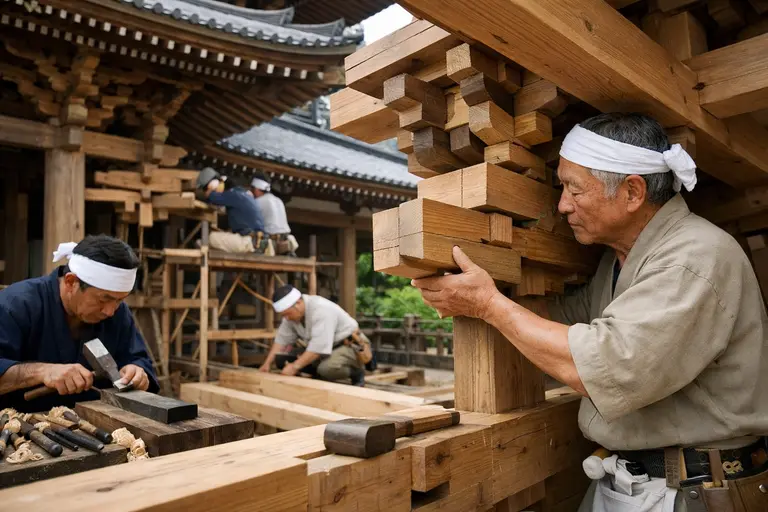
Imagine running a business for over 1,400 years without failing. That is exactly what Kongō Gumi achieved. Studying the world’s oldest company lessons for Keralam provides a vital blueprint for longevity and resilience in today’s volatile market. Founded in 578 AD in Japan, this construction firm built and restored Buddhist temples across dozens of generations. Wars, earthquakes, economic crashes, and social upheavals came and went; however, Kongō Gumi survived them all through sheer discipline. Today, the company operates as a specialized member of the Takamatsu Construction Group, continuing the same temple-building work it started more than fourteen centuries ago.
Keralam and Japan may look very different on the surface. Nevertheless, both regions share a deep tradition of wooden architecture, skilled craftsmanship, and intense cultural pride. Therefore, the story of this legendary firm carries powerful implications for Keralam’s family businesses, traditional artisans, and modern entrepreneurs. By examining their survival strategies, we can identify a clear roadmap for endurance in our own local industries.
Leadership Advice from the World’s Oldest Company for Keralam
One of the biggest reasons Kongō Gumi survived so long was its pragmatic approach to leadership. In many family businesses, the eldest child automatically takes over, regardless of their actual ability or interest. As a result, companies sometimes lose direction or fail entirely after the founder steps aside.
Kongō Gumi avoided this common trap through a flexible succession model. Instead of following strict inheritance rules, the company consistently placed the most capable leaders in charge. When a biological heir lacked the necessary skills, the company even adopted talented sons-in-law or skilled outsiders into the family to maintain strong management. This focus on merit is one of the most critical world’s oldest company lessons for Keralam to adopt.
Currently, Keralam possesses thousands of family-owned businesses in sectors like jewellery, Ayurveda, hospitality, and retail. Many of these businesses thrive during the founder’s lifetime; however, succession remains a serious challenge as the third and fourth generations take over. To learn more about managing high-value assets and precision, you can read our guide on synthetic gems in fiber optics. Ultimately, Keralam entrepreneurs should start grooming capable successors early and prioritize merit over birth order to ensure long-term survival.
Blending Heritage and Tech: Lessons for Keralam Artisans
Kongō Gumi still utilizes ancient Japanese woodworking techniques that craftsmen refined over hundreds of years. At the same time, the company adopts modern engineering, digital design systems, and advanced construction technology. Consequently, it preserves historical authenticity while simultaneously improving safety and structural efficiency.
Keralam faces a strikingly similar challenge right now. Traditional craftsmen who build temple structures, wooden nalukettu homes, and snake boats are becoming increasingly rare. Furthermore, younger generations often choose tech-heavy careers, leaving these ancient skills without enough successors. From the timber-rich houses of central Keralam to the carved wooden ceilings of historic churches, the state holds an architectural legacy that deserves protection.
Fortunately, technology can help bridge this gap. Educational institutions can introduce courses in Thachushasthra—Keralam’s traditional system of architecture—alongside modern civil engineering programmes. Similarly, digital tools can help document and preserve traditional construction methods for future generations. By combining heritage with innovation, Keralam can protect its cultural identity while preparing for a modern economy.
Specialization: Key World’s Oldest Company Lessons for Keralam
For centuries, Kongō Gumi focused exclusively on one thing: constructing and restoring religious structures. Instead of chasing every fleeting opportunity, the company mastered a highly specialized craft. As a result, customers trusted it with some of Japan’s most important cultural landmarks. This commitment to a niche is a core part of the world’s oldest company lessons for Keralam.
However, even the world’s oldest company made mistakes. During Japan’s property boom in the 1980s, Kongō Gumi entered real-estate investment and accumulated heavy debt. Eventually, these financial pressures contributed to its acquisition in 2006. In other words, the one period it moved away from its core strength is precisely when it lost its independence.
Many Keralam businesses face the same temptation to over-diversify. While expansion can create growth, it also increases risk when owners move too far from what they do best. Therefore, entrepreneurs should evaluate expansion plans carefully. In many cases, strengthening a core business delivers greater long-term value than entering unfamiliar, volatile markets.
Adopting a Stewardship Mindset in Kerala Business
Beyond business strategy, the leaders of the world’s oldest company carried a unique mindset. They saw themselves as custodians of cultural heritage rather than merely profit-seekers. Their work preserved temples that remain deeply important to Japanese society today. Because of this long-term perspective, the company built lasting trust and an unmatched reputation.
Keralam can benefit immensely from the same philosophy of stewardship. The state holds a remarkable cultural legacy: temples, churches, mosques, and unique backwater ecosystems. These assets support tourism and create massive employment. Therefore, Keralam businesses should think beyond short-term quarterly profits. For example, tourism operators can adopt sustainable practices, and developers can preserve historic architecture. Over time, these efforts strengthen both the economy and the community for the next generation.
Implementing World’s Oldest Company Lessons for Keralam
Keralam stands at an important crossroads. On one hand, the state continues to modernize its infrastructure and education. On the other hand, traditional knowledge faces growing pressure from rapid globalization.
Fortunately, Kongō Gumi proves that modernization and heritage preservation can work together harmoniously. Moreover, its history proves that strong leadership, deep specialization, and long-term thinking can help organizations survive for centuries. These lessons apply not only to construction firms but also to Ayurveda companies, jewellery businesses, and family enterprises across the state. Resilience does not develop overnight; instead, it grows through consistent, value-driven decisions made over many years.
FAQ: World’s Oldest Company Lessons for Keralam
Is Kongō Gumi really the oldest company in the world?
Yes, Kongō Gumi is widely recognized as the oldest continuously operating business. It was founded in 578 AD, meaning it has outlasted nearly every other kingdom and corporation in recorded history.
What is the most important lesson for Keralam family businesses?
The most vital of the world’s oldest company lessons for Keralam is choosing leadership based on competence rather than birth order. This ensures the company remains strong even when family members lack management skills.
Why is Kongō Gumi famous in the business world?
The company is famous for its “Kongo Gumi Creed,” which emphasizes quality, craftsmanship, and humble leadership. Its 1,400-year history makes it a global case study for business longevity.
What is Thachushasthra in Keralam?
Thachushasthra is Keralam’s traditional system of architecture and carpentry. It provides a mathematical and spiritual framework for building structures that harmonize with nature.
How can Keralam businesses apply these Japanese lessons?
Keralam businesses can apply these lessons by focusing on merit-based succession, mastering a specific niche, and viewing their business as a cultural contribution to society rather than just a source of income.
Disclaimer
This article is for educational and informational purposes only. Historical interpretations, business practices, and management strategies may vary among researchers and institutions. Readers should consult authoritative sources and professional advisors before making any business, financial, or policy decisions based on the ideas discussed here. The author has no financial affiliation with the companies mentioned in this article.