Introduction to Luxury Vaults and Fine Dining
For many generations, families in India have looked for reliable ways to store their gold, diamonds, and ancestral heirlooms. Traditionally, bank lockers and heavy home safes handled this vital job. However, a new global trend involving luxury vaults and fine dining is currently changing how people think about protecting their most precious valuables.
Today, several major international cities have seen private vault operators combine military-grade storage with premium lifestyle spaces. Consequently, these facilities no longer offer only cold metal safe-deposit boxes but instead provide lush private lounges and exclusive event spaces. Therefore, understanding this shift is essential for anyone interested in the future of high-end asset protection.
How Luxury Vaults and Fine Dining Replace Standard Lockers
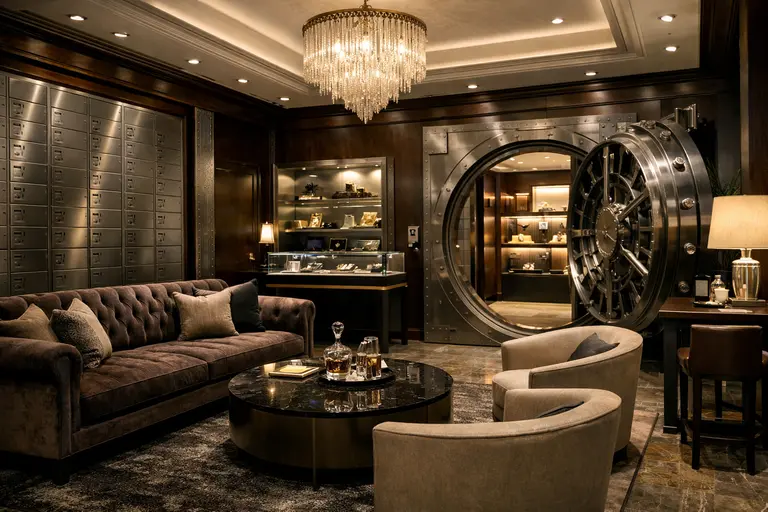
Private vaults are not entirely new; however, the newest generation of these facilities goes far beyond basic mechanical storage. One striking example is “The Reserve” in Singapore, built near Changi Airport. This six-story facility pairs extreme security with hospitality-style amenities that rival five-star hotels.
Specifically, clients can store massive quantities of gold, silver, rare watches, and fine art inside heavily protected chambers. Furthermore, the building includes private meeting rooms where business deals can be finalized in absolute secrecy. It also holds the professional catering capacity to host exclusive dinners for over 100 guests. As a result, the facility works as both a secure storage center and a prestigious private venue. Even so, security remains the top priority throughout the building. Therefore, the architecture relies on biometric scans, reinforced walls, and multiple layers of physical protection that no residential safe can provide. This model is a prime example of the “honeybee” approach discussed in our guide to the three business models: ants, spiders, and honeybees.
Global Growth of Luxury Vaults and Fine Dining Services
Several global economic shifts have pushed the demand for private vault services much higher in 2026. First, modern investors keep diversifying their portfolios well beyond traditional financial assets. Many individuals now hold physical gold and rare colored gemstones alongside their stocks and bonds. Consequently, the need for secure, third-party physical storage has become more important than ever.
Second, global geopolitical uncertainty encourages families to spread their valuables across different jurisdictions. Because of this, independent vault operators have become an appealing alternative to traditional banks. Furthermore, many successful entrepreneurs now expect premium experiences in every service they consume. For this reason, vault operators add private lounges and concierge assistance to stand out in a competitive market. To understand the professionals who manage such high-value supply chains, you can read our guide on industry sheepdogs in tech and jewelry. For more technical data on gold trends, visit the World Gold Council.
India’s Readiness for Luxury Vaults and Fine Dining
India looks exceptionally well-positioned for the next stage of vault services. The country boasts one of the world’s largest gold jewelry markets, and numerous families own diamonds and legal documents that require protection. At the same time, obtaining a bank locker in a major Indian city is rarely a simple task.
Waiting periods in many branches stretch on for months, and access remains strictly limited to banking hours. As a result, several private Indian companies have already introduced modern alternatives. These new operators now offer automated lockers, biometric access, and round-the-clock entry. Unlike banks, these companies generally specialize in custody alone rather than lending. Although India hasn’t yet built a massive integrated facility like Singapore’s, the underlying technology is already forming here. This focus on specialized service is similar to the Chow Tai Fook business model, which prioritizes trust and specific consumer needs.
Local Obstacles for Luxury Vaults and Fine Dining
Even though the opportunity for luxury vaults and fine dining looks promising, real challenges remain for local developers. First, private vault operators must follow incredibly strict Know Your Customer (KYC) and anti-money laundering rules. Consequently, maintaining full regulatory compliance is essential to ensure long-term stability.
Second, many Indian families still prefer keeping their jewelry close to home. After all, they use these ornaments frequently during weddings and religious festivals. Therefore, shifting these long-standing cultural habits will likely take time and significant education. Third, building these ultra-secure facilities demands massive capital investment. Advanced surveillance and specialized construction significantly increase operating costs. For these reasons, India will probably see a gradual expansion of private vaults rather than a sudden explosion of luxury mega-facilities. This long-term thinking is a core lesson in the world’s oldest company lessons for Keralam.
Future Access to Luxury Vaults and Fine Dining Tech
The most valuable lesson from the luxury vaults and fine dining trend isn’t actually the gourmet food or the private lounges. Instead, the real innovation lies in how better security and advanced technology will eventually reach more people. As these services expand, high-end safety features will gradually filter down to professionals and middle-class families.
For instance, biometric access and solid insurance coverage could eventually become standard for all safe deposit boxes. Consequently, ordinary customers may enjoy stronger protection for their passports and family jewelry without paying for an elite membership. Ultimately, India’s real opportunity involves making reliable and accessible storage available to millions, not just the ultra-wealthy. This democratization of quality is exactly what we explore in our steel jewellery buying guide, where durability becomes accessible to everyone.
FAQ About Luxury Vaults and Fine Dining
What is a private luxury vault?
A private vault is a secure facility managed by an independent company that specializes in the custody of high-value physical assets like gold, art, and documents.
Are private vaults safer than bank lockers?
Independent vaults often provide higher levels of insurance and 24/7 biometric access, which many traditional banks do not offer. However, security depends on the specific technology used by the operator.
Can I host a meeting inside a luxury vault facility?
Yes, the newest generation of luxury vaults includes soundproof meeting rooms and lounges designed for private business discussions among clients.
Do I have to be a billionaire to use a private vault?
While the “fine dining” versions target the wealthy, many private vault companies offer standard secure lockers for professionals and small business owners at competitive annual rates.
Are these vaults regulated in India?
Private vault companies in India must comply with local security standards and commercial laws, though they operate differently than the regulated banking sector.
Disclaimer
This article serves general informational purposes only. It does not offer financial, legal, or investment advice. Before choosing any vault provider, readers should independently verify the company’s insurance, security standards, and regulatory compliance. The author has no financial affiliation with the vault companies mentioned.