
Introduction to the Three Business Models
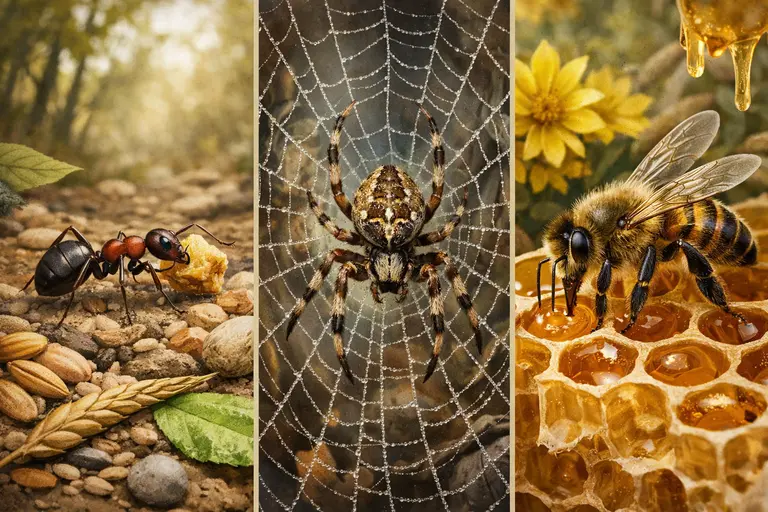
Why does one brand choose to build massive factories while another builds a digital app? Often, the answer comes down to how each specific organization creates value and earns money. A helpful way to understand this dynamic comes from the philosopher Francis Bacon. He once compared three insects—the ant, the spider, and the honeybee—to different ways of working with information. Today, modern business writers borrow this idea to explain the three business models that dominate our global economy.
Although this framework is not a formal economic theory, it still gives everyday readers a simple lens for understanding how companies behave. From the jewelry trade to global food delivery, most organizations operate like ants, spiders, or honeybees. Indeed, the most successful modern firms often show traits of all three simultaneously. By studying these categories, you can better understand why some companies focus on logistics while others prioritize branding. Therefore, let us explore these three business models in detail.
The Ant: Efficiency in the Three Business Models
First, think about the behavior of ants. Ants gather resources and organize them with remarkable efficiency. Similarly, “ant” companies focus heavily on production, logistics, and strict quality control. They do not necessarily create new materials; instead, they move and process existing resources at a scale that others cannot match.
For instance, mining companies such as De Beers and Rio Tinto extract and process gemstones through highly structured supply chains. This is a perfect example of how the silver supply chain from mine to jewelry operates. These companies rely on the physical movement of goods and the discipline of large-scale operations. To manage this massive complexity, many companies (ant) often use enterprise software such as SAP to handle inventory and procurement. Consequently, they earn money by selling goods efficiently and reliably. In turn, consumers benefit because they receive consistent standards and predictable quality every time they purchase a product.
The Spider: Networks and the Three Business Models
Next, consider the role of the spider. Unlike the ant, the spider does not collect physical resources directly from the ground. Instead, it builds an intricate web and waits for activity to come its way. In the same way, “spider” companies build digital platforms that connect buyers and sellers. Therefore, they often own very few physical assets while still controlling a massive share of the marketplace.
For example, travel platforms connect travelers with thousands of guesthouses worldwide. Likewise, food delivery apps connect local restaurants with hungry customers. These companies depend heavily on technology, including complex algorithms and predictive data analytics. Consequently, they earn revenue through commissions and advertising rather than through manufacturing. From a consumer’s perspective, spider companies offer unparalleled convenience and choice. However, they also gain enormous influence because they control the flow of information. To maintain this digital web, they often employ “digital sheepdogs” to manage server traffic, a concept we explore in our guide on industry sheepdogs in tech and jewelry.
The Honeybee: Transformation in the Three Business Models
Now, picture the behavior of the honeybee. Unlike the ant and the spider, the honeybee gathers raw materials and then transforms them into something far more valuable, such as honey. Therefore, “honeybee” companies create value through craftsmanship, high-end design, and storytelling. They do not just move resources; they change them into something aspirational.
For example, Rolex turns steel and gemstones into luxury products that carry meaning far beyond their material cost. Similarly, a high-end designer takes raw silk and creates a couture gown that sells for thousands of dollars. This model relies on the mastery of a craft, much like how Jean-Baptiste Tavernier gem trade methods relied on finding unique stones and selling them to royalty. As a result, consumers benefit because honeybee companies deliver innovation and emotional value. This focus on transformation is exactly what is needed when building India’s global brands for the future.
Mixing the Three Business Models for Success
However, most modern businesses do not fit into just one category. In fact, the strongest companies often blend traits from all three models to remain competitive. For instance, Apple operates as both a honeybee and a spider. On one hand, it transforms hardware into a smooth user experience like a honeybee. On the other hand, its App Store connects developers with users like a spider.
Similarly, many jewelry retailers act as ants when they manage their inventory, but they become honeybees when they design custom engagement rings. This hybrid approach allows them to be efficient while remaining creative. Therefore, this framework works best as a guide for strategic thinking rather than a strict set of rules. As a result, an entrepreneur can decide which insect behavior they need to adopt to solve a specific problem.
Why Entrepreneurs Should Study These Models
Why should a small business owner in India care about these three business models? First, the ant model shows the incredible value of discipline and consistency. If you can make your operations more efficient, you will naturally save money. Second, the spider model demonstrates the power of connections. By building a network, you can reach more customers without necessarily buying more equipment. Third, the honeybee model shows how transformation builds loyalty.
Furthermore, understanding these models helps you choose the right trade skills that stay ahead of AI in India. If your business is purely an “ant” operation, it may be easier for AI to automate your processes. However, if you add “honeybee” craftsmanship, your value becomes much harder to replace. Consequently, blending these strategies is the best way to ensure long-term survival in a changing market.
FAQ About the Three Business Models
Which of the three business models is the most profitable?
There is no single answer, as profitability depends on execution. However, “spider” models often have higher profit margins because they have fewer physical overheads, while “honeybee” models command higher prices through branding.
Can a small startup be an ant?
Yes, many small businesses focus on being high-efficiency suppliers for larger companies. By mastering a specific niche, they become an essential part of the larger supply chain.
How does technology affect the honeybee model?
Technology allows honeybees to tell their story to a global audience. For example, a traditional artisan can now use social media to transform their local craft into a global brand.
Is it risky to be only a spider?
Yes. Because spider companies do not own the resources, they are vulnerable to changes in regulation or shifts in user behavior. Diversifying into “honeybee” value creation can reduce this risk.
What is the biggest lesson from the ant model?
The biggest lesson is that process matters. Even the most creative idea will fail if the logistics and quality control are not consistent and reliable.
Disclaimer
This article uses the ant, spider, and honeybee analogy as an educational framework inspired by Francis Bacon’s writings. The author has no financial affiliation with the companies mentioned. These classifications are interpretive and many companies operate across multiple categories. Readers should conduct independent research before making business decisions.