Introduction to Safe Valuables Transit
Traveling with jewelry in India calls for a thoughtful balance between personal style, convenience, and modern security. Whether you carry a traditional gold necklace for a family wedding or simple silver earrings for everyday wear, careful planning protects your valuables throughout your journey. Consequently, learning how to travel safely with jewelry in India has become a top priority for both domestic tourists and international visitors.
Fortunately, you do not need expensive high-tech gadgets to protect your assets. Instead, a few practical packing techniques and sensible habits can significantly reduce the risk of loss or theft. Moreover, travel conditions differ between large metropolitan cities and smaller rural towns; therefore, understanding these differences helps you make informed decisions. Specifically, you should always keep high-value items in your carry-on bag rather than checked luggage. For more general advice, see our guide on travel safety essentials. Additionally, you should review the latest recommendations from the Bureau of Civil Aviation Security (BCAS).
Packing Strategies to Travel Safely with Jewelry in India
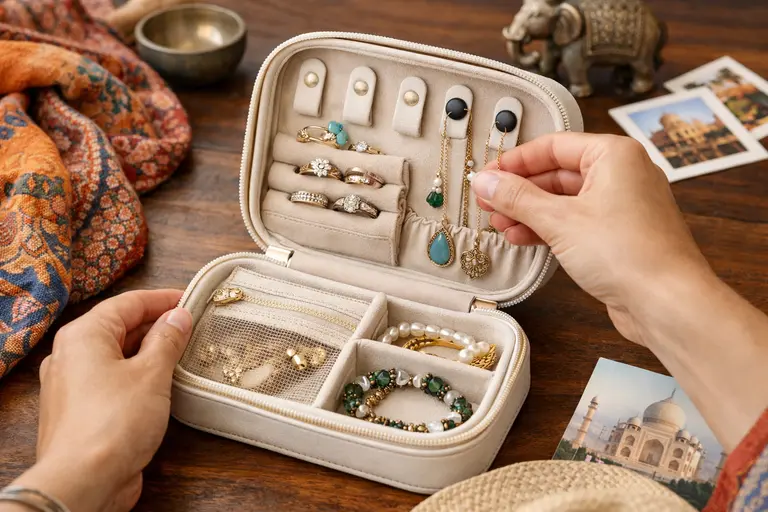
Proper packing protects your jewelry from physical damage and accidental loss. Therefore, you should choose compact, discreet storage solutions instead of a bulky, obvious jewelry box. For instance, thread a delicate gold chain through a drinking straw before fastening the clasp. This simple step ensures the chain stays straight and tangle-free during transit. If you follow this method, you will find it much easier to travel safely with jewelry in India without damaging fine links.
Similarly, you can secure your stud earrings through the holes of a spare clothing button. This habit keeps matching pairs together and prevents small backings from disappearing. Next, consider using a small pill organizer for rings and toe rings. Each compartment separates individual pieces, which protects them from scratching one another. Furthermore, you should wrap larger bangles in a soft microfiber cloth before rolling them tightly. Consequently, the fabric cushions the metal and reduces movement inside your bag. These methods are as vital as understanding the silver supply chain from mine to jewelry to appreciate the true value of the items you carry.
Transit Habits to Travel Safely with Jewelry in India
Once you pack your items, you must focus on the logistics of safe transportation. Always keep your valuables inside your handbag or backpack during the entire journey. Specifically, never place expensive jewelry in checked airline baggage, as recovery becomes nearly impossible if the luggage is tampered with or lost. To travel safely with jewelry in India, you must maintain physical possession of your high-value goods at all times.
During overnight train journeys across the subcontinent, you should keep your valuables close to your body. Many security experts suggest using a compact cross-body pouch worn under your clothes. Alternatively, keep your bag beneath your pillow while you sleep. Furthermore, before you reach airport security, ensure your jewelry is already packed in your carry-on. Wearing multiple metallic accessories often triggers alarms and slows the screening process. Consequently, this increases the chance of accidentally leaving an item behind in the security bin. This level of oversight is handled by the same type of industry sheepdogs in tech who maintain quality and safety standards globally.
Regional Advice to Travel Safely with Jewelry in India
India is a vast and diverse nation, so security conditions vary significantly from one destination to another. Therefore, you should adjust your habits to your specific surroundings. In major hubs like Mumbai, Delhi, and Bengaluru, crowded metro stations and busy markets create opportunities for pickpocketing. Consequently, you should avoid displaying heavy gold or diamond jewelry in these public spaces if you want to travel safely with jewelry in India.
Instead, wear simple, understated accessories until you reach your final event or destination. In contrast, smaller towns and rural areas present different challenges. Although these areas are often very safe, expensive jewelry can attract unwanted attention simply because it stands out. Specifically, understated jewelry or high-quality imitation pieces often work better for casual sightseeing. Staying alert and following local advice remains the most effective way to manage your trip. This cultural awareness is a key part of building India’s global brands and respecting local norms while abroad.
Hotel Security to Travel Safely with Jewelry in India
After you arrive at your hotel, you must make security part of your daily routine. Many premium hotels in India provide digital in-room safes; however, availability varies at smaller guesthouses. Therefore, you should confirm the security arrangements immediately upon check-in to ensure you can travel safely with jewelry in India. Whenever possible, place your valuables in the room safe right after arrival.
Nevertheless, you must remember that no storage method is entirely risk-free. Lock the safe carefully, avoid sharing your code with anyone, and confirm the door closes securely before you leave the room. If your guesthouse lacks a safe, you should ask the reception about a “central locker” or carry only the items you plan to wear. Most importantly, never leave your jewelry unattended on dressing tables or bathroom counters. This disciplined approach is similar to the Chow Tai Fook business model of maintaining strict control over high-value inventory.
Preparation Steps for Insurance and Records
Careful preparation before you leave home saves significant time and stress later. First, you should photograph every piece of jewelry you plan to carry. Clear images help local authorities with identification if an item goes missing. Next, you should save digital copies of your invoices and hallmark certificates in secure cloud storage. This documentation is a mandatory step for anyone who wants to travel safely with jewelry in India.
Before your trip begins, review your insurance policy. Some standard travel policies cover personal valuables, while others require specific endorsements. Therefore, you must read the fine print and contact your provider with any questions. Understanding your coverage is a vital part of a gem trading survival guide. Finally, consider traveling with a “jewelry capsule”—a few versatile pieces that match multiple outfits. Traveling with fewer items naturally brings greater peace of mind and reduces your overall risk profile.
FAQ: How to Travel Safely with Jewelry in India
Is it safe to wear a gold chain on Indian trains?
While many people do it, it is safer to keep gold chains concealed or stored in a secure body pouch during the journey, especially while sleeping.
Can I carry jewelry in my pockets through airport security?
It is not recommended. Metal detectors will likely beep, leading to a physical search. It is much better to keep the jewelry secured in a zipped pouch inside your carry-on bag.
What should I do if my jewelry is stolen?
You must file a First Information Report (FIR) at the nearest police station immediately. This document is essential for any future insurance claims.
Are hotel safes in India reliable?
Most safes in reputable 4-star and 5-star hotels are very reliable. However, for extreme peace of mind, you can use a portable “travel safe” that locks to a fixed piece of furniture in your room.
How do I travel safely with jewelry in India during a wedding?
Use the hotel safe for all items you aren’t currently wearing. When moving between venues, use a private car rather than public transport if you are wearing heavy bridal sets.
Disclaimer
This article serves general educational purposes only and does not constitute legal or insurance advice. Travel conditions and crime risks vary by location and property. The author has no financial affiliation with the security or insurance companies mentioned. Always verify current travel guidance and read your insurance policy documents carefully before traveling. Data reflects the situation as of July 2026.