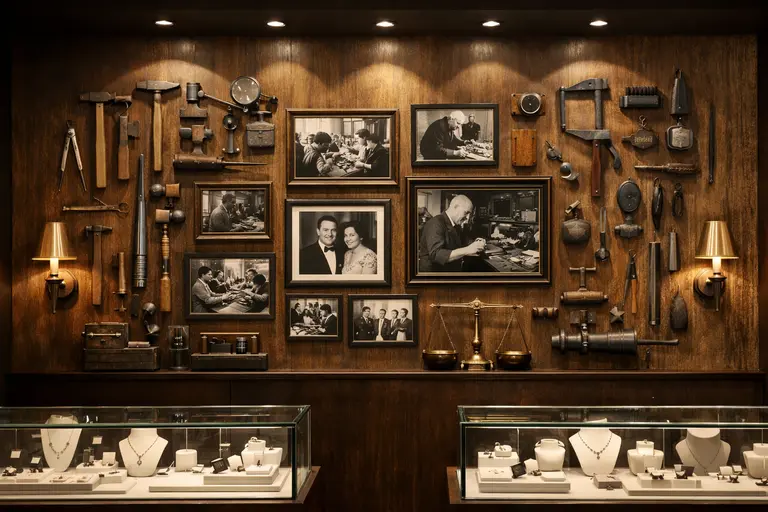
Introduction to Heritage Walls in Jewelry Stores
Independent jewelry stores across India increasingly compete against massive retail chains that spend heavily on celebrity endorsements and sprawling showroom networks. However, local jewelers hold one distinct advantage that large corporate brands cannot easily replicate: a genuine story built on family values and community trust. Specifically, implementing heritage walls in jewelry stores allows local businesses to showcase their unique journey and technical expertise.
A well-designed heritage wall turns that history into one of the most powerful marketing tools a showroom owns. Instead of depending only on expensive interiors, independent jewelers can build an emotional bond with customers the moment they step through the door. Consequently, the showroom stops being just a retail space and becomes a destination where customers experience history and craftsmanship firsthand. This concept works especially well in Keralam, where families often pass down jewelry-buying traditions across dozens of generations. By adopting this approach, you can differentiate your brand in a crowded market. To understand how other high-end industries manage their prestige, you can read our guide on industry sheepdogs in tech and jewelry.
Branding Impact of Heritage Walls in Jewelry Stores
A heritage wall does far more than just decorate a blank surface. Instead, it signals stability, authenticity, and a long-term commitment to the trade. As a result, customers quickly sense that the business represents something beyond simply selling ornaments. When shoppers notice vintage photographs, traditional weighing scales, or handcrafted tools, they often start trusting the jeweler before a salesperson even says hello.
Furthermore, these visual stories spark emotional engagement that digital advertising alone rarely achieves. Unlike a temporary social media campaign, a heritage wall stays visible to every visitor throughout the year. Therefore, it steadily reinforces the brand’s identity and commitment to quality. For more design inspiration, you should explore our article on modern jewelry store design trends. In a world where buying emotional value in India is the primary driver of sales, your store’s history is a premium asset.
Why Keralam Needs Heritage Walls in Jewelry Stores
Keralam shares one of the world’s deepest cultural bonds with gold. Families in the state buy jewelry not only for weddings but also for festivals and intergenerational savings. Because of this, trust remains the absolute foundation of the industry. Many families remain fiercely loyal to the same jeweler for decades. Consequently, heritage walls in jewelry stores can strengthen that existing relationship within the first few minutes of a visit.
At the same time, the Kerala jewelry market remains aggressively competitive. Large organized chains pour money into nationwide campaigns; however, they cannot recreate a personal history tied to a specific town or family. For this reason, local identity becomes your most durable competitive edge. Moreover, bridal jewelry carries enormous weight in the region. Displaying vintage wedding photographs or original account books helps today’s brides connect their own purchase with a legacy of trusted craftsmanship. This focus on authenticity is a key lesson from building India’s global brands for the future.
Indian Success of Heritage Walls in Jewelry Stores
Only a small share of independent stores currently use heritage walls in jewelry stores as a deliberate part of the customer experience. Many still rely on basic founder portraits or framed certificates. While these hold some value, they rarely create the immersive experience that modern buyers crave.
Even so, notable exceptions exist within the country. Historic institutions like The Gem Palace in Jaipur preserve archival documents and royal associations that enrich every visitor’s experience. Similarly, the National Retail Federation (NRF) emphasizes that “experience-led retail” is the most effective way to combat the rise of purely online commerce. By looking at these models, new jewelers can learn how to present their brand as a cultural institution. This long-term thinking is a core part of the world’s oldest company lessons for Keralam.
Creating Unique Heritage Walls in Jewelry Stores
New jewelers should think beyond luxury marble floors and embrace “narrative luxury” instead. Even without a century of history, every business has a story worth telling.
Entrance Design for Heritage Walls in Jewelry Stores
The entrance deserves careful planning because customers form their first impressions within seconds. Rather than placing a security desk near the door, retailers should dedicate that space to their brand story. This shift in layout changes the customer’s mindset from a “transaction” to an “exploration.”
Artifact Choice for Heritage Walls in Jewelry Stores
Established family businesses can display original ledgers or traditional gold-testing stones to show how they grew alongside the community. Meanwhile, newer businesses can highlight their ethical sourcing and local expertise. For example, you could show the journey of a handcrafted Palakka necklace from the initial sketch to the finished gold piece. Introduce the actual goldsmiths behind the work. Consequently, customers begin to appreciate the human labor involved in the craft. This is especially relevant when discussing raw diamond and Polki jewelry in India, where the handmade feel is the selling point.
Future Tech and Heritage Walls in Jewelry Stores
Modern technology can actually strengthen traditional storytelling rather than replace it. For instance, you can place discreet QR codes beside physical artifacts on the wall. These codes can lead visitors to short videos showing ancient jewelry-making techniques or interviews with master artisans.
In addition, you can gradually build a living digital archive of your most loyal customers. This creates a sense of community belonging that a corporate chain could never offer. As a result, the wall keeps evolving alongside the business. This digital mycelium acts like the hidden networks in nature and business that sustain healthy ecosystems.
FAQ About Heritage Walls in Jewelry Stores
What exactly are heritage walls in jewelry stores?
They are curated displays inside a showroom that use old photos, tools, and documents to tell the history of the jeweler. They turn a retail space into a cultural gallery.
Can a small store with limited space have a heritage wall?
Yes, absolutely. You don’t need a massive wall. Even a small, well-lit corner or a few shadow boxes near the billing area can effectively tell your brand story.
Is it expensive to build one?
The cost is primarily in the research and curation. Using high-quality frames, lighting, and actual historical tools is far more affordable than a full showroom renovation.
How do I find artifacts if I didn’t save them?
Look through old family albums, check with retired employees for their old tools, or search local archives for photos of your original shop location.
Does this really help increase sales?
While it may not lead to an immediate impulse buy, it significantly increases customer trust. In high-value sectors like gold and diamonds, trust is the primary driver of a final sale.
Disclaimer
This article is intended for educational purposes only. Retail design trends and customer behaviors vary by region and demographic. The author has no financial affiliation with the retail brands or organizations mentioned. Before investing in a showroom redesign, you should consult with professional architects and marketing experts. Readers should rely on their own business judgment when implementing these strategies.