Introduction
Gold jewelry means far more than simple adornment for the modern family. For millions of households worldwide, it also represents family heritage, financial security, and a sophisticated method of household gold wealth storage. However, households in America, India, and China use that wealth in strikingly different ways based on their local economic systems.
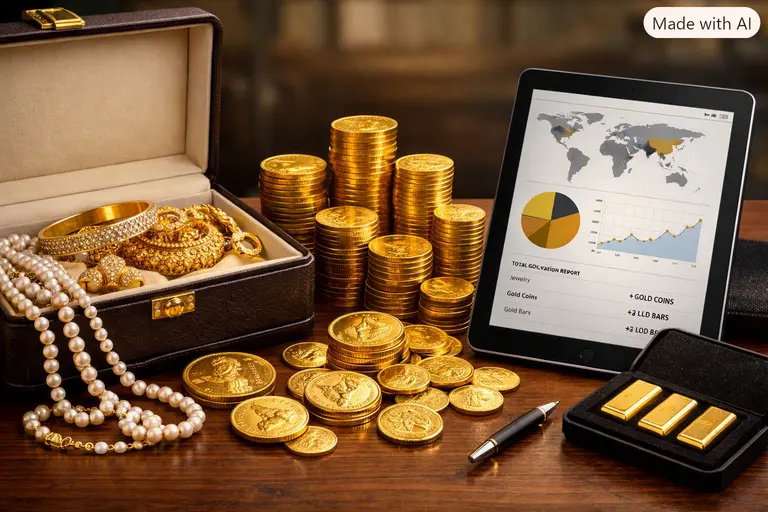
Specifically, recent research from the Unvault Jewelry Drawer Index estimates that about $750 billion worth of gold jewelry sits dormant inside American homes. According to their data, 62% of jewelry owners carry no insurance, while many owners typically underestimate the value of their pieces by more than three times. This lack of awareness suggests that American household gold wealth storage is largely passive and undocumented.
This finding naturally raises a bigger question for global analysts. If American homes hold so much overlooked wealth, then what about the situations in India and China? In these nations, gold carries a much deeper cultural and financial role. The total value is potentially much larger, yet we cannot simply multiply the American figure across Asia. Instead, we must consider how each specific market buys, stores, pledges, and sells its precious metals.
America’s Dormant Household Gold Wealth Storage
Unvault’s research focuses primarily on the intrinsic gold value rather than the original retail price paid at a boutique. This distinction matters immensely because consumers often pay for far more than the raw metal. Specifically, high-end design, brand marketing, and retail markups can inflate the initial price well above the metal’s spot worth.
Therefore, readers should not confuse the $750 billion estimate with what Americans could actually receive by selling their items today. Resale proceeds often land significantly lower once buyers account for testing, refining costs, and dealer margins. Even so, a jewelry box can quietly hold real financial power, even when the owner rarely wears the pieces inside it.
Furthermore, the real problem in American household gold wealth storage is not necessarily forgetfulness. Instead, many owners simply lack a current professional valuation. They often do not understand how retail, replacement, and resale values differ in the open market. To better understand how to value these assets, consumers can consult our guide on gemstone and jewelry verification.
India’s Active Household Gold Wealth Storage
India tells a completely different story regarding household gold wealth storage. The World Gold Council estimates that Indian households, including massive temple holdings, hold roughly 25,000 tonnes of gold. At mid-2026 prices, this stock is worth an estimated $2.4 trillion. However, this figure covers household gold broadly, so readers should not treat it as jewelry alone.
Nevertheless, jewelry forms the central pillar of India’s gold culture. Wedding jewelry and inherited heirlooms often stay within families for generations. Unlike the American model, Indian families frequently treat gold as practical financial security rather than pure decoration. Consequently, Indian household gold rarely counts as “forgotten wealth.” Families store it for decades, yet they also remake, exchange, or pledge it whenever they require immediate funds.
In addition, this difference shows up clearly in India’s booming gold-loan market. Indeed, outstanding gold-backed loans at Indian banks recently topped roughly $54 billion. This data proves that households increasingly borrow against their jewelry instead of selling it outright. In other words, household gold wealth storage in India moves directly from the drawer into the formal financial system. The jewelry then moves back to the home once the family repays the loan.
China’s Hybrid Household Gold Wealth Storage
China also runs an enormous gold market, though analysts should stay cautious when estimating what Chinese households privately own. Unlike the widely cited 25,000-tonne estimate for India, no equally authoritative figure confirms Chinese household holdings at a precise tonnage. Therefore, any frequently repeated round number for China deserves a high degree of skepticism.
What we can establish is that Chinese consumers maintain a powerful, evolving relationship with gold jewelry. Even as high prices reduced purchases by weight in early 2026, total spending remained heavy. Furthermore, China’s market blends jewelry consumption with investment demand more than any other nation. In China, the line between adornment and savings blurs significantly.
Notably, high global prices reshaped consumer behavior in early 2026. While Chinese jewelry demand fell year-on-year, interest in gold bars and coins remained resilient. This suggests that Chinese household gold wealth storage is becoming more strategic. Consumers are shifting toward forms of gold that carry lower premiums over the spot price.
Market Value of Household Gold Wealth Storage
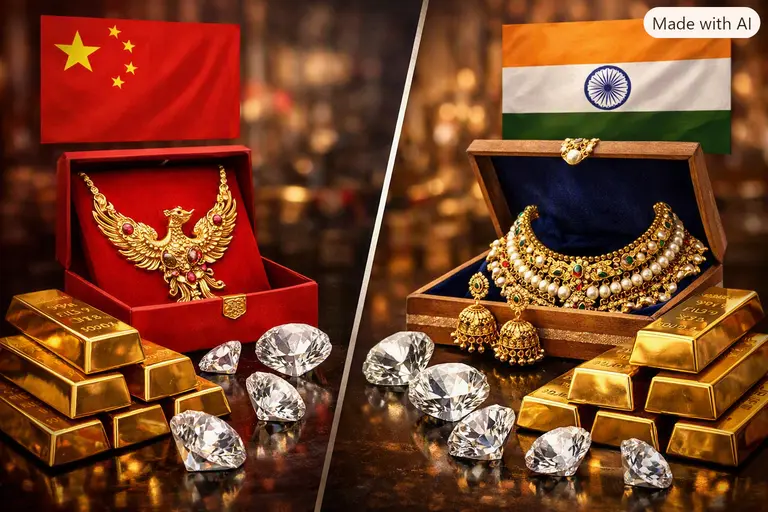
America’s $750 billion figure highlights a massive pool of dormant, under-appraised wealth. India, by contrast, holds a gargantuan stock that regularly functions as savings, family wealth, and bank collateral at once. China presents yet another model, where consumers treat jewelry as both a high-fashion cultural product and a reliable store of value.
Therefore, we should never transfer the American assumption of “unused” jewelry onto the Asian markets. Likewise, comparing countries purely by the gross weight of the metal misses the point. Factors such as metal purity (typically 22k in India vs 14k/18k in the US), ownership patterns, and local buying habits all shape the real liquid value. Ultimately, the real question for the future is not just how much gold sits in drawers. Instead, we must ask how effectively that gold moves between jewelry, savings, lending, and the resale market.
Industry Lessons for Household Gold Wealth Storage
The global jewelry industry should rethink the relationship between retail sales and household gold wealth storage. First, retailers can offer better digital records for their customers. A simple digital portfolio could log the weight, purity, and valuation details of a purchase in one central place.
Second, brands can simplify the process of jewelry recycling and trade-ins. If consumers have access to trusted, transparent valuations, they have a reason to return old jewelry to the system instead of leaving it unused. Finally, the industry can market jewelry as both emotional and financial property. A wedding necklace carries deep sentimental weight, but it also holds real, tradable metal value that can protect a family during a crisis.
Managing Your Household Gold Wealth Storage
Everyday consumers should always begin their journey with knowledge rather than an immediate sale. If you own gold, you should follow these essential steps:
- Identify the Karat: Determine if your pieces are 14k, 18k, or 22k gold, as this dictates the metal value.
- Record the Weight: Use a digital scale to know exactly how many grams of gold you possess.
- Document the Hallmarks: Photograph the tiny stamps on the clasps or inside rings that prove purity.
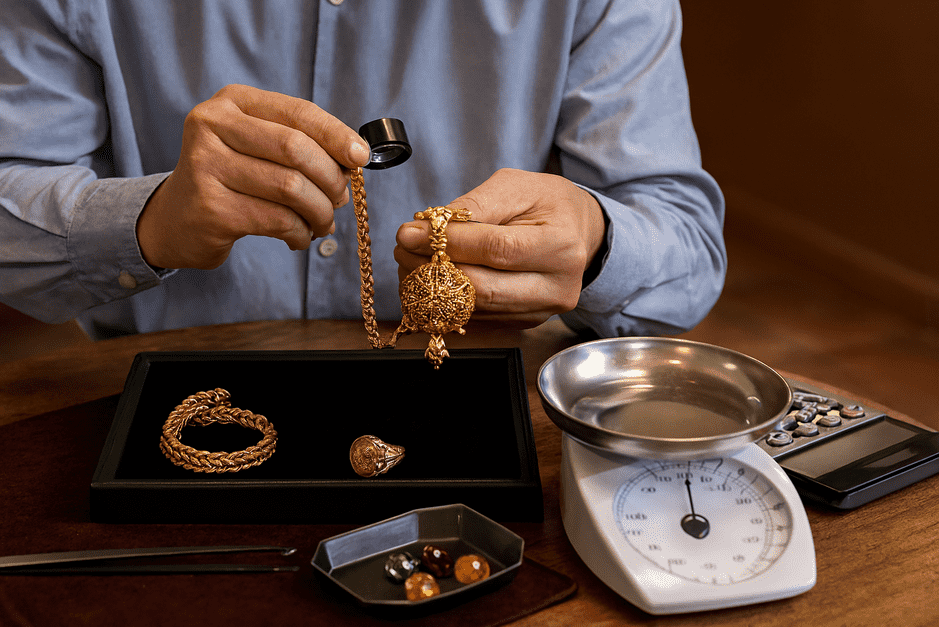
- Seek Professional Valuation: Obtain an appraisal that distinguishes between insurance replacement cost and immediate resale value.
Moreover, consumers should never assume that the gold value automatically equals a dealer’s first offer. Testing, refining fees, and business margins will always shift the final number. Most importantly, nobody should treat old jewelry as worthless simply because the style looks unfashionable today. The metal remains a timeless asset regardless of the design.
FAQ: Guide to Household Gold Wealth Storage
How much gold is actually dormant in American homes?
According to the Unvault Jewelry Drawer Index, approximately $750 billion in gold jewelry sits unused in US homes. Furthermore, many owners underestimate this value by a factor of three.
What is the estimated value of Indian household gold?
The World Gold Council suggests Indian households own about 25,000 tonnes of gold. At current 2026 market rates, this is valued at approximately $2.4 trillion.
Why is the Indian gold market considered more active?
Indian families often use jewelry as collateral for bank loans. With over $54 billion in outstanding gold loans, the jewelry serves as a liquid financial asset rather than just a collectible.
How does China view gold jewelry compared to the West?
Chinese consumers often view jewelry as a hybrid between fashion and investment. This leads to a higher demand for high-purity gold (24k) jewelry that retains more of its intrinsic metal value.
Should I insure my household gold jewelry?
Yes, especially if you fall into the 62% of owners who currently lack coverage. However, ensure your appraisal reflects current 2026 gold prices, as older valuations are likely obsolete.
Disclaimer
This article serves general education and information purposes only. Household gold estimates involve real uncertainty, and gold prices change continuously. Unvault’s $750 billion figure represents its own estimate of dormant American jewelry wealth. The World Gold Council’s Indian figure covers household gold broadly rather than jewelry alone. Furthermore, no comparable authoritative figure for total private Chinese household gold holdings currently exists. Therefore, readers should never treat these figures as financial, investment, insurance, or valuation advice. Before making any significant financial decision, always obtain an independent professional valuation and appropriate financial or tax guidance. The author has no financial affiliation with the brands or organizations mentioned.