Introduction
China and India both shape the global market, yet the China vs India jewelry debate proves that each country reaches its position through a different path. While China builds enormous manufacturing scale and an integrated domestic supply chain, India develops deep expertise in diamond cutting and traditional craftsmanship. Consequently, the leadership in this industry is more nuanced than a simple ranking of sales figures.
Therefore, the real question is not simply whether China outpaces India. Instead, readers should ask what each country does best and whether India can eventually challenge China’s overall industrial scale. For most consumers and industry followers, the China vs India jewelry comparison matters because the future of luxury goods will increasingly depend on these two Asian giants.
China’s Role in China vs India Jewelry
First of all, China’s greatest advantage in the China vs India jewelry competition comes from its sheer scale. Over the last few decades, the country has successfully connected manufacturing, trading, and logistics into one tightly linked ecosystem. This integration allows for a level of efficiency that few other nations can match.
For instance, Shenzhen has grown into one of China’s most important jewelry centers. According to the Gemological Institute of America (GIA), Shenzhen has developed into China’s largest jewelry manufacturing hub. Furthermore, its Shuibei district became a dense concentration of jewelry companies and laboratories.
As a result, businesses can complete many stages of production within one connected zone. This proximity gives Chinese manufacturers a significant edge in speed. In addition to this, China’s huge domestic market lets companies test products at home before expanding. Consequently, China remains a powerhouse in the global manufacturing landscape.
India’s Role in China vs India Jewelry
India, however, should never be viewed merely as a country chasing China. In fact, India already holds a commanding position across several parts of the global gem chain. If we look at the China vs India jewelry landscape through the lens of specialized processing, India often comes out on top.
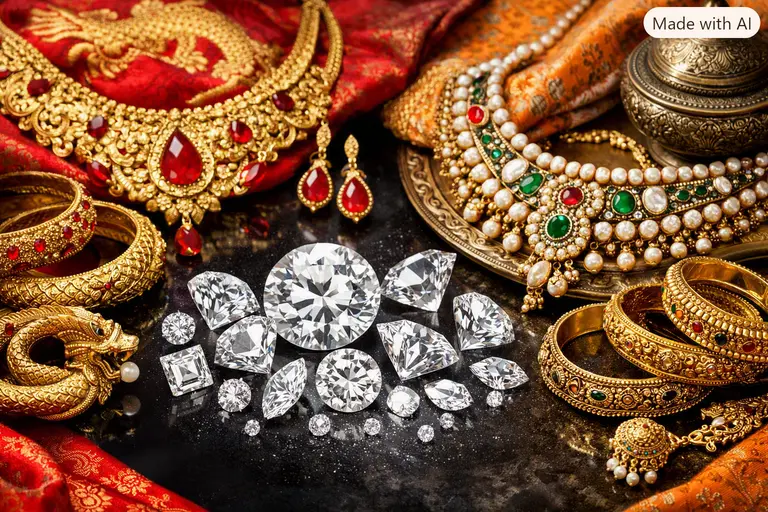
Most notably, Surat has become the world’s leading diamond cutting and polishing center. In fact, Surat processes the vast majority of the world’s diamonds by volume. India also has deep-colored gemstone expertise, and Jaipur has earned a global reputation for traditional craftsmanship.
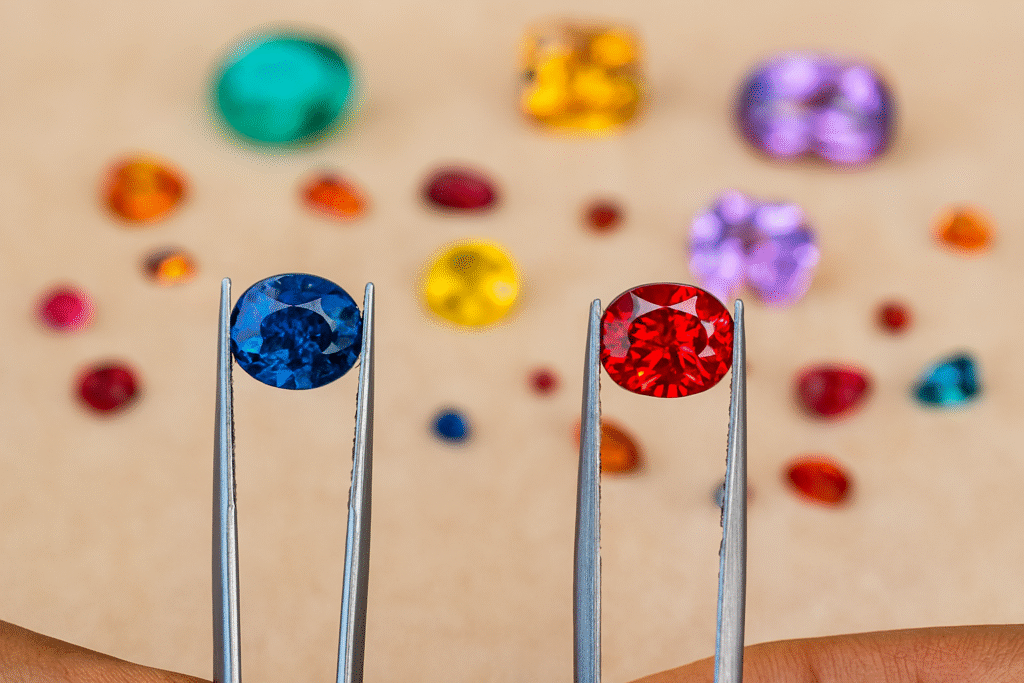
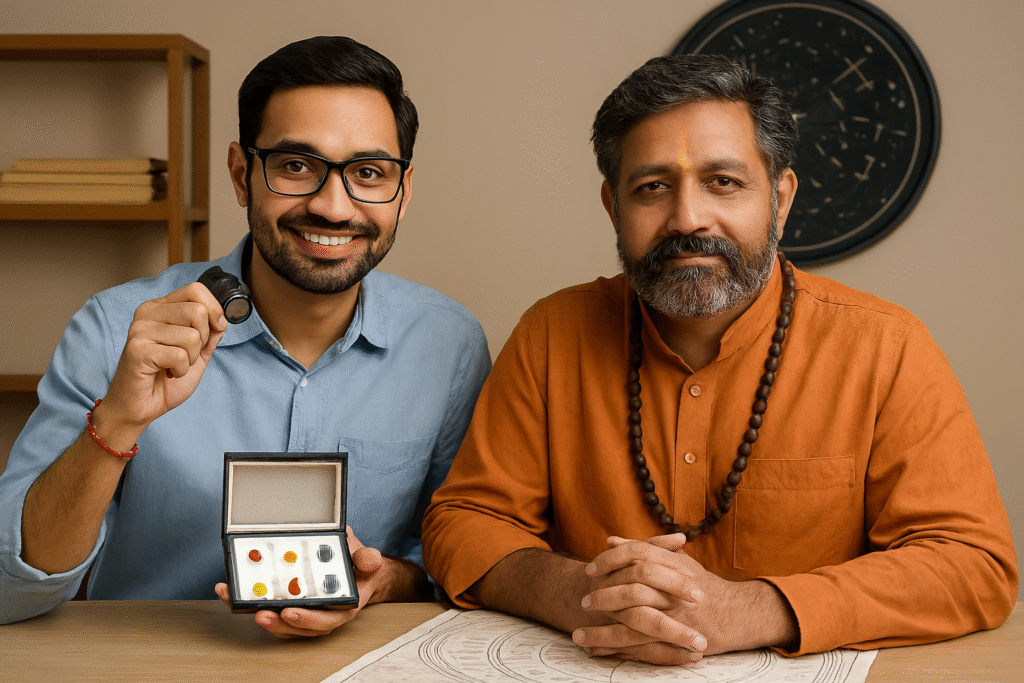
Readers who are interested in gemstone identification can see how Indian laboratories are advancing their technology. Moreover, India’s jewelry sector is deeply rooted in heritage. This means that while China excels at mass production, India excels at intricate, hand-finished details. Therefore, India leads in the high-value segment of the diamond industry.
Gold Trends in China vs India Jewelry
China also remains one of the world’s two dominant gold markets, though the numbers need careful reading. In the ongoing discussion of China vs India jewelry, gold demand is a primary metric. According to the World Gold Council, mainland China’s gold jewelry demand reached 360.1 tonnes in 2025. During the same period, India’s demand reached 430.5 tonnes.
So, India actually exceeded China in annual gold demand for 2025. Nevertheless, China remains an enormous market because Chinese buyers purchase gold both as jewelry and as an investment. Similarly, quarterly rankings shift often based on local economic conditions.
During the first quarter of 2026, China’s gold demand reached roughly 85 tonnes, which was slightly ahead of India’s demand. This happened even though record-high prices pressured both markets. Consequently, analysts should call China a global powerhouse rather than labeling it the world’s single largest consumer.
Luxury Watches in China vs India Jewelry
The contrast in China vs India jewelry leadership becomes especially clear when we look at watches. China maintains a huge consumer market and remains a vital destination for Swiss exports. However, Switzerland still dominates the prestige end of mechanical watchmaking by a wide margin.
According to the Federation of the Swiss Watch Industry, Swiss watch exports to China declined again in 2025. Meanwhile, Switzerland exported watches worth CHF 24.4 billion globally in 2025. Therefore, China carries enormous weight as a consumer market, but it does not yet produce brands with the same heritage as Swiss firms.
India’s watch market is also growing rapidly, yet it remains smaller than China’s in total imports. On the other hand, India is seeing a rise in domestic watch enthusiasts. Thus, a country can dominate consumption without dominating production. This distinction is vital when evaluating the global jewelry market.
Industrial Models for China vs India Jewelry
Ultimately, this contrast brings us back to a useful analogy: the thali versus the single dish. China often operates with a sharp national industrial focus. When China targets a sector, it can mobilize capital and manufacturers around that single goal. This approach creates massive, unified power very quickly.
India, however, resembles a thali because it contains many regions and traditions on one plate. At first glance, the thali may look less efficient. However, it also offers variety and resilience. If one part of the market struggles, another region can keep growing. Therefore, India does not need to become another China to win. Instead, India can lead by pairing its ancient heritage with modern technology.
Summary of China vs India Jewelry
In conclusion, China and India both stand as global powers, though each dominates a different dimension. China brings extraordinary industrial scale, particularly in Shenzhen. In contrast, India commands major strength in diamond processing and traditional craftsmanship.
Meanwhile, Switzerland still holds outsized influence in high-end watches. Ultimately, no single country controls the entire global industry. This competition benefits ordinary consumers because it leads to more choice and better technology. As we move further into 2026, the China vs India jewelry rivalry will continue to drive innovation across the globe.
FAQ: China vs India Jewelry Facts
Is China the world’s largest jewelry power?
China is a leading manufacturing power, but no single country dominates everything. China leads in mass production, while India leads in diamond processing and craftsmanship.
Is China the world’s largest gold consumer?
Not always. India recorded higher annual gold demand than China in 2025. Rankings often shift based on gold prices and seasonal festivals in each country.
Why is Shenzhen important for China vs India jewelry?
Shenzhen is a massive manufacturing hub. Its Shuibei district concentrates hundreds of companies in one place, allowing for incredible production speed.
Why does India lead in diamonds?
India is the world’s dominant diamond-processing hub. Surat leads the world in cutting and polishing, making India essential to the global diamond trade.
Disclaimer
This article serves general educational purposes only. Market data, gold demand figures, and industrial rankings can fluctuate based on economic shifts and new reporting. Because gemstone valuation and origin determination require professional scientific testing, readers should consult accredited laboratories or qualified gemologists before making significant investment or purchasing decisions. The author has no financial affiliation with the brands or organizations mentioned.