Introduction to Akoya Pearls in India
Akoya pearls have carried a prestigious reputation for elegance and fine craftsmanship for over a century. Although Japan still sets the global benchmark for quality, smaller harvests now arrive from China, Vietnam, and Australia. Recently, many consumers have begun seeking Akoya pearls in India because these gems occupy a unique position between affordable freshwater strands and exceptionally expensive South Sea varieties.
However, warming seas and oyster diseases have squeezed Japanese production and made fine-quality strands significantly scarcer. Consequently, understanding the nuances of luster and nacre is essential for any modern collector. For related reading, you can see our freshwater vs. saltwater pearls comparison or our guide to buying natural gemstones safely. By educating yourself on these biological treasures, you ensure that your jewelry collection holds both beauty and long-term value.
How Japan Influences the Market for Akoya Pearls in India
Japan leads the international trade through generations of meticulous craftsmanship and strict quality control. Even so, rising seawater temperatures have reduced harvests in historic regions such as Ehime and Mie. Therefore, researchers have expanded oyster-genetics studies to breed hardier stock that can survive a changing climate.
Despite these environmental challenges, professional graders in Kobe still sort every harvest by size, shape, and luster under highly controlled lighting. These standards directly dictate the availability of Akoya pearls in India. For readers curious about global benchmarks, the Gemological Institute of America (GIA) offers detailed resources on pearl classification. Furthermore, because supply cannot expand quickly, the demand for high-grade strands continues to drive prices upward. This scarcity is a key feature of the three business models: ants, spiders, and honeybees, where “honeybee” transformation creates elite value.
The Rising Demand for Akoya Pearls in India
India has admired pearls for centuries, yet that appreciation is currently evolving. While freshwater pearls still dominate the high-volume market, Akoya pearls in India now occupy a premium niche that attracts luxury shoppers and bridal customers alike. Specifically, a high-quality saltwater pearl reflects light almost like a small mirror, which allows it to photograph beautifully under the bright festive lighting common in Indian weddings.
Naturally, this visual brilliance makes Akoya strands a perfect match for embroidered sarees and lehengas. Additionally, younger shoppers in metropolitan hubs like Mumbai and Kochi increasingly favor minimalist jewelry. For these buyers, a simple Akoya pendant provides a touch of “quiet luxury” without the bulk of traditional gold. This trend is part of a larger movement toward buying emotional value in India, where the sentiment and quality of the item outweigh the desire for heavy ornamentation.
Evaluating Quality: Luster and Nacre Thickness
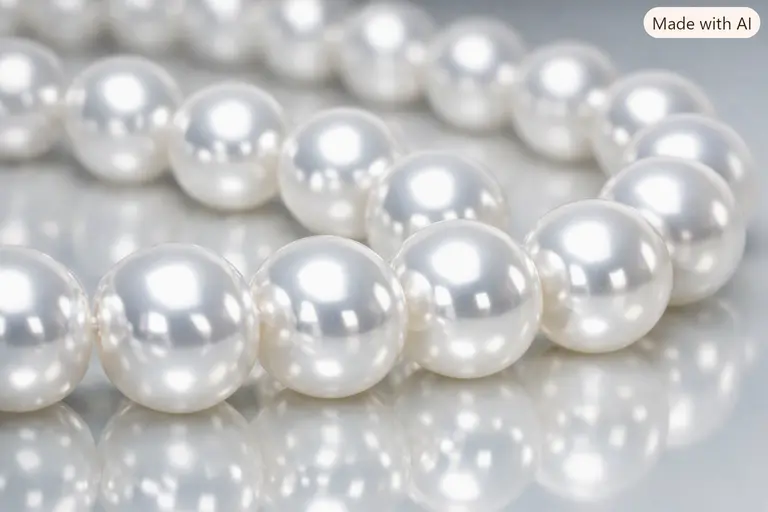
When you are evaluating Akoya pearls in India, luster must be your first priority. A premium pearl reflects light sharply and clearly. In contrast, a low-quality pearl displays a dull, blurred glow that lacks depth.
Nacre thickness matters just as much as luster because thicker nacre strengthens the pearl and preserves its original shine for decades. If the nacre is too thin, the pearl may eventually “peel” or lose its luster entirely. Furthermore, most fine Akoya pearls measure between 7 and 9 millimeters. Anything reaching the 9.5-millimeter range remains exceptionally rare because the Pinctada fucata martensii oyster is a small species. Consequently, you should stay extremely cautious if a seller offers you a massive “Akoya” pearl at a low price; it likely belongs to another variety altogether. This level of technical scrutiny is handled by the industry sheepdogs in tech and jewelry who protect market integrity.
Why Certification Protects Your Purchase
Before you spend a significant amount on Akoya pearls in India, you should always request an independent laboratory certificate. Certification provides genuine confidence in the authenticity and treatment status of the gems. Specifically, the Pearl Science Laboratory (PSL) in Tokyo remains the global authority on these specific saltwater gems.
Many of the finest strands earn the “Hanadama” designation. This mark, first used by pearl pioneer Kokichi Mikimoto, identifies the “flower pearls” of each harvest. Notably, only a small percentage of each year’s total crop meets the criteria for this label. In the Indian market, insisting on these documents ensures that you are not paying premium prices for dyed or imitation materials. This focus on standardisation is vital for building India’s global brands in the luxury jewelry sector.
Maintenance for the Indian Climate
Because pearls are organic gems, they require much gentler handling than diamonds. This is especially true in India’s humid climate. You should follow the “last on, first off” rule: apply all cosmetics, hairspray, and perfume before putting on your pearls. This habit prevents chemical residues from dulling the surface of the nacre.
Moreover, you should wipe your pearls gently with a soft, damp cloth after every use to remove traces of sweat. You must store Akoya pearls in India separately from other jewelry to prevent harder gemstones from scratching the delicate surface. Additionally, you should avoid sealing them in airtight plastic bags. Because pearls contain a small amount of water, they need to breathe to prevent the nacre from becoming brittle. Following these summer jewelry care tips will help you preserve your heirlooms for future generations.
FAQ About Akoya Pearls in India
Are Akoya pearls natural or cultured?
Almost all Akoya pearls in India are cultured. Farmers manually insert a nucleus into the oyster, which then spends years depositing layers of nacre around it. This process is a partnership between human skill and natural biology.
Can I wear Akoya pearls in the rain?
You should avoid getting your pearls wet whenever possible. While a few drops won’t hurt, rainwater often contains pollutants that can damage the organic nacre. If they do get wet, dry them immediately with a soft cloth.
How often should I re-string my pearl necklace?
If you wear your pearls frequently, you should have them re-strung every one to two years. Most professional jewelers use silk thread with knots between each pearl to prevent them from rubbing together.
Which skin tone suits Akoya pearls best?
Akoya pearls come in various overtones. Silver-white overtones often suit cooler skin tones, while cream and golden overtones pair beautifully with warmer Indian complexions and yellow gold settings.
Where can I find Hanadama certified pearls in India?
You can find them through high-end authorized retailers in major cities or by commissioning a custom piece through a jeweler who sources directly from Japanese auctions.
Disclaimer
This article serves general educational purposes only. The author has no financial affiliation with the pearl laboratories or jewelry brands mentioned. Pearl prices and market availability are subject to change. Always verify certifications and buy from reputable sources to ensure the quality of Akoya pearls in India. Consult with a certified gemologist for high-value appraisals. Data reflects market conditions as of August 2026.