Introduction
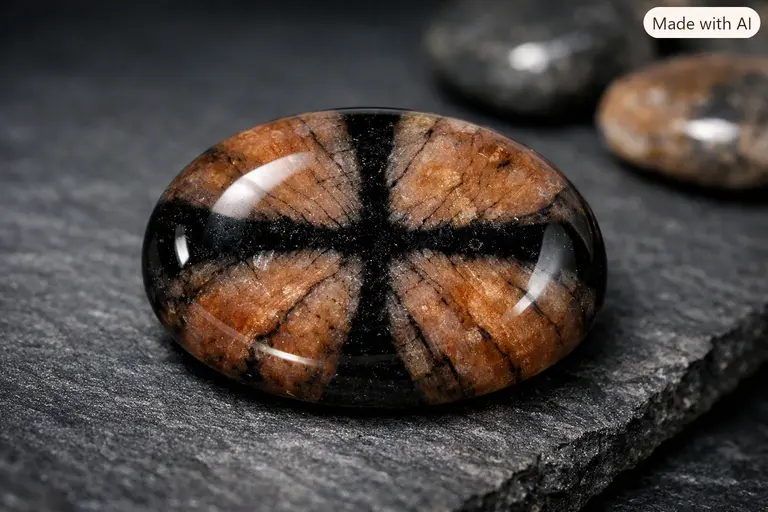
Chiastolite is a unique variety of andalusite that displays a natural cross inside the crystal. Nature creates this pattern without any human engraving or painting. Carbonaceous inclusions gather inside the growing crystal, and they form a dark cross when someone slices the stone. Consequently, chiastolite combines unusual geology with a long cultural history. Collectors, pilgrims, and jewellery designers have admired it for centuries. Although it remains a niche material, its natural cross gives it an identity that few other stones match. Behind every stone lies a fascinating geological journey. By exploring its deep roots and symbolic legacy through Indian gemstone education, buyers can truly connect with the history they are wearing.
What Makes Chiastolite Unique?
Mineralogists classify chiastolite as a variety of andalusite, not a separate mineral. Its name comes from the Greek word chiastos, which means crosswise, referring to the Greek letter chi. Mineral references describe it as andalusite with cross-shaped carbonaceous inclusions, as Gemdat explains.
First, andalusite crystals grow during metamorphism in rocks that contain carbonaceous material. As the crystal develops, its growth pattern decides where these inclusions collect. Therefore, the cross forms naturally, and no human hand adds it. Moreover, slicing the crystal in different directions reveals different crosses, so each stone varies in size, sharpness, and position. For deeper mineralogical detail, readers can visit Mindat’s chiastolite page.
Why Does the Natural Cross Matter?
The cross gives chiastolite a special place in European history. Mindat records the material from the late 1500s and notes that Latin texts called it lapis crucifer, or cross stone. In addition, sources describe the stone as a souvenir and amulet that pilgrims carried home from Santiago de Compostela. However, researchers say the stones probably came from Asturias, not Compostela itself. Nevertheless, readers should separate documented history from later legend. Sources clearly document the link with Christian pilgrimage, but stories about specific royal collections need separate evidence. Still, Christian collectors can value the cross for personal reasons, while mineral lovers enjoy it as a lesson in geological growth.
Is Chiastolite Popular in India?
Chiastolite holds a niche position in India, not a mainstream jewellery market. Indian buyers know ruby, sapphire, emerald, diamond, and pearl far better. Even so, collectors, crystal enthusiasts, and independent designers do seek it out, and online sellers make specimens easier to find. Therefore, it is more accurate to call this stone a specialist material than a popular one. Curious buyers can start with our beginner guide to buying gemstones in India.
Do Synthetics or Imitations Exist?
Gemdat notes that chiastolite simulants (imitations) do not exist because of its distinct marking. However, some retail sellers reportedly paint or carve crosses onto ordinary stones, so buyers should check the whole specimen. In genuine examples, the cross runs through the stone and shows on both cut faces. Finally, when authenticity or value matters, a qualified gemologist or mineralogist can confirm the identification.
Durability and Wearability
Hardness deserves attention because chiastolite differs from clean andalusite. Gemdat cites a Mohs hardness of about 5 to 5.5, although some sellers quote the 6.5 to 7.5 range of andalusite. Moreover, one source says the inclusions reduce durability, and Gemdat lists distinct cleavage. Therefore, wearers should take reasonable care, especially with thin edges or vulnerable sections. A well-polished cabochon or pendant still works well in practice. However, nobody should treat it as a scratch-resistant everyday gemstone.
Why Do Jewellery Designers Use Chiastolite?
Chiastolite gives designers a natural graphic pattern. Instead of relying on transparency, brilliance, or saturated colour, they can make the cross the focus of the piece. According to Gemdat, makers polish crystal sections, shape cabochons and tablets, and use the material as amulets. As a result, it suits contemporary, rustic, historical, and symbolic designs. Furthermore, every section shows a slightly different cross, so designers create individual pieces instead of repeating a uniform pattern. For this reason, designers who want jewellery to look geological rather than conventionally precious may find it especially appealing.
Could Chiastolite Suit Specialty Watch Dials?
In principle, a specialist watchmaker could experiment with chiastolite as a dial material. Nonetheless, it would remain an unusual and technically demanding choice. A stone dial needs precise cutting, thin sections, and accurate drilling for the hands. In addition, the pattern varies from specimen to specimen, so the cutter must balance strength, thickness, and cross position. Consequently, it works best as an experimental dial material, not as a proven one.
Frequently Asked Questions
Is Chiastolite a real gemstone?
Yes. Chiastolite is a recognized variety of andalusite, and makers fashion it into polished sections, cabochons, tablets, and amulets.
Is the cross painted inside Chiastolite?
No. In natural chiastolite, inclusions concentrate during crystal growth, so cutting the crystal in the right direction simply reveals the cross.
Is Chiastolite associated with Christianity?
Yes. Historical sources document the name lapis crucifer and a link with pilgrims in northern Spain. However, it is safest to call it a niche interest.
Can Chiastolite work in jewellery or watch dials?
Yes for jewellery, because polished sections display the cross well. However, its reported hardness of about 5 to 5.5 calls for careful design. Watch dials remain experimental.
Disclaimer
This article offers general gemological, mineralogical, and consumer education. Historical traditions carry differing interpretations, and individual chiastolite specimens vary widely in appearance, inclusions, and durability. Therefore, seek professional identification when authenticity, provenance, or valuation matters. The author has no financial affiliation with the brands or organizations mentioned.