Introduction to Smart Gemstone Buying Guardrails
Establishing smart gemstone buying guardrails has become essential for consumers in 2026 as the global jewelry market grows increasingly complex. Although most buyers find gemstone shopping exciting, they often realize that this opaque industry operates differently from other retail sectors. Specifically, sellers typically possess significantly more technical knowledge than the average shopper. Consequently, without a structured process, buyers struggle to distinguish between genuine geological facts and persuasive sales pitches. Therefore, implementing clear safeguards is the most effective way to protect your financial investment and ensure you receive an authentic stone.
This information gap appears in nearly every major gem hub, from Jaipur and Colombo to Bangkok and New York. While some dealers rely on decades of experience, others may inadvertently pass on incorrect supplier claims. Meanwhile, gemstone science keeps advancing; specifically, laboratories regularly uncover new treatments and refine detection methods for lab-grown stones. Consequently, information that felt reliable a few years ago can quickly become outdated. This guide provides the necessary steps to shop wisely without needing a gemology degree. To understand the professionals who maintain these standards, you can read our guide on industry sheepdogs in tech and jewelry.
Information Gaps and Smart Gemstone Buying Guardrails
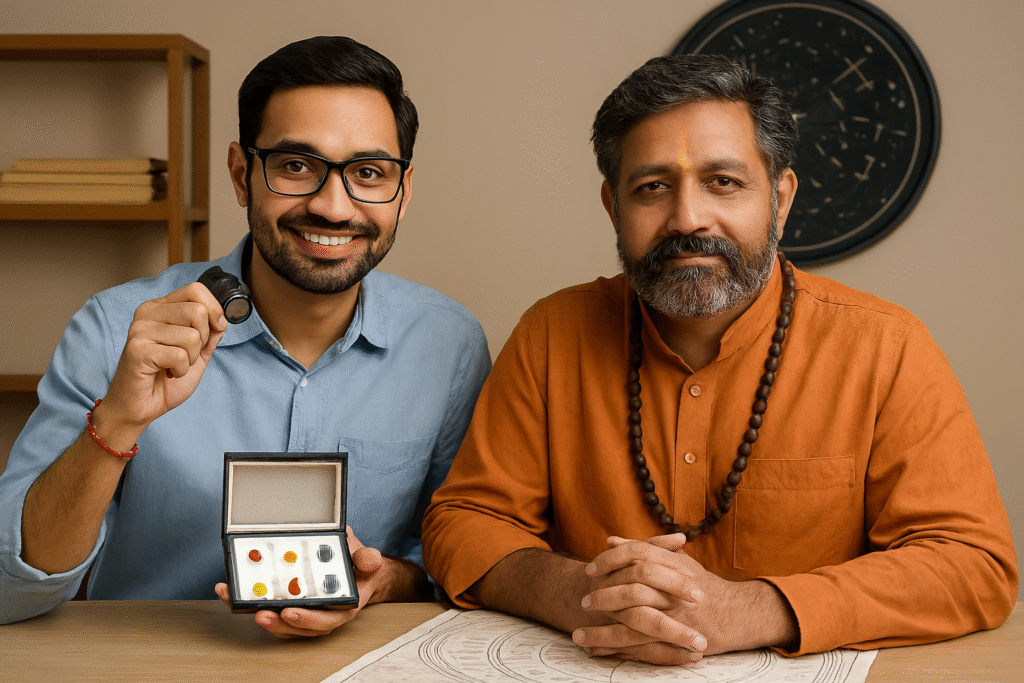
Naturally, many shoppers assume every jeweler doubles as a trained gemologist. In reality, these two roles overlap but remain distinct. For example, a jeweler may understand design and pricing extremely well, while a seasoned dealer may recognize many stones by sight. Nevertheless, experience alone cannot always catch a hidden chemical treatment or confirm whether a stone grew in a lab.
Specifically, this gap widens because colored gemstones never trade at one fixed global price like gold. Instead, buyers must weigh color, clarity, cut, rarity, and origin together. Consequently, two similar-looking stones can carry very different values. Mining hubs like Tanzania or Brazil build strong practical skills around rough stones, whereas trading centers like Jaipur pair knowledge with modern labs. Ultimately, one truth stays constant: buyers hold less technical data than sellers. Therefore, independent verification remains one of the strongest smart gemstone buying guardrails available today. For more on the historical context of this trade, see our article on Sanskrit gem knowledge and ancient trade.
Lab Reports as Smart Gemstone Buying Guardrails
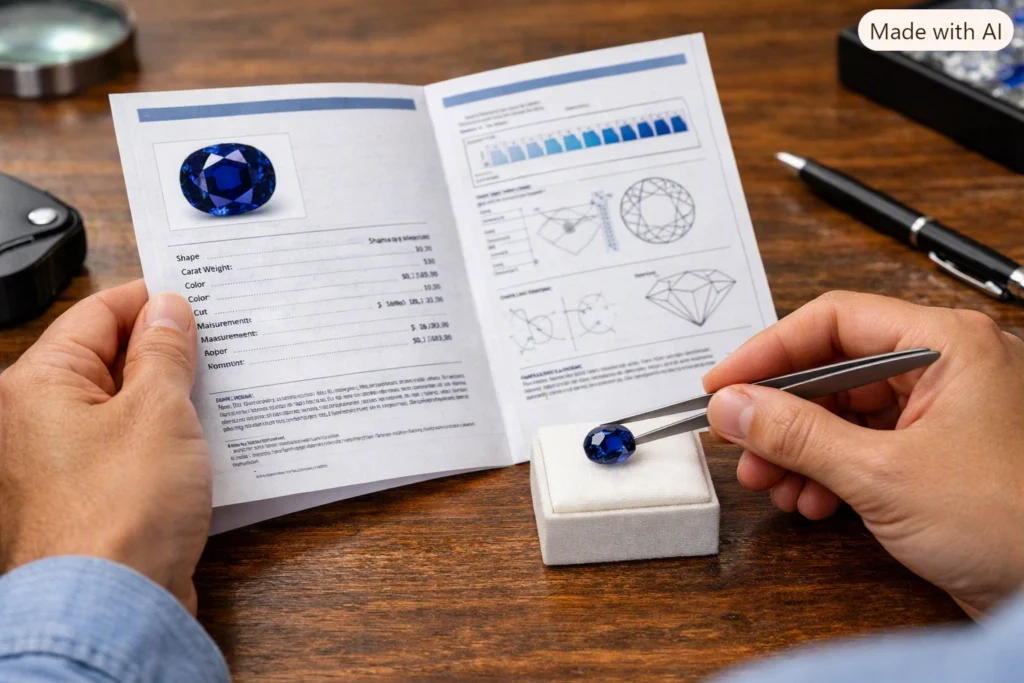
Indeed, an independent report from a respected laboratory ranks as the most valuable document a buyer can hold. Trained gemologists use tools that most jewelry stores never stock, such as Raman spectrometers and UV-Vis-NIR equipment. Consequently, they can detect features that are invisible to the naked eye. These reports typically confirm the natural or lab-grown origin and disclose any detectable treatments.
Online Checks for Smart Gemstone Buying Guardrails
A vital part of your smart gemstone buying guardrails involves verifying the report through the issuing lab’s official portal. Because counterfeit certificates occasionally surface, you should never trust a paper or PDF document alone. Reputable institutions such as the Gemological Institute of America (GIA) and SSEF offer instant online verification. This step ensures that the data you see matches the lab’s original findings.
Valuation within Smart Gemstone Buying Guardrails
Furthermore, please note that identification and appraisal serve different purposes. Identification confirms what a stone is and how it was treated. In contrast, an appraisal estimates the monetary value for insurance or resale. Relying on an appraisal for “identification” is a common mistake; therefore, always prioritize the laboratory identification report first. This scientific focus is similar to the grading standards for juice and gemstones.
Handheld Tools in Smart Gemstone Buying Guardrails
In addition, portable “diamond testers” or multi-testers offer a helpful first screen against obvious imitations like glass. However, these devices cannot reliably distinguish a natural ruby from its lab-grown counterpart because both share identical chemical properties. Likewise, a 10x loupe helps you spot visible inclusions, yet it cannot replace full laboratory testing.
Some lab-grown stones intentionally include “natural-looking” inclusions to deceive the eye. Therefore, you should treat handheld tools as aids rather than final proof. This level of critical thinking in modern gemology is necessary to navigate gemstone identification challenges successfully. Always remember that technology can be used to both create fakes and detect them.
Questioning Sellers for Smart Gemstone Buying Guardrails
Generally, most gemstones sold today carry some form of treatment. This fact alone should not alarm you; however, disclosure is non-negotiable. As part of your smart gemstone-buying guardrails, you should ask the seller the following questions:
- Has this stone been heated to enhance its color?
- Does it contain any fracture-filling materials like lead glass or resin?
- Is the color natural, or was it produced through irradiation or dyeing?
- What is the specific country of origin, and is there a lab report to support it?
Above all, you deserve to know how a treatment affects long-term care. For instance, oil-treated emeralds require gentler cleaning than unheated sapphires. To learn more, read our detailed guide on chemical treatments in colored gemstones.
FAQ About Smart Gemstone Buying Guardrails
Can I trust a jeweler’s verbal guarantee?
While many jewelers are honest, a verbal guarantee is not a scientific document. For significant purchases, you should always insist on a written report from an independent, third-party laboratory.
Why do similar stones have such different prices?
Pricing depends on the “rarity” of the combination of the 4Cs. A natural, unheated stone will always command a massive premium over a treated stone of the same color and size.
Are lab-grown gemstones a good investment?
Lab-grown stones are beautiful and durable, but they do not hold their value like rare natural stones. You should buy them for their looks rather than as a financial investment.
What is the best lab for colored gemstones in India?
In India, GIA and IGI are widely recognized. Additionally, the GTL (Gem Testing Laboratory) in Jaipur is highly respected for its expertise in colored stones.
Should I buy a gemstone without seeing it in person?
If you buy online, ensure the seller provides high-resolution videos and a clear return policy. Most importantly, ensure the stone comes with a pre-existing independent lab report.
Disclaimer
This article serves general educational purposes only. Gemology and market standards change over time. The author has no financial affiliation with the labs or jewelry brands mentioned. Always consult with a certified gemologist and verify all documentation before making high-value purchases. Data reflects market standards as of August 2026.