
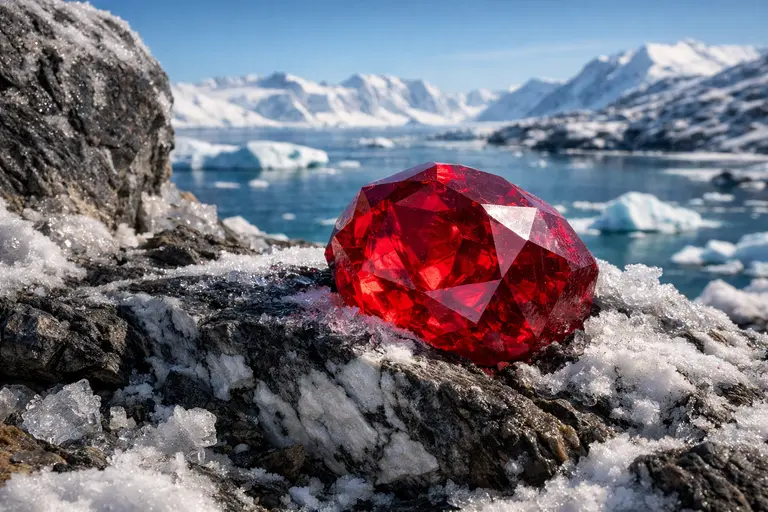
Introduction to Arctic and Antarctic Gems and Metals
The Arctic and Antarctica stand out as two of the last untouched frontiers on Earth. Both regions hold valuable minerals, precious metals, and Arctic and Antarctic gems beneath their icy surfaces. However, the two poles follow very different paths when it comes to resource extraction. Sovereign nations govern the Arctic; therefore, they actively mine its land for diamonds and gold. Antarctica, on the other hand, remains protected under international agreements that ban commercial mining entirely.
Although scientists have confirmed valuable minerals in both regions, ice still hides most of Antarctica’s geology from view. Meanwhile, the Arctic already supports large-scale mining operations that supply global markets. As climate change reshapes both polar regions, retreating ice may soon reveal rocks that researchers have never studied before. Consequently, governments and environmental groups continue to debate how these discoveries should shape future policy. Looking ahead, both regions will play an increasingly important role in global conversations about natural resources. To understand how quality is managed in these harsh environments, you can read our guide on industry sheepdogs in tech and jewelry.
Arctic Riches: Finding Rare Arctic and Antarctic Gems
To begin with, the Arctic stretches across Russia, Canada, the United States, Greenland, and several Nordic nations. Because national governments control these territories, each country regulates mining under its own specific laws. As a result, the Arctic has become one of the world’s leading diamond-producing regions. Specifically, Northern Canada operates several internationally recognized diamond mines in the Northwest Territories. These mines follow the GemFair diamonds supply chain model of transparency to ensure ethical sourcing.
In addition, Greenland has earned international recognition for its rubies and pink sapphires. Mining projects near Fiskenæsset produce jewelry-quality corundum for collectors and jewellers worldwide. Furthermore, Greenland holds unusual gemstones such as tugtupite and lapis lazuli. Consequently, the island continues to fascinate gem enthusiasts everywhere. Beyond Arctic and Antarctic gems, the north holds enormous reserves of precious metals. For instance, Alaska and Canada’s Yukon produce substantial amounts of gold. Russia’s Norilsk region also contains some of the richest platinum-group metal deposits on the planet. For official data on these resources, visit the U.S. Geological Survey (USGS).
Antarctica: Ice-Hidden Arctic and Antarctic Gems
Unlike the Arctic, Antarctica remains almost completely untouched by mining machines. Indeed, ice covers nearly 98 percent of the continent, often reaching several kilometres in thickness. Therefore, scientists can only study a tiny fraction of the exposed rock. Even so, researchers have found strong evidence that Antarctica holds significant mineral potential.
Millions of years ago, Antarctica formed part of the ancient supercontinent Gondwana alongside India and Africa. As a result, many geologists believe Antarctica shares geological traits with these mineral-rich regions. For example, researchers discovered kimberlite in the Prince Charles Mountains back in 2013. Because kimberlite often carries diamonds up from the mantle, this discovery hints at diamond-bearing conditions. This geological link is similar to the history explored in our guide on Sanskrit gem knowledge and ancient trade. For more on treaty restrictions, you can consult the Secretariat of the Antarctic Treaty.
Critical Metals and Arctic and Antarctic Gems
As the world transitions to green energy, the demand for specific metals is skyrocketing. Specifically, platinum, palladium, and rare earth elements are essential for electric vehicles and renewable energy grids. Both polar regions contain these critical materials. In the Arctic, mining companies are already expanding nickel and cobalt operations to meet this demand.
However, in Antarctica, the legal barriers remain absolute. The Madrid Protocol firmly prohibits commercial mining to protect the fragile ecosystem. Therefore, even if massive deposits of lithium or cobalt are confirmed, they will stay in the ground. Consequently, the Arctic will likely bear the brunt of the industrial world’s mineral hunger. This creates a difficult tension between economic growth and environmental stewardship, a theme we also explored in the deep-sea mining benefits and risks analysis.
100-Year Outlook for Arctic and Antarctic Gems
Over the next 100 years, rising temperatures will continue to reduce Arctic sea ice. This change will likely open new shipping routes between Europe and Asia. Consequently, Arctic nations will probably respond by investing more heavily in resource development. At the same time, thawing permafrost will damage existing roads and buildings. Therefore, governments will need to plan carefully for these structural challenges.
Meanwhile, scientists at the British Antarctic Survey closely track the Thwaites Glacier because its retreat could raise global sea levels. Eventually, warmer temperatures may expose more coastal rock. However, treaty protections will likely keep that land off-limits to mining firms. Many people mistakenly believe the mining ban expires in 2048. In reality, that year only marks the earliest chance for a formal treaty review. A broad international agreement would be required to lift the ban, which remains extremely unlikely in the current political climate.
Protecting Ecosystems of Arctic and Antarctic Gems
Ordinary people can make a real difference, even if they never visit the poles. For example, repairing old electronics instead of replacing them reduces the demand for freshly mined metals. Recycling phones helps recover gold and palladium that already exist in the supply chain. This is a practical application of the three business models: ants, spiders, and honeybees, where the “honeybee” transformation adds value to recycled materials.
Similarly, choosing responsibly sourced or lab-grown gemstones eases the pressure on fragile ecosystems. By reducing daily energy use, we also lower the emissions that threaten the polar ice caps. Ultimately, everyday consumers hold real power to protect these remote frontiers through simple, informed choices.
FAQ About Arctic and Antarctic Gems
Are there active diamond mines in the Arctic?
Yes, both Canada and Russia operate major diamond mines within the Arctic Circle. These mines are some of the most productive and technically advanced in the world.
Can I buy a ruby from Antarctica?
No. Commercial mining is illegal in Antarctica. Any rubies found there are used strictly for scientific research and cannot be sold on the open market.
Why is Greenland becoming a gem hub?
As the Greenland ice sheet melts, it reveals ancient rock formations that were previously inaccessible. This has led to the discovery of high-quality rubies and pink sapphires.
What is the 2048 Antarctic Treaty review?
The year 2048 is the first time member nations can propose changes to the mining ban. However, any change requires a unanimous vote, which is highly unlikely given the global focus on conservation.
Are polar minerals more expensive to mine?
Yes, the extreme cold and remote locations make mining significantly more expensive. Therefore, only high-value materials like gold, diamonds, and platinum are currently profitable to extract.
Disclaimer
This article serves educational purposes only. The author has no financial affiliation with the mining companies or government agencies mentioned. Scientific data and climate projections are based on information available as of 2026. Readers should consult official government reports before making investment or policy decisions.