
Introduction to What Food Businesses Can Learn From King’s Joy
Most people think luxury dining inevitably requires expensive meat and imported seafood, but what food businesses can learn from King’s Joy in Beijing is that local, plant-based ingredients can define a global brand. Today, this vegetarian restaurant holds three Michelin stars and a Michelin Green Star, proving that sustainability and culinary excellence can coexist. By examining their success, entrepreneurs can discover new ways to elevate simple vegetables into a premium dining experience.
Moreover, it has attracted serious attention from Harvard Business School and hospitality professionals worldwide. Specifically, what food businesses can learn from King’s Joy is that authenticity and local sourcing can outperform imported luxury. Whether you run a small café, a family restaurant, or a food production business, these lessons are essential to understand. By studying their model, you can identify how to elevate simple ingredients into a premium brand. For more on high-value asset management, you can read our guide on industry sheepdogs in tech and jewelry.
Culinary Lessons Food Businesses Can Learn From King’s Joy
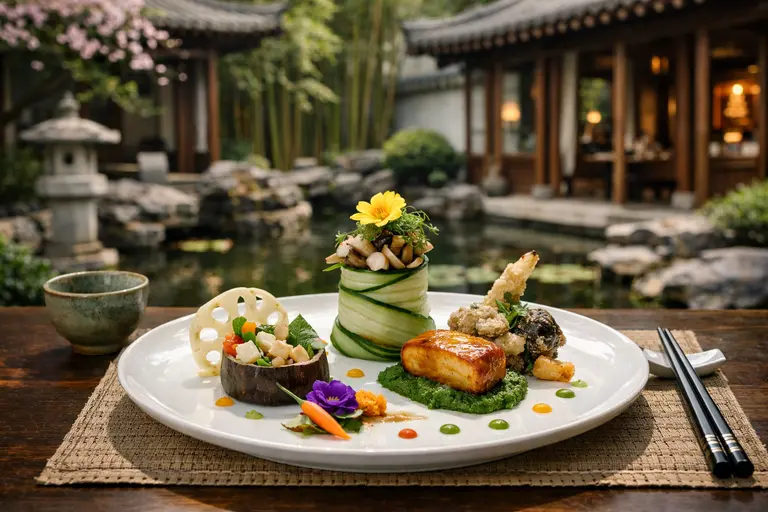
For centuries, people in China associated vegetarian food with modest temple meals and simple living. King’s Joy actively challenged that idea. Instead of treating vegetables as poor substitutes for meat, the chefs placed them at the very heart of every dish. They worked with seasonal ingredients, focused on natural flavors, and paid careful attention to artistic preparation.
As a result, guests began experiencing plant-based food in an entirely new way. Furthermore, the restaurant avoided imitation meat products altogether. Rather than recreating meat textures, the chefs highlighted what each mushroom and grain does best on its own. Consequently, King’s Joy demonstrated to the world that vegetarian cuisine can achieve the highest standards of fine dining without relying on animal products. This mindset is similar to building India’s global brands, where we must celebrate our unique identity rather than copying Western models. You can see their accolades on the official Michelin Guide — King’s Joy page.
Experience Design: What Food Businesses Can Learn From King’s Joy
King’s Joy does not just serve meals; it creates an experience that guests remember for years. Located directly opposite the Lama Temple in Beijing’s historic district, the restaurant blends contemporary design with traditional aesthetics. During the day, guests enjoy views of a peaceful courtyard, while evening lighting creates a calming atmosphere.
This approach teaches an important lesson: customers do not judge a restaurant by its menu alone. Instead, they remember how the visit made them feel. Ambience, service, storytelling, and presentation all shape customer loyalty. Therefore, businesses that design the full customer journey tend to build stronger, more resilient audiences. This sensory focus is also seen in scent marketing in luxury jewelry and watch stores, where every detail influences the buyer’s mood.
Growth Strategy Lessons From King’s Joy for Food Businesses
In 2019, Harvard Business School published a case study called “David Yin’s Vegetarian Mission.” The study explored a question that many growing businesses eventually face: should you expand quickly, or protect quality by growing slowly? Expanding rapidly could spread the restaurant’s sustainability values to a larger audience; however, it also risks weakening quality control.
The Harvard case examined how King’s Joy navigated this tension. In addition, researchers examined the restaurant’s sourcing practices and operational decisions. As a result, the case became a useful reference for anyone studying how a business can balance purpose and profit. For an academic context, you can explore the Harvard Business School Case Collection. This type of long-term planning is exactly what we discuss in the world’s oldest company lessons for Keralam.
Sustainability: What Food Businesses Can Learn From King’s Joy
Sustainability is no longer simply an environmental concern; increasingly, it is a massive commercial opportunity. Consumers today want to know where their food comes from and how businesses treat the land. Restaurants that communicate this transparently tend to earn greater trust. King’s Joy made sustainability a central part of its identity, and that identity now gives it a genuine edge in a competitive market.
Similarly, food businesses of all sizes can use responsible sourcing and clear storytelling to stand out. You do not need to be a Michelin-starred restaurant to make sustainability part of your brand. By adopting the pay what you can restaurants in India model, some owners even use social responsibility to drive their business. Therefore, ethical choices often lead to better financial outcomes.
India and Keralam: What Food Businesses Can Learn From King’s Joy
Keralam’s food and beverage sector already holds many of the ingredients for a King’s Joy-style success story. The state has rich agricultural diversity, a celebrated heritage, and global recognition for its spices. Chefs can place ingredients such as jackfruit, tapioca, yam, and moringa at the center of modern menus.
In addition, Keralam’s architectural heritage offers something few other regions can match. Nalukettu homes and waterfront locations can provide the kind of memorable setting that turns a meal into a spiritual experience. Direct partnerships with local farmers further strengthen the farm-to-table narrative. Above all, authenticity matters. Rather than copying international concepts, Keralam’s food businesses should celebrate what is genuinely theirs. In the long run, this creates a more durable competitive advantage.
FAQ About What Food Businesses Can Learn From King’s Joy
What is the most important lesson from King’s Joy?
The most important lesson is that local, seasonal ingredients can be elevated to luxury status through skill and storytelling. You do not need expensive imports to create a world-class brand.
How does sustainability affect a restaurant’s profit?
Sustainability builds customer trust and loyalty. While initial sourcing might cost more, the long-term retention of “green-conscious” diners often leads to higher revenue and a stronger brand reputation.
Can a small café apply these lessons?
Yes. A small café can focus on one signature local ingredient, tell its story well, and maintain a high standard of service to create a “micro-luxury” experience for its customers.
Why did they choose a location near a temple?
The location reinforces the brand’s connection to tradition and tranquility. For any business, choosing a location that matches your brand’s “vibe” is a critical strategic decision.
Is it possible to be a luxury brand while being vegetarian?
Absolutely. King’s Joy proves that luxury is defined by the quality of execution, the beauty of the environment, and the depth of the story, not by the presence of meat or rare delicacies.
Disclaimer
This article is for educational and informational purposes only. The author has no financial affiliation with King’s Joy or any mentioned restaurants. Business outcomes vary based on location and management. Readers should conduct independent research before making operational or investment decisions.