
Introduction to Pay What You Can Restaurants in India
Can a restaurant truly survive without fixed menu prices? Most people assume it cannot. After all, rent, high-quality ingredients, staff wages, and utilities add up exceptionally fast. However, a growing number of food businesses around the world are proving that alternative models can actually work. One widely discussed example is Post Modern Times in Minneapolis, formerly known as Modern Times Cafe. Instead of fixed prices, this restaurant invites customers to contribute whatever they can afford. Interestingly, the experiment has attracted massive community support across the city. As a result, many food entrepreneurs are now asking if pay what you can restaurants in India could achieve similar success.
Interestingly, the experiment has attracted massive community support across the city. As a result, many food entrepreneurs are now asking if pay what you can restaurants in India could achieve similar success. The answer is a definitive yes, but success depends heavily on community trust, specific local conditions, and meticulous financial planning. Therefore, we must examine how these models operate before attempting to scale them in the Indian context.
What Minneapolis Teaches Indian Food Entrepreneurs
Post Modern Times in Minneapolis operates a pay-what-you-can system that completely disregards traditional menu pricing. Instead of displaying fixed charges, the restaurant encourages guests to contribute an amount that feels right to their personal budget. Consequently, some customers pay less than the actual cost of their meal. Others, however, voluntarily pay significantly more to subsidize their neighbors.
As a result, generous contributions from wealthier patrons help cover the meals for those with limited resources. Furthermore, the restaurant draws support from private donations, government grants, and a simplified operating model. Although the initiative began as a social statement, it gradually evolved into a long-term community project. Observers noted a growing interest and broader public participation over time. You can read more about this specific model at the Star Tribune. This international example demonstrates that trust-based commerce is viable when a clear social mission is in place.
Similar Models Already Exist in Keralam
Many people mistakenly assume that pay-what-you-can dining is purely a Western idea. In reality, Keralam has explored related concepts for many years with great success. For example, Janakeeya Bhakshana Sala in Alappuzha allows visitors to contribute based on their individual ability. Likewise, Capuchin Mess in Kochi operates on a voluntary contribution system that protects every guest’s dignity. Together, these examples show that flexible food models have deep roots in Keralam.
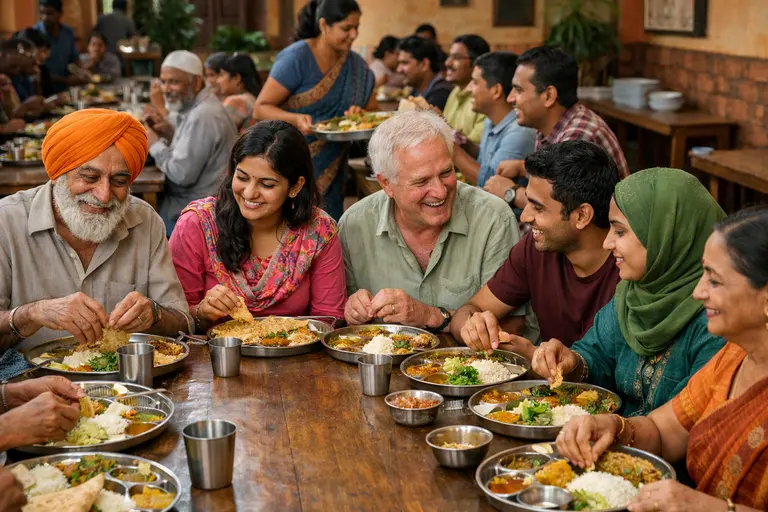
While these initiatives differ in their exact structure, they share a vital common purpose. Namely, they ensure that nobody goes hungry because of temporary financial hardship. Moreover, these projects often become gathering places where people from different economic backgrounds eat side by side. Consequently, they strengthen social bonds while meeting a basic human need. You can read more about Kerala’s community food culture at NDTV Food. To explore other local opportunities, check out the article on Community-Based Enterprises in Keralam.
Why the Social Dining Model Thrives in Keralam
Several factors help explain why community-supported food initiatives often thrive in Keralam. First, Keralam has a long and proud tradition of charitable giving. Religious institutions, social organizations, businesses, and ordinary citizens regularly support food-related causes. Therefore, community kitchens here tend to receive assistance from multiple sources simultaneously.
Second, many charitable food initiatives attract sponsorships tied to personal milestones like birthdays or anniversaries. As a result, these celebrations provide a steady additional source of funding. Third, many organizations actively reduce costs through volunteer participation and community partnerships. This is similar to how building India’s global brands requires a collective effort from local artisans. Most importantly, successful initiatives build genuine trust over time. When people see clearly how funds are used, they become far more willing to contribute generously.
Strategic Lessons for Aspiring Food Entrepreneurs
Food entrepreneurs often focus exclusively on menu design and social media marketing. While those elements remain important, pay what you can restaurants in India offer additional lessons that most business schools rarely teach. First, entrepreneurs should focus on building relationships rather than just processing cold transactions. When customers feel connected to a mission, they often become loyal, long-term supporters. As a result, customer retention tends to improve naturally.
Second, successful social food ventures rarely depend on meal sales alone. Instead, they actively combine customer contributions, sponsorships, and fundraising events. Consequently, they build multiple income streams that protect them during slow economic periods. This approach is highly effective for those starting a restaurant with limited capital. Finally, trust remains the most valuable business asset. If people genuinely believe in your mission, they are more likely to support you even during difficult times.
Implementing Hybrid Models in Small Cafes
Can a small, private restaurant use the same approach without going bankrupt? The answer is yes, although a fully open donation model may not suit every commercial location. For example, a small restaurant could maintain standard menu prices while separately allowing customers to sponsor “suspended” meals for people in need. Similarly, owners could introduce a “pay it forward” system that lets customers pre-purchase meals for future visitors who cannot afford them.
Meanwhile, neighborhood cafes could organize community meal days sponsored by local businesses or charitable groups. In this way, they could actively support social goals without abandoning traditional pricing entirely. Therefore, entrepreneurs should view the concept as a flexible framework rather than a rigid formula. By adopting these affordable food business ideas in India, local owners can stay resilient against market fluctuations while helping their community.
FAQ About Pay What You Can Restaurants in India
How do pay-what-you-can restaurants manage their inventory?
They typically simplify their menus and use locally sourced ingredients to reduce waste. By keeping the menu focused, they can predict demand more accurately and lower their overhead costs.
Are pay-what-you-can restaurants in India legally recognized?
Yes, they usually register as non-profits, trusts, or social enterprises. However, they must still follow the same food safety and licensing regulations as traditional commercial restaurants.
Do people ever take unfair advantage of the system?
While a small minority might, the vast majority of customers respect the mission. In most cases, the generous “over-payments” from supportive customers more than compensate for those who pay less.
Can this model work in big cities like Mumbai or Delhi?
Certainly. In high-traffic urban areas, the potential for high-volume sponsorships and corporate partnerships is even greater. However, the higher rent in these cities requires a more robust fundraising strategy.
What is the first step to starting such a restaurant?
The first step is securing a community partner or a core group of volunteers. Because this model relies on trust, you need a strong foundational team to advocate for the mission.
Disclaimer
This article is for informational purposes only. The author has no financial affiliation with the restaurants mentioned. Business outcomes vary based on location and management. Readers should consult with financial and legal professionals before launching a social enterprise