Introduction to Master Perfumers and Gem Graders
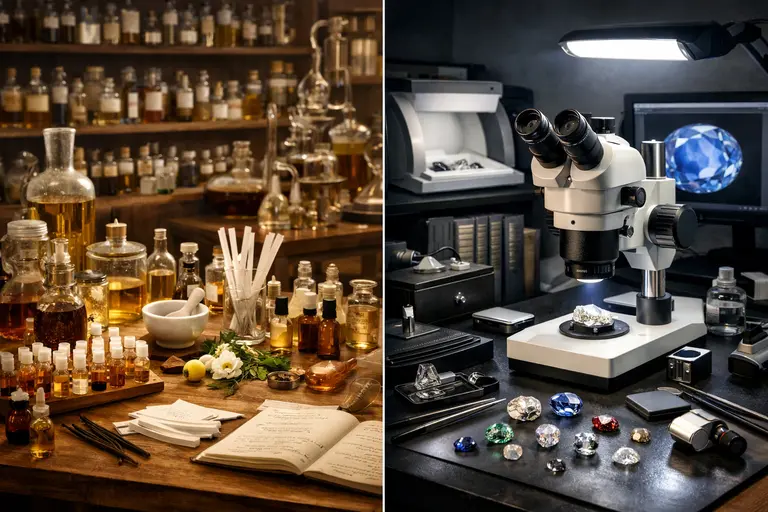
Luxury products often start with a combination of nature, science, and years of human skill. However, the roles of master perfumers and gem graders differ significantly despite their shared focus on high-value items. While a perfumer builds something entirely new from raw ingredients, a professional gem grader evaluates diamonds or gemstones that nature has already produced over millions of years.
Both professions demand years of training, sharp observation skills, and deep scientific knowledge. Nevertheless, their goals point in opposite directions. While a perfumer creates fragrances that stir emotions and memories, a gem expert measures quality and confirms authenticity using recognized international standards. Consequently, the work of master perfumers and gem graders serves different but equally important roles. Understanding what each specialist does helps consumers make smarter purchasing decisions and appreciate the true value of their items.
The Role of Master Perfumers in Fragrance Creation
First, consider the daily responsibilities of a master perfumer. These experts combine chemistry, creativity, and lived experience to design signature scents. Unlike gem graders, perfumers do not assess a finished natural product. Instead, they build fragrances from carefully chosen ingredients—flowers, woods, fruits, and laboratory-made aroma compounds.
Because of this creative process, perfumers must understand both natural materials and synthetic ingredients at a molecular level. Training is exceptionally rigorous. Specifically, students typically spend five to seven years studying fragrance formulation and chemistry. Afterward, they continue their education inside major fragrance houses or supplier training programs. During this period, they must memorize between 1,500 and 3,000 unique aroma materials. Over time, only a small number of professionals reach the level of “master” after decades of successful work. On a typical day, a master perfumer develops complex formulas, tests how a fragrance performs on skin, and adjusts scents for global markets. For those interested in the educational path, the Grasse Institute of Perfumery offers world-renowned training.
How Gem Graders Apply Scientific Standards
Next, consider the specialized work of a professional diamond grader. While perfumers create products, diamond graders evaluate them using scientific consistency. Specifically, they assess diamonds using internationally recognized methods based on the Four Cs: cut, color, clarity, and carat weight. This process differs significantly from the silver supply chain from mine to jewelry, where the focus is on logistics rather than individual stone grading.
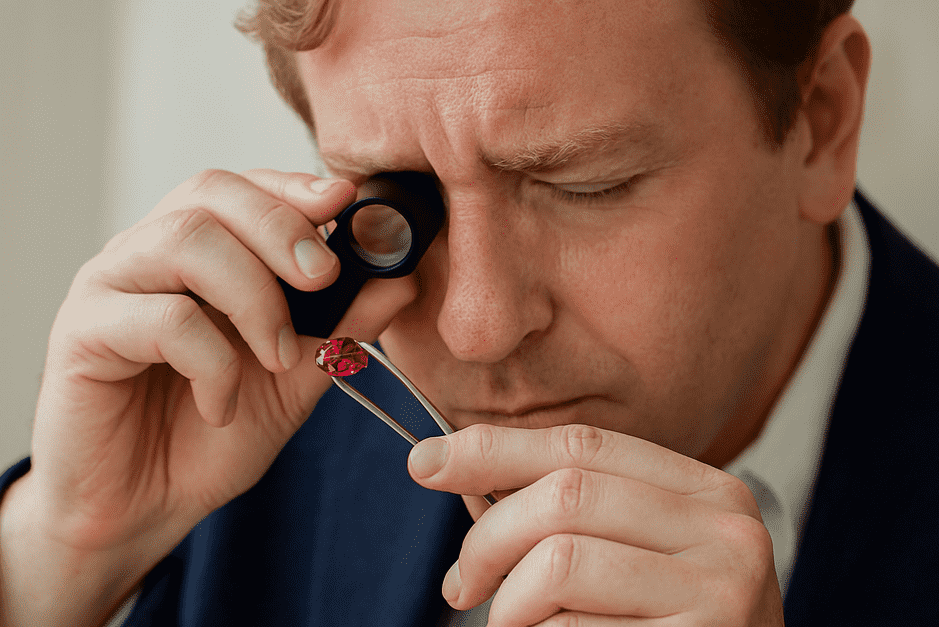
Many grading laboratories follow systems influenced by GIA (Gemological Institute of America) standards. Therefore, a professional grader must learn detailed procedures and apply them with exceptional accuracy every single day. Graders need excellent color perception, patience, and a strong eye for minute detail. Each working day, they examine stones under magnification and identify internal features called inclusions. In some cases, they use advanced laboratory instruments to confirm whether a diamond is natural, synthetic, or treated. Consequently, consumers receive a trustworthy picture of what they are buying.
Coloured Gem Graders and Sourcing Knowledge
Meanwhile, coloured gemstone grading presents an entirely different challenge. Unlike diamonds, coloured gemstones vary enormously in rarity, treatment history, and geographic origin. Because of this diversity, these specialists require extensive knowledge of geology and gemology combined.
An experienced coloured stone specialist evaluates rubies, sapphires, and emeralds by studying tone, saturation, and transparency. In addition, they assess factors that directly influence market demand. Advanced laboratories sometimes determine a probable geographic origin based on chemical analysis. Daily, specialists use microscopes and analytical instruments to separate natural gems from synthetic alternatives. This vigilance makes them the “sheepdogs” of the luxury world, much like the industry sheepdogs in tech and jewelry who protect trade integrity. Consequently, consumers receive reliable information about a gemstone’s authenticity before spending their money.
Pearl Grading: Distinct from Master Perfumers’ Work
At the same time, pearl grading follows a completely different path from diamond evaluation. Because pearls are organic gems produced by living organisms, graders evaluate a distinct set of characteristics: lustre, surface quality, shape, and nacre thickness. Lustre is widely regarded as the most important factor because it directly shapes a pearl’s visual beauty.
Professional pearl graders study Akoya, South Sea, and freshwater pearls. They measure each pearl carefully and examine the quality of the nacre to assess durability. This specialized niche requires a different mindset than the Jean-Baptiste Tavernier gem trade methods, which historically focused on large, rare diamonds. As a result of this careful grading, consumers gain confidence that their pearls will retain their appearance over the years.
Common Ground Between Master Perfumers and Gem Graders
At first glance, fragrance chemistry and gemology appear completely unrelated. Nevertheless, the two fields share some fascinating common ground. For example, both industries rely on advanced analytical technology. Scientists use Gas Chromatography-Mass Spectrometry (GC-MS) to identify fragrance ingredients. Similarly, gemological laboratories use related analytical methods to investigate treatments and geographic origins.
Another interesting connection involves amber. Amber originated as tree resin millions of years ago. Interestingly, it contains terpenoid compounds that belong to the same chemical families found in many natural fragrance materials. Furthermore, scent can occasionally provide a useful clue in gem identification. Genuine amber, for instance, may release a mild resinous aroma when gently warmed. However, this test alone cannot confirm authenticity. Therefore, chemistry creates a meaningful and often overlooked bridge between the work of master perfumers and gem graders.
Training for Master Perfumers and Gem Graders
If you want to enter either field, several well-respected institutions offer professional education. Future perfumers often study at ISIPCA in France. Likewise, major fragrance companies operate highly selective internal training programs for emerging talent. Meanwhile, aspiring gemologists frequently pursue qualifications through GIA, Gem-A, or the Gübelin Academy. These programs cover diamond grading and coloured stone evaluation in depth. Although the educational paths differ significantly, both professions demand years of structured study and a lifelong commitment to continuous learning.
Why Consumers Need Master Perfumers and Gem Graders
Ultimately, consumers gain the most from the expertise of these specialists. A highly skilled perfumer helps ensure that fragrances remain safe, stable, and consistent across every bottle. In addition, they follow safety standards to reduce risks linked to specific ingredients. Meanwhile, diamond graders verify the characteristics that justify a high price. Coloured stone specialists confirm treatments, and pearl graders assess durability. Professional grading also promotes fair pricing. Consequently, buyers can compare products using independent standards rather than relying on marketing claims alone. For families purchasing luxury items, the expertise of master perfumers and gem graders provides real confidence.
FAQ About Master Perfumers and Gem Graders
What is the main difference in the output of these experts?
A master perfumer creates an original product (a scent), whereas a gem grader analyzes and verifies an existing natural product (a gemstone).
How long does it take to become a master perfumer?
It typically takes over 10 to 15 years of study and professional practice to earn the title of master perfumer within the fragrance industry.
Do gem graders use the same tools as perfumers?
While they both use analytical spectrometers, gem graders rely more on microscopes and refractometers, while perfumers rely on their sense of smell and chromatography.
Is there a connection between amber in jewelry and perfume?
Yes. Amber is a gemstone, but its chemical components (terpenoids) are also used to create the “amber” scent profile in many fine fragrances.
Why should I ask for a grading report before buying a gem?
A grading report provides independent verification of a stone’s quality. This prevents you from overpaying for a gem that might be treated or synthetic.
Disclaimer
This article is for educational and informational purposes only. The author has no financial affiliation with the companies mentioned. Grading standards and fragrance regulations may vary by country and market. Consumers should consult qualified professionals before making significant luxury purchases.