Introduction
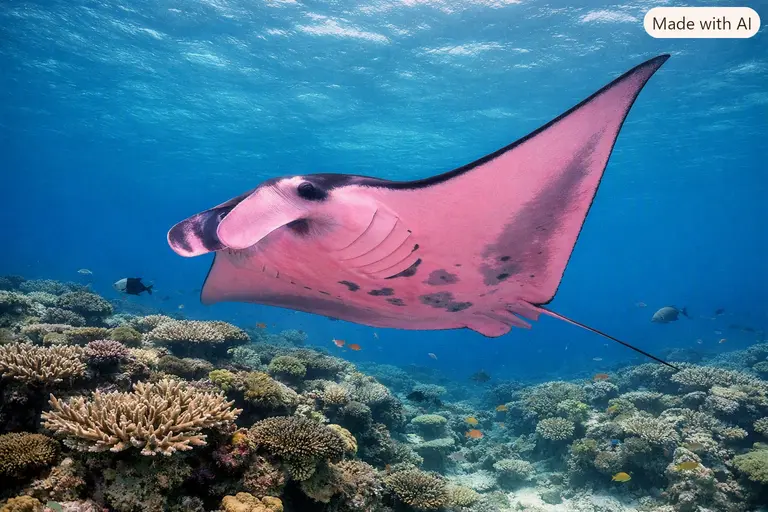
Imagine snorkeling near Australia’s Great Barrier Reef and suddenly spotting a massive pink manta ray with a bright belly. That unique animal is Inspector Clouseau, the world’s only known specimen of its kind. Divers first recorded him near Lady Elliot Island in 2015. Since then, his vibrant color has fascinated photographers and marine researchers alike.
Because his pink underside resembles a polished pink gemstone, and because his name links him to the famous film The Pink Panther, his story ties together marine biology, gemology, and cinema. Therefore, this article explores who he is, why he looks pink, and which gemstone comes closest to matching his extraordinary color. By examining the Inspector Clouseau Pink Manta Ray through a scientific and aesthetic lens, we can appreciate one of nature’s most colorful mysteries.
Meet the Inspector Clouseau Pink Manta Ray
Researchers first identified the Inspector Clouseau Pink Manta Ray near Lady Elliot Island in 2015, and Project Manta has tracked his sightings ever since. He belongs to the reef manta ray species, known scientifically as Mobula alfredi, which commonly lives in tropical Australian waters. Unlike typical reef mantas, which show a standard black-and-white pattern, he carries a dark upper body alongside a bright, bubblegum-pink underside.
As a result, researchers can identify him instantly, even from a great distance. Additionally, his case highlights why photographic identification matters in marine research. This is because every manta ray has a distinctive belly pattern—much like a human fingerprint—that lets scientists track individuals without capturing them. Consequently, the Inspector Clouseau Pink Manta Ray has become a global celebrity for conservationists. Readers can learn more through the Lady Elliot Island Project Manta program.
Why is the Inspector Clouseau Pink Manta Ray Pink?
Initially, some skeptics thought his color might be a trick of the light or a camera filter. However, scientists have confirmed that his coloration is entirely genuine. In 2016, Project Manta researcher Amelia Armstrong collected a small skin biopsy from his underside to investigate the cause. Consequently, the team found tissue that matched normally colored reef manta rays, with no signs of infection or skin disease behind his pigmentation.
So, what causes this hue? Researchers found no genetic difference at the population level between him and other mantas in his group. Furthermore, his persistent coloring made a diet-based cause (as in how flamingos turn pink from eating shrimp) unlikely. Therefore, most experts suggest an unusual shift in pigment expression, possibly linked to a genetic mutation, best explains his appearance. Specifically, some researchers have proposed “erythrism” as a likely cause. This condition causes an overproduction of red pigments. Even so, nobody has confirmed it 100%, since good science separates a promising hypothesis from a proven conclusion.
Which Pink Gemstone Matches the Inspector Clouseau Pink Manta Ray?
Comparing gemstones to the Inspector Clouseau Pink Manta Ray works best when focusing on visible saturation rather than mineral chemistry. In the world of gemstone identification, certain minerals stand out for their vibrant rosy hues.
- Vivid Pink Tourmaline: This likely offers the closest match. Tourmaline naturally forms in a wide range of saturated pink and red shades. Because of that range, a “rubellite” tourmaline more closely echoes his coloration than a pale gem.
- Pink Sapphire: This also provides a strong comparison. Fine examples of sapphire display deeply saturated, hot-pink tones that mirror the intensity seen on the manta’s belly.
- Rose Quartz: On the other hand, rose quartz offers a softer comparison. It usually shows a delicate, pastel pink rather than the intense, glowing hue of the ray.
- Morganite and Rhodonite: These add gentle parallels, but they often lean toward peach or opaque pink-red, which lacks the “neon” quality of the Inspector Clouseau Pink Manta Ray.
Overall, vivid pink tourmaline remains the strongest visual match for this underwater wonder. For a deeper look at these minerals, explore the GIA Tourmaline Guide.
The Pink Panther and Fictional Diamonds
Interestingly, the name of Inspector Clouseau Pink Manta Ray comes directly from The Pink Panther, and the connection runs deeper than the name alone. The original 1963 film centers on a valuable fictional pink diamond called the “Pink Panther”. According to the movie’s lore, the diamond contained a flaw that looked like a leaping panther.
Meanwhile, the animated panther created for the film’s opening sequence became so beloved that it grew into its own lasting cultural icon. As a result, this story brings together three expressions of one color: a real pink manta ray, a fictional pink diamond, and a famous animated character. Because the ray shares his name with the film’s bumbling detective, an unusual sea creature unexpectedly became part of a larger cultural conversation about rare pink treasures.
Where Nature, Gemology, and Cinema Meet
This connection shows how a single color can link entirely different worlds. In marine biology, the Inspector Clouseau Pink Manta Ray represents a rare pigmentation pattern that challenges our understanding of species’ norms. In gemology, pink tourmaline and pink sapphire show how Earth’s geology and trace minerals produce brilliant color over millions of years.
Meanwhile, cinema transformed a fictional pink gemstone into a lasting symbol of luxury and mystery. Even so, these similarities stay visual and cultural rather than scientific. This is because the biological processes behind a manta’s pigment differ completely from the geological processes that shape a gemstone. Nevertheless, that difference makes the comparison more compelling. It shows that nature and storytelling can each produce something remarkable in their own way.
Is the Inspector Clouseau Pink Manta Ray Still Around?
Lady Elliot Island’s current Project Manta records still recognize him as the world’s only known pink manta ray. Therefore, the available evidence suggests he remains part of the region’s population. However, scientists do not track his exact location continuously. Instead, researchers rely on documented photographs and reported sightings from divers.
While some manta rays wear satellite tags, not every individual receives one. Consequently, sightings of the Inspector Clouseau Pink Manta Ray stay uncommon, even though he remains officially recognized. Notably, most confirmed sightings occurred between 2015 and early 2020. No widely reported sighting has surfaced in the last few months, so his current whereabouts remain a mystery. Nonetheless, every confirmed sighting adds valuable information to ongoing reef research.
FAQ: Understanding the Inspector Clouseau Pink Manta Ray
Is Inspector Clouseau the only pink manta ray in the world?
Yes, as of 2026, he currently holds the distinction of being the world’s only known pink manta ray, according to Lady Elliot Island’s Project Manta records.
What species is Inspector Clouseau?
He is a reef manta ray, scientifically named Mobula alfredi. This species commonly lives in the tropical waters of Australia and the Indo-Pacific.
Why is the manta ray pink?
Scientists believe an unusual genetic mutation called erythrism causes his color. This mutation leads to an overproduction of red pigments in the skin.
Is pink tourmaline the closest gemstone match?
Most gemologists agree that a highly saturated pink tourmaline or pink sapphire provides the best visual match for his bright, bubblegum-pink belly.
Why is he named Inspector Clouseau?
He is named after the fictional detective from The Pink Panther movies, a nod to both his color and the famous fictional pink diamond in the films.
Can visitors guarantee seeing him at Lady Elliot Island?
No. Because he is a wild animal with a large range, sightings are unpredictable. Divers and snorkelers must be very lucky to encounter him.
Disclaimer
This article uses the Inspector Clouseau Pink Manta Ray, pink gemstones, and The Pink Panther purely as a visual and cultural comparison. The gemstone references describe subjective color similarities only. They do not suggest that the ray’s pigmentation shares any chemical origin with gemstones. Additionally, erythrism remains a proposed explanation rather than a confirmed diagnosis. The author has no financial affiliation with the organizations mentioned.