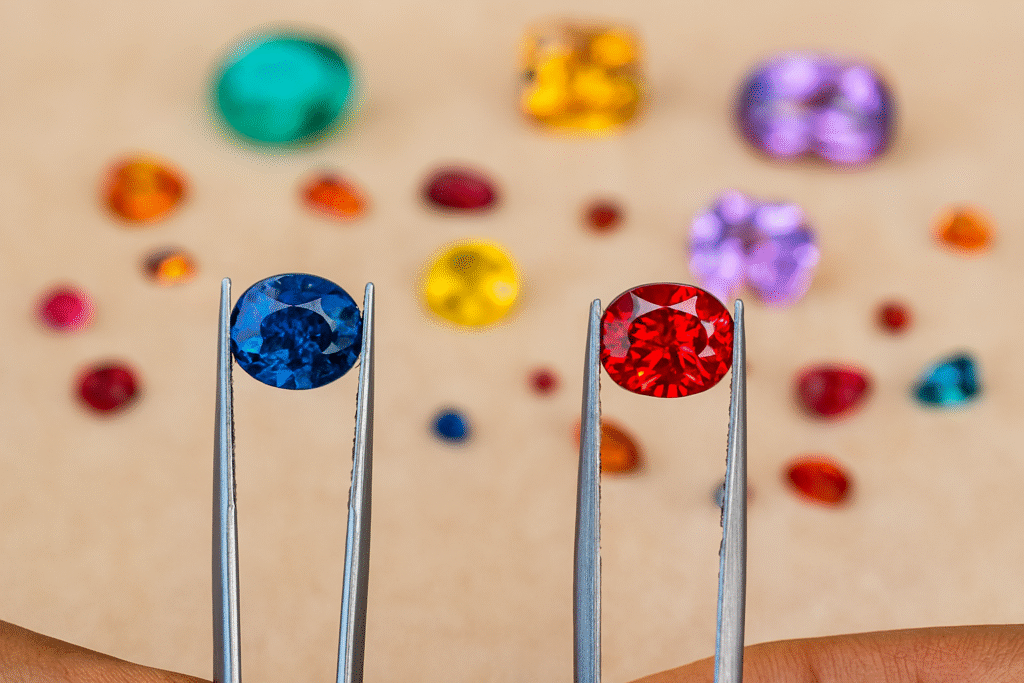
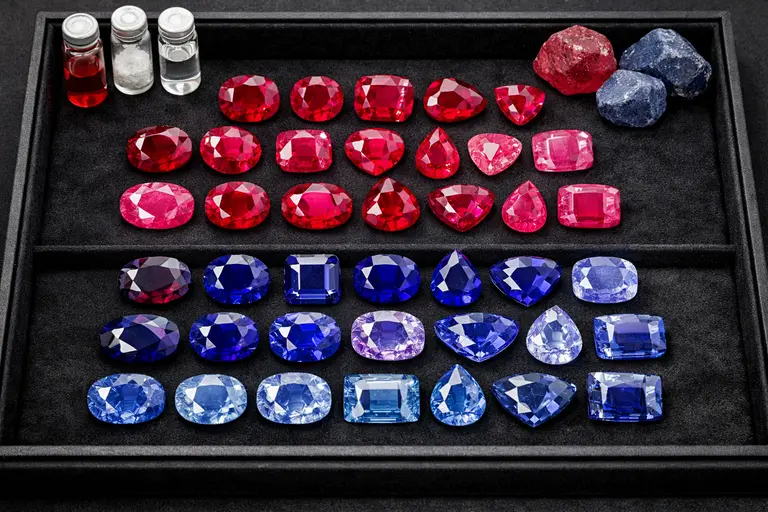
Introduction to Chemical Treatments in Colored Gemstones
Every colored stone you see in a modern jewelry store has a story that begins deep underground. However, the material that miners extract is rarely ready for a retail display case. Many stones arrive at the surface with dull colors, visible cracks, or uneven staining. Therefore, the gem trade uses chemical treatments in colored gemstones to improve how these stones look before they reach the global market.
Understanding what those treatments are, how they work, and what they mean for market value is something every buyer deserves to know. In fact, these enhancements fall into four broad categories: diffusion, bleaching, fracture filling, and dyeing. Each method works differently, and each carries a unique impact on price and physical durability. Consequently, disclosure is not merely a suggestion; it is a basic part of honest selling. This guide explains all four treatments in plain language, so you can ask better questions before you spend your money.
Reasons for Using Chemical Treatments in Colored Gemstones
Rough gemstones often come out of mines looking nothing like the polished jewels you see in high-end shops. A sapphire may carry a muddy brownish tone, or an emerald may be riddled with surface-reaching cracks. Similarly, a ruby may look cloudy because internal fractures scatter light in all directions. As a result, treaters step in with chemical processes that improve color, clarity, or both.
The goal is always commercial in nature. Treaters want stones to look cleaner and brighter to attract more buyers. Sometimes, the trade accepts the treatment as standard practice. For example, minor oiling in emerald has been a common procedure for generations. In other cases, the treatment dramatically reduces value, as happens with heavily lead-glass-filled ruby. Either way, every buyer has the right to know what they are purchasing. To learn how laboratories identify these enhancements, you can read our guide on how gem labs detect gemstone treatments. This background helps you appreciate why a certified laboratory report matters so much when buying any significant stone.
Diffusion: Advanced Chemical Treatments in Colored Gemstones
Diffusion is one of the most technically advanced chemical treatments in colored gemstones. In this process, a stone sits at extremely high temperatures in the presence of selected chemical elements. Under these intense conditions, certain elements move into the crystal structure and change or intensify the stone’s color.
Beryllium: Potent Chemical Treatments in Colored Gemstones
The most well-known example is beryllium diffusion in corundum. Because beryllium atoms are extremely small, they can penetrate deep into the crystal when the stone reaches extreme heat. Consequently, unattractive brownish or orangy rough material can transform into stones with vivid yellow or pinkish-orange hues. In some cases, the new color reaches well below the surface. This is a far more aggressive approach than the traditional methods discussed in our article on Indian designers and raw diamond jewelry, where natural beauty is the focus.
Surface Diffusion: Chemical Treatments in Colored Gemstones
Earlier diffusion work in corundum used larger elements such as titanium and chromium. However, those treatments stayed closer to the surface and were considerably shallower than beryllium diffusion. Therefore, a cutter who repolishes such a stone can accidentally remove part of the treated color layer. This is precisely why gem laboratories examine diffusion evidence so carefully. The Gemological Institute of America (GIA) has published detailed research on beryllium-treated sapphire for those seeking a technical deep dive.
Bleaching: Common Chemical Treatments in Colored Gemstones
Bleaching is a simpler chemical treatment, but it still plays a vital role in several gem categories. In bleaching, treaters apply oxidizing chemicals to reduce stains, dark spots, or unattractive body color. Hydrogen peroxide is one of the chemicals most commonly associated with this specific process.
This treatment appears more often in porous gem materials than in transparent faceted stones. For example, the pearl industry has used bleaching for a long time to lighten body color and create a uniform appearance across matched strands. Bleaching also appears in jadeite, where dark discoloration reduces commercial appeal. Moreover, bleaching is rarely a standalone treatment in jadeite. After treaters chemically remove the unwanted gray tone, they often fill the stone with polymer to improve its stability. Consequently, a bleached jadeite piece is frequently also a polymer-impregnated piece. This multi-step process is a key part of the Chow Tai Fook business model for maintaining consistent stock quality.
Fracture Filling: Chemical Treatments in Colored Gemstones
If a colored stone has surface-reaching cracks, treaters can fill those voids with a substance that makes them far less visible. This is one of the oldest and most widespread clarity-enhancement methods in the entire gem industry.
Oiling Emeralds: Chemical Treatments in Colored Gemstones
In emerald, the classic filler is cedarwood oil. The oil enters the fissure and reduces the contrast between the crack and the surrounding stone. As a result, the crack becomes far less obvious to the naked eye. However, oil is not permanent. Over time, heat or ultrasonic cleaners can cause the oil to dry out. Modern emerald treatment also utilizes resins and synthetic polymers such as Opticon. These are generally more durable than simple oil, although long-term stability still varies. For a detailed breakdown, see our article on emerald oiling and resin filling.
Glass Filling: Extensive Chemical Treatments in Colored Gemstones
In ruby, the most controversial filler is high-lead glass. This treatment can turn near-worthless, heavily fractured rough into material that looks clean and transparent. However, lead-glass-filled ruby occupies a very different market position than standard heated ruby. It typically sells at a steep discount because the glass filler can suffer damage from heat or ordinary household acids. This level of manipulation is why industry sheepdogs in tech and jewelry must remain vigilant to protect consumer trust.
Dyeing: Porous Chemical Treatments in Colored Gemstones
Dyeing is exactly what it sounds like. Treaters expose a porous or fractured stone to a colored chemical solution so that the color soaks into voids or cracks. This treatment is common in chalcedony, quartz, turquoise, and lower-grade jade.
The purpose is to make pale material look richer and more saturated. While this can certainly make the gem look more attractive in a display case, it creates clear disclosure obligations. Furthermore, dyed stones may fade or bleed color when they react to household cleaning products over time. Therefore, sellers must never offer dyed stones as natural-color material. Buyers should never assume that a vivid, saturated color automatically signals rarity. This is a common pitfall we addressed in our guide on blue garlic and Chinese turquoise.
Tech Levels for Chemical Treatments in Colored Gemstones
The gem trade uses both sophisticated and simple chemistry to alter stones. High-tech treatment typically involves precision furnaces and engineered fillers. Beryllium diffusion and lead-glass filling belong firmly in this category. These treatments can produce dramatic visual changes and usually carry a major impact on market value.
By contrast, low-tech treatment uses simpler materials such as cedarwood oil or wax. These are cheaper and easier to apply at the source. In fact, the trade has accepted some low-tech treatments like minor emerald oiling for many decades. Even so, acceptance does not mean unimportance. Disclosure still matters because durability and resale value can change significantly depending on the degree of treatment. The real difference between these categories is not just the chemistry; it is the long-term trust between buyer and seller.
Next Gen Chemical Treatments in Colored Gemstones
The colored stone industry does not stand still. As laboratory science advances, treatment methods will likely become more precise and harder to detect. Researchers are currently exploring advanced fillers engineered to match a gemstone’s refractive index far more precisely than traditional oils.
If a filler matches the stone’s own refractive index closely enough, filled fractures become almost invisible under standard magnification. Another area to watch is surface coating technology. While the trade already sees coatings on topaz, future coatings could become significantly thinner and harder to detect. In theory, a lab could apply a thin chemical layer to change surface color without touching the crystal structure below. This creates obvious disclosure challenges. Consequently, advanced laboratory testing, such as trace-element analysis, will become even more important over time. This technological race is a significant part of the that govern our modern world.
FAQ About Chemical Treatments in Colored Gemstones
Can chemicals permanently change sapphire color?
Yes. In beryllium diffusion, the color change can be deep and permanent. However, not every diffusion treatment penetrates equally; therefore, some stones may lose color if they are significantly recut.
Do chemicals actually hide inclusions?
Indeed, they do. Oils and resins reduce the visibility of fractures by filling them with a material that changes how light travels through the crack. As a result, the stone looks cleaner than it truly is.
Is emerald oiling considered “normal”?
Yes, minor oiling is widely accepted. However, heavy filling with resin lowers the stone’s value compared to a lightly enhanced or naturally clean one.
Is lead-glass-filled ruby the same as heated ruby?
No. Standard heat treatment and lead-glass filling are very different processes. Lead-glass filling is a far more extensive alteration, and the resulting product carries a much lower market value.
Why is disclosure of chemical treatments in colored gemstones required?
Disclosure is required because these treatments affect the rarity, value, and durability of the stone. Ethical sellers provide this information to ensure customers know exactly what they are buying.
Disclaimer
This article serves as a general educational guide for consumers. Treatment practices vary by stone type and market segment. Emerging technologies are still evolving and may not be standard market practice. Always rely on a qualified gemological laboratory report from a trusted jeweler before making significant chemical treatments in colored gemstones related purchases. The author has no financial affiliation with the labs mentioned.