Introduction to the Musgravite Gemstone Guide India
Finding a comprehensive Musgravite gemstone guide India has become essential for discerning collectors as this elusive mineral gains prestige in the global luxury market. Because true musgravite occurs so rarely, most people never encounter a genuine specimen in their entire lifetime. Nevertheless, this remarkable gem attracts immense interest due to its superior scratch resistance and fascinating scientific backstory. Consequently, understanding how to identify and source this rarity is the first step toward a secure investment in 2026. This guide explains exactly what makes musgravite so special and how you can navigate the Indian trade with absolute confidence.
Additionally, musgravite belongs to the taaffeite mineral family, a group that regularly puzzles even the most trained gemologists. At first glance, musgravite appears almost identical to taaffeite, another famously rare gem. As a result, experts typically turn to advanced laboratory equipment rather than routine tools to confirm its identity. If you enjoy learning about unusual minerals, you can also explore our guide to rare gemstones. Meanwhile, curious readers can consult the Gemological Institute of America (GIA) and the Mindat mineral database for further scientific detail. Therefore, this musgravite gemstone guide for India serves as your primary roadmap for navigating the exclusive market.
Defining Traits in the Musgravite Gemstone Guide India
Mineralogists officially classify musgravite as magnesiotaaffeite-6N’3S. This is a rare beryllium-magnesium-aluminium oxide that sometimes contains traces of iron and zinc. Its complex chemical formula, Be(Mg,Fe,Zn)₂Al₆O₁₂, reflects the extremely specific pressure and temperature conditions required for its formation.
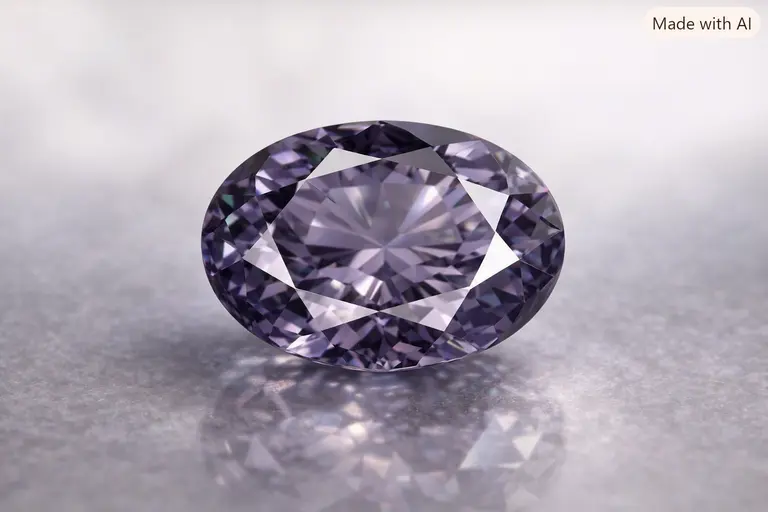
Although collectors chase musgravite mainly for its extreme scarcity, the gem also holds up well in daily wear scenarios. It measures 8 to 8.5 on the Mohs hardness scale; therefore, it resists everyday scratches more effectively than many common stones. Even so, hardness never guarantees absolute toughness. Consequently, a hard knock can still chip or fracture the crystal. Most musgravite crystals show olive green or smoky gray tones. Occasionally, though, the finest specimens reveal delicate purple or violet hues. These specific colors fetch the highest prices in the international auction circuit. This level of material quality is as critical as understanding the silver supply chain from mine to jewelry.
Scientific Facts for the Musgravite Gemstone Guide India
Gemologists frequently mix up musgravite and taaffeite because the two minerals share strikingly similar physical and optical traits. Standard tests like refractive index measurements usually cannot distinguish them with total confidence. Instead, professional laboratories must turn to advanced analytical methods to find the truth.
For instance, Raman spectroscopy and X-ray diffraction reveal subtle structural differences that ordinary gemological tools simply cannot catch. Therefore, these techniques remain the most dependable way to confirm a true musgravite specimen. Notably, researchers who studied rare gem parcels from Tanzania discovered stones originally labeled as taaffeite that later proved to be musgravite. Thus, scientific verification has become an essential safeguard for everyone who buys, sells, or collects these elusive gems in 2026. This level of scrutiny is handled by the same type of industry sheepdogs in tech and jewelry who maintain quality standards globally.
Sourcing through the Musgravite Gemstone Guide India
Scientists first identified musgravite in 1967 in Australia’s Musgrave Ranges. Since then, researchers have identified a few additional specimens; yet musgravite remains extraordinarily rare today. Beyond Australia, small deposits have also turned up in Sri Lanka, Tanzania, Myanmar, and Madagascar. However, gem-quality material from these locations remains extremely limited.
India itself has no confirmed natural musgravite deposits. Consequently, every genuine stone sold here arrives through the import market. Even so, Indian buyers regularly encounter musgravite because Jaipur and Mumbai function as major global centers for gemstone cutting. Because Sri Lanka sits geographically close to India, buyers in the subcontinent can often access certified musgravite through specialized dealers. However, you must verify the stone’s paperwork with extreme care. This focus on provenance is a key component of building India’s global brands in the luxury sector. By ensuring authenticity, you contribute to a transparent gem trading survival guide environment.
Preventing Scams with the Musgravite Gemstone Guide India
Because musgravite commands such high prices, counterfeit and misidentified stones occasionally slip into the retail market. Consequently, buyers should treat unusually cheap listings with real suspicion. For example, some online sellers advertise “natural musgravite” at prices far below genuine market rates. In most cases, these stones turn out to be glass, synthetic material, or another gem entirely mislabeled to deceive the buyer.
Therefore, you should never rely on digital photos or seller descriptions alone. Instead, always request an independent laboratory report from a recognized institution. Reputable labs apply Raman spectroscopy whenever routine gemological tests cannot deliver a conclusive answer. Consequently, a documented stone from a respected laboratory dramatically lowers your risk of financial loss. This defensive mindset is a core lesson for those buying emotional value in India, where the peace of mind of authenticity is the ultimate goal.
Expert Tips in this Musgravite Gemstone Guide India
Smart collectors prioritize scientific proof over size or first impressions. First, you should confirm that a recognized laboratory, such as the GIA or the SSEF Swiss Gemmological Institute, has examined the stone. Next, you must evaluate the color carefully. While grayish tones are more common, fine purple stones generate the strongest demand.
Visual Grading for the Musgravite Gemstone Guide India
After that, you should check clarity and cut quality. Since musgravite is so rare, completely flawless stones rarely appear in the market. Still, a well-cut gem should show good transparency and pleasing brilliance. Minor natural inclusions rarely hurt the value unless they compromise the overall beauty. This appreciation for natural character is why Indian designers choose raw diamond and Polki jewelry.
Carat Sizes in the Musgravite Gemstone Guide India
Finally, weigh carat size against realistic expectations. Most faceted musgravites weigh under one carat; therefore, specimens above two carats are exceptionally valuable. By following this musgravite gemstone guide in India, you can build a collection that represents the pinnacle of mineral rarity. To see how these standards compare to high-end fashion, you can read our guide on Cartier Love Bracelets and Keralam Kadas.
FAQ About the Musgravite Gemstone Guide India
Why is musgravite more expensive than diamond?
It is more expensive because it is statistically much rarer. While thousands of diamonds are mined daily, only a handful of faceted musgravite stones are known to exist worldwide.
Can a local jeweler in India identify musgravite?
Most local jewelers lack the advanced Raman spectroscopy equipment needed to distinguish musgravite from taaffeite. You should always send the stone to a specialized laboratory for verification.
Does musgravite have any astrological significance in India?
Musgravite is too rare to have a traditional place in ancient Vedic astrology. However, many modern collectors value it for its energetic rarity and its association with discovery.
What is the best way to clean my musgravite jewelry?
You should use warm, soapy water and a soft brush. Avoid ultrasonic cleaners and steam, as the intense vibrations could trigger existing internal fractures.
Is musgravite a good long-term investment?
Because of its extreme rarity and growing demand among elite collectors, musgravite has strong potential for value appreciation. However, you should buy it primarily for its unique beauty and scientific interest.
Disclaimer
This article serves educational and informational purposes only. The author has no financial affiliation with any specific gemstone dealers or laboratories. Gemstone markets are volatile; therefore, always verify materials and authenticity through a certified gemologist. Consult with financial professionals before making major asset purchases. Data reflects the situation as of August 2026.