Introduction
For nearly 1,600 years, the Roman Lycurgus Cup has fascinated scholars, archaeologists, and museum visitors alike. The British Museum preserves this fourth-century glass vessel, which remarkably changes colour depending on the direction and source of the light. In 2026, researchers at the University of Sheffield successfully recreated this elusive effect, and The Guardian covered the story extensively, bringing ancient ingenuity back into the public eye. Moreover, this project seamlessly links archaeology, nanotechnology, gemology, and modern industrial design. Most importantly, it teaches everyday shoppers, collectors, and jewellery enthusiasts how tiny, invisible structures shape the appearance of familiar materials. By understanding these ancient secrets, you gain a deeper, more sophisticated perspective on how light creates the vibrant magic we often attribute to high-end gemstones and fine watch dials. This article examines the science behind the cup, explores its implications for the future of jewellery design, and explains why informed consumers must look beyond surface appearances when evaluating the value and authenticity of modern luxury goods.
How the Lycurgus Cup Reveals Optical Secrets
The Lycurgus Cup Science and Dichroic Glass
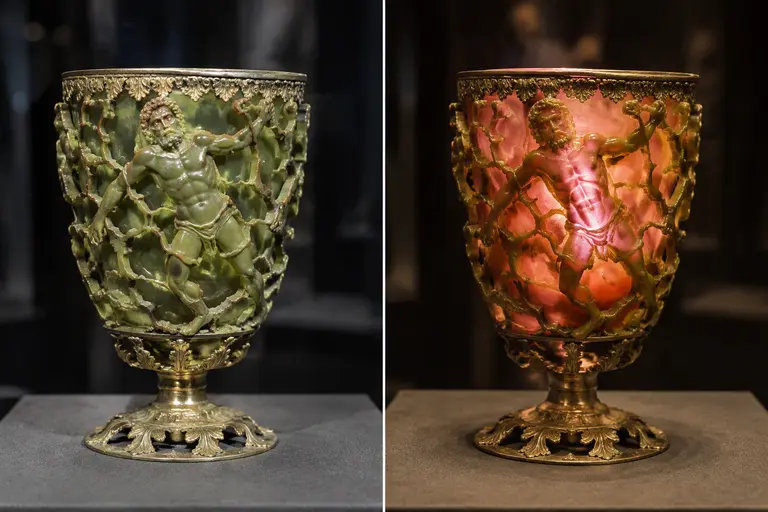
The cup looks jade green in reflected light. However, it glows ruby red when light shines through it. Scientists credit tiny particles of gold and silver scattered throughout the glass. These metallic nanoparticles absorb and scatter specific wavelengths of light. As a result, red tones dominate the transmitted light, while green dominates the reflected light. Therefore, the same cup looks green from one angle and red from another. Remarkably, it needs no electricity to perform this optical trick.
Recreating the Lycurgus Cup Achievement
Dr Lisa Hollands and Professor Russell Hand, from Sheffield’s School of Chemical, Materials, and Biological Engineering, reverse-engineered this ancient glass recipe. However, the task demanded careful control because particle size, distribution, and composition all change the final colour. Next, they partnered with glass sculptor Elliot Walker to build a contemporary sculpture that showcases the dichroic effect. Thus, visitors can watch the glass transform as light moves around it. Furthermore, the Ancient Secrets, Modern Light project will bring this work to the Millennium Gallery in Sheffield from 6 to 15 November 2026.
What Gemologists Learn from Lycurgus Cup Optics
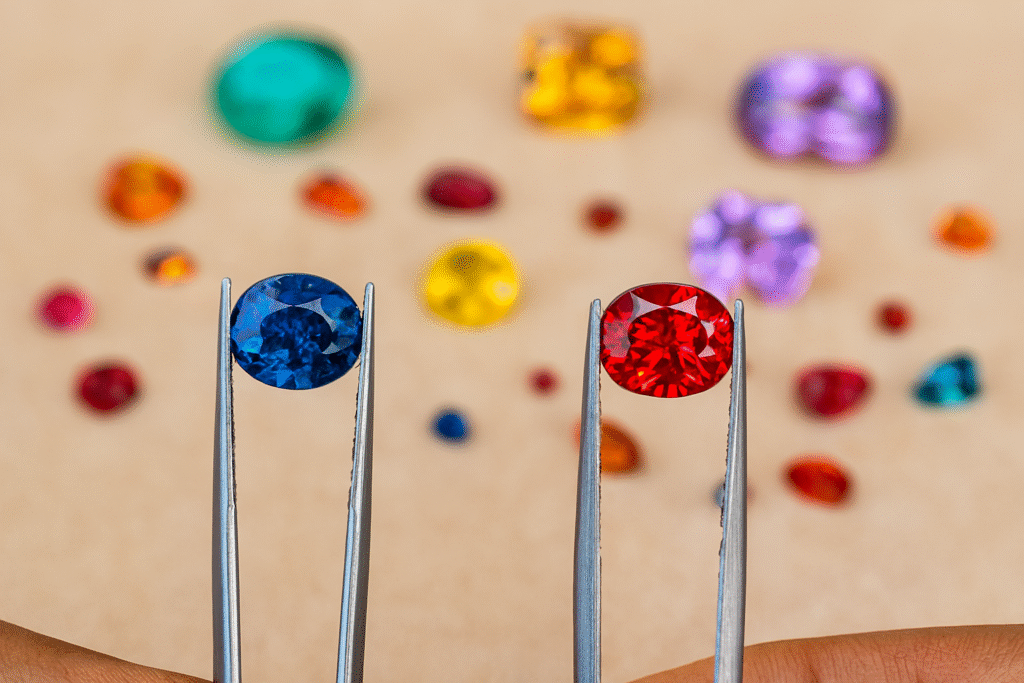
Gemologists study how chemistry, crystal structure, and inclusions shape a stone’s appearance. Likewise, the Lycurgus Cup proves that invisible structures can create striking, permanent colour. For example, chromium gives ruby its signature red, while other trace elements colour different minerals. Similarly, precious opal shows its famous play-of-colour because ordered silica spheres diffract light. Meanwhile, sunstone sparkles through reflective inclusions, and labradorite flashes through internal lamellar structures.
Nevertheless, the Lycurgus Cup is glass, not a natural gemstone. In addition, its colour change differs from the alexandrite effect, where a stone looks different under distinct light sources. Pleochroism also differs because certain crystals show different colours from different viewing directions. Readers can explore more in our gemology articles.
Can the Lycurgus Cup Inspire Natural-Looking Gemstones?
The Sheffield work may inspire new engineered optical materials in glass, ceramics, and some synthetic substances. However, it does not give scientists a recipe for colour-changing sapphire or alexandrite, because each gemstone has its own chemistry and growth requirements. Furthermore, nature builds gemstones over thousands or millions of years. Laboratories may copy some visual properties, but they cannot replicate geological history. Consequently, shoppers should always separate an imitation from a true member of a mineral species.
Lycurgus Cup Applications in Watches and Technology
Designers might use similar glass in jewellery parts, art objects, and watch dials. For instance, a dial could shift colour as a wearer moves from sunlight to indoor lamps. Yet, manufacturers must first test durability, colour stability, production cost, and everyday wear resistance. Similarly, researchers may explore architectural glass and optical filters. Still, these ideas remain possibilities, not proven products. Besides, a colour effect cannot guarantee authenticity, because real security features require controlled manufacturing and independent testing. Curious readers can find more in our watch design stories.
What Everyday Buyers Learn from Lycurgus Cup Secrets
Appearance alone cannot show whether an object is natural, ancient, or valuable. For example, a glass imitation can resemble a high-end gemstone, and a lab-grown stone can share the chemistry and structure of its natural twin. Therefore, buyers should ask what a material is instead of trusting colour or sparkle blindly. Changing the light or viewing angle reveals useful behaviour. However, those simple checks cannot separate natural stones from synthetic, treated, or imitation ones. For valuable purchases, request clear disclosures and a reliable gemological report. Additionally, Indian buyers should check metal purity, BIS hallmarking, and any stated gemstone treatments.
Frequently Asked Questions
Can the Lycurgus Cup help identify fake gemstones?
No. The cup shows an interesting optical effect, but it does not work as a universal gemstone test. Professional examination always matters when authenticity is at stake.
Will this discovery lead to colour-changing luxury watches?
Possibly. The research may inspire fresh watch designs. However, manufacturers must first prove that the material meets practical durability and performance standards.
Does laboratory-created mean fake?
No. A laboratory-created gemstone is a genuine synthetic example of its declared species. Nevertheless, sellers must clearly separate synthetic stones from natural ones.
Can a flashlight prove that an object contains Roman-style nanoparticles?
No. A flashlight may reveal differences between reflected and transmitted colour. However, it cannot establish an object’s true composition, age, or authenticity.
Disclaimer
This article offers educational information about materials science and jewellery design. Potential applications still need further research and commercial validation. The author has no financial affiliation with the brands or organizations mentioned.