Introduction to the GLP-1 drugs and the Indian jewelry market
Recent discussions regarding the link between GLP-1 drugs and the Indian jewelry market trends are gaining momentum as weight-loss medications begin to impact consumer behavior. While a medical treatment might seem unrelated to the luxury trade, a recent Harvard working paper suggests that these drugs can trigger significant social and professional shifts. Specifically, the report indicates that users often experience changes in partnership rates and employment status. Consequently, economists and retailers are now examining whether these global health patterns will eventually transform how people buy and wear gold and gemstones in India. According to the Harvard FAS report, women who start GLP-1 weight-loss medications often experience profound shifts in their social and professional lives.
Specifically, the researchers found that single women who began GLP-1 treatment married or moved in with a partner significantly more often than similar women who had not yet started. Although the study focused on the United States, its findings have pushed retailers to ask whether the GLP-1 drugs and the Indian jewelry market connection could eventually surface in the subcontinent as well. Because India is one of the world’s largest jewelry consumers, even minor shifts in marriage rates or professional status can trigger massive economic changes. Consequently, jewelers are now evaluating how these health trends might shape future consumer behavior. To understand the current landscape, you can explore our latest report on the Indian jewelry market trends.
Clinical Evidence for GLP-1 drugs and the Indian jewelry market
Harvard economist Rebecca Diamond led the study, drawing on a nationally representative panel survey from the University of Southern California. Rather than simply comparing all users against the general population, the researchers narrowed their focus. Specifically, they compared women who had already started treatment with women who wanted the medication but had not yet begun. This approach reduced selection bias and provided much stronger data.
After roughly 18 months, single women who started GLP-1 therapy became up to 28.6 percentage points more likely to marry than the comparison group. Similarly, unemployed women who began treatment were 26.9 percentage points more likely to land a job. Notably, women who were already married or employed before starting treatment reported no significant change in their status. Diamond suggests this happens because employers and partners already judge these women on more than just first impressions. Therefore, weight loss shifts very little for them in a professional or marital sense. Most importantly, the study shows a strong association rather than direct proof of a cause.
Demand Drivers for GLP-1 drugs and the Indian jewelry market
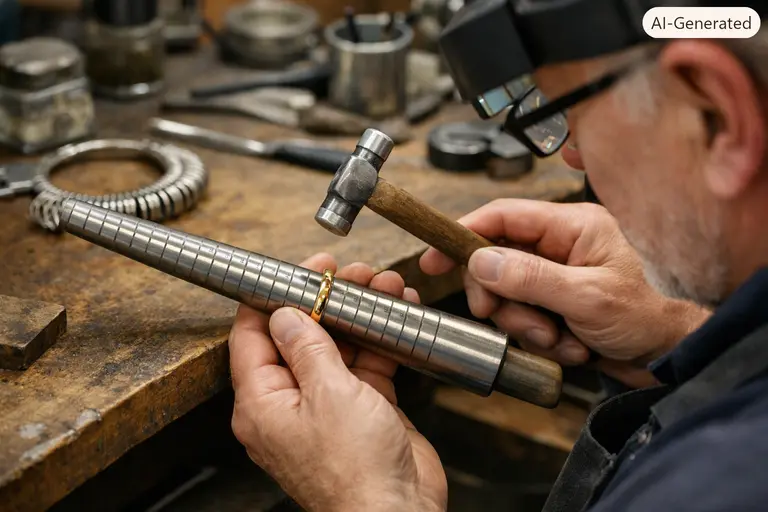
While medical researchers focus on health outcomes, jewelers have noticed a very practical and immediate consequence. Rapid weight loss often slims the fingers and wrists of the wearer. As a result, rings, bangles, and watch bracelets that once fit snugly can suddenly feel loose or even fall off.
Finger Resizing in the GLP-1 drugs and the Indian jewelry market
Media outlets have famously nicknamed this effect “Ozempic finger.” Nevertheless, any significant weight loss, regardless of the method, can trigger the same resizing need. Consequently, jewelers abroad have reported a steady rise in resizing requests for engagement rings and high-end watches. In several cases, repair departments have gained welcome business during otherwise quiet retail seasons. This shift highlights the importance of the Chow Tai Fook business model, which prioritizes service and trust during a customer’s physical transition.
Bridal Demand for GLP-1 drugs and the Indian jewelry market
Furthermore, if future research continues linking medication use to higher partnership rates, the GLP-1 drugs and the Indian jewelry market could see a modest lift in bridal demand. However, this outcome remains highly speculative. Marriage decisions in India depend on emotional compatibility, financial stability, and family support rather than medication alone. Still, if the “first impression” factor in dating improves, the bridal sector could benefit from a faster turnover of marriage-age consumers.
Global vs. GLP-1 drugs and the Indian jewelry market
India remains one of the world’s most diverse jewelry markets; however, its marriage system differs fundamentally from Western models. Although love marriages continue to grow in urban centers, many families still guide the partner selection process. In these cases, education, family compatibility, and financial security often matter as much as physical appearance. Therefore, the GLP-1 drugs and the Indian jewelry market link may not be as direct as the American study suggests.
Furthermore, GLP-1 medications remain relatively costly for the average Indian household. Consequently, adoption currently concentrates among affluent, urban consumers in metros like Mumbai and Delhi. Any economic ripple effects would likely surface first in these high-income pockets. Moreover, Indian buyers often purchase jewelry for traditional savings and inheritance purposes. Because these decisions are financial rather than aesthetic, they involve far more than a person’s body weight. This is why gold demand shifting from jewelry to investment is a trend worth watching, independently of health crazes.
2026 Strategy for GLP-1 drugs and the Indian jewelry market
Rather than expecting a sudden bridal sales boom, Indian jewelers should track practical signals instead. Specifically, they can monitor whether resizing requests climb steadily over several quarters.
- First: They can introduce “adjustable” ring designs or flexible clasps to accommodate body changes.
- Second: They can market their repair services as an essential part of the “wellness journey.”
- Third: They can invest in skilled bench jewelers who can handle the delicate task of resizing intricate raw diamond and Polki jewelry.
By investing in efficient repair systems, retailers can turn this shift into consistent revenue. For further strategy ideas, you can read our guide on how Indian jewelers can build service revenue. Meanwhile, healthcare updates regarding these medications remain available through the Indian Council of Medical Research (ICMR).
FAQ About GLP-1 drugs and the Indian jewelry market
Did the study prove that drugs cause marriage?
No, the paper found an association, not direct proof. Other factors like social confidence and economic status also play massive roles in these life transitions.
Will India see a rise in “Ozempic finger” resizing?
Yes, especially in major cities. As more people access these medications, jewelers in urban hubs will likely see a significant increase in requests to downsize existing rings.
Are these weight-loss drugs affordable in India?
Currently, these medications are primarily accessible to high-net-worth individuals. However, as local generic versions enter the market, affordability and usage may increase among the middle class.
Should I buy jewelry that is easy to resize?
If you are currently on a weight-loss journey, it is wise to choose designs that allow for easy adjustment. Specifically, avoid “eternity bands” where stones go all the way around, as these are very difficult to resize.
How does weight loss affect luxury watch buyers?
Weight loss often requires removing links from a metal watch bracelet. High-end brands are now creating “micro-adjustable” clasps to help owners change the fit themselves without visiting a shop.
Disclaimer
This article serves educational and informational purposes only. It summarizes international research and discusses potential implications for the Indian market. It does not constitute medical or financial advice. The author has no financial affiliation with the pharmaceutical companies or jewelry brands mentioned. Always consult with a qualified healthcare professional before starting any medication. Data reflects the situation as of July 2026.