Introduction
Gem traders often treat gemstone inclusions as mere flaws that lower clarity and retail price. However, these internal features also show how a gemstone formed deep inside the Earth. Some look like tiny, intricate landscapes, while others hold rare crystals, liquid-filled cavities, or striking growth patterns. What if collectors could enjoy these features instead of overlooking them? Indeed, a new collecting category could place the gemstone inclusion at the centre of the experience. Moreover, it could welcome students, hobbyists, and first-time buyers, not only wealthy collectors. This idea remains a proposal rather than an established global market, but scientists already value these internal features for education and research. By shifting our perspective, we can appreciate the geological story within every stone. Readers can also review our gemstone clarity basics to understand how these internal traits form.
Why Gemstone Inclusions Deserve Attention
The Geology of Gemstone Inclusions
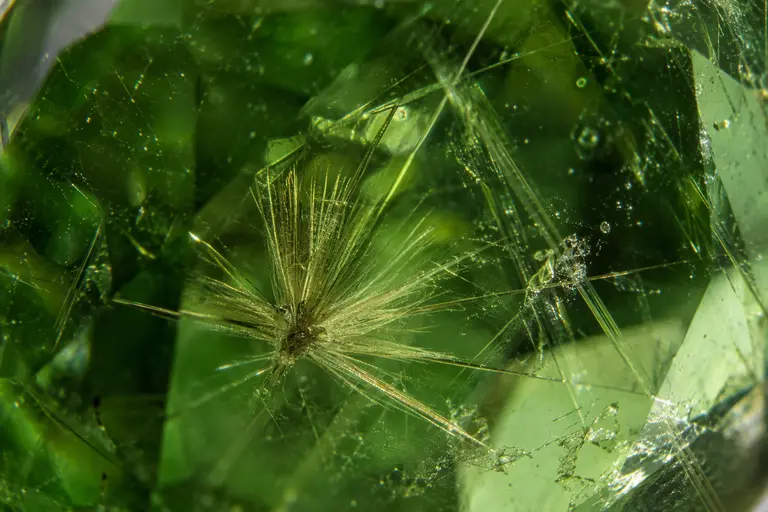
A gemstone holds more than just surface beauty. Its internal features record the intense conditions that shaped it over millions of years. For example, demantoid garnets from certain localities show unique “horsetail-like” inclusions. Similarly, emeralds can contain three-phase inclusions made of liquid, gas, and solid material. In addition, other stones display needle-like mineral crystals, growth tubes, and fine internal patterns. Collectors would still buy the complete gemstone; the inclusion would simply serve as the main attraction rather than a defect. Therefore, each specimen must arrive with clear documentation and detailed photographs. However, an attractive inclusion does not automatically guarantee rarity or market value.
Learning from the Photoatlas and the GIA Collection
Scientific Foundation for Collectors
Science already provides a strong foundation for this market. Edward Gübelin and John Koivula co-wrote the Photoatlas of Inclusions in Gemstones, which grew into a comprehensive three-volume reference. As a result, gemologists can compare internal features against a well-documented photographic record. In November 2026, the GIA announced that it had acquired 2,665 crystals, gemstones, and minerals featuring extraordinary inclusions. John Koivula, a GIA analytical microscopist, curated the collection over 60 years. GIA stated that the specimens will support global education, research, and identification services. You can read the full announcement on the GIA news page. Still, this acquisition does not necessarily imply that GIA endorses a new commercial market for inclusion-based collecting.
Starting the Gemstone Inclusions Market at the Mine
Training and Documentation at the Source
A credible market could begin at the source. Small-scale miners often find unusual crystals that do not suit traditional jewellery. Instead of selling every discovery as ordinary rough material, miners could set aside interesting specimens for specialist review. Practical training would help them spot promising features without requiring definitive scientific identifications. Specialists would then photograph and document each selected stone. Additionally, origin claims would require supporting evidence, because a seller’s statement alone cannot prove where a stone came from. See our gemstone origin guide.
Building Trust Through Independent Laboratories
Trust decides whether any new collecting market succeeds. Consequently, independent laboratories must examine each specimen. They can determine the gemstone species, natural or synthetic status, treatments, and visible inclusions. Depending on the material, they might use microscopy, spectroscopy, Raman analysis, or FTIR. Still, no single instrument answers every question, so experienced human interpretation remains essential. A good laboratory report describes exactly what examiners observe. It should include photomicrographs, measurements, treatment disclosures, and the limits of the examination. Moreover, laboratories must make decisions free from seller pressure.
Protecting Gemstone Inclusions Buyers from Fraud
A new market needs strong consumer protection. Otherwise, attractive photographs could easily mislead buyers. Risks include synthetic stones sold as natural, treated stones sold as untreated, counterfeit reports, substituted specimens, and false locality claims. Online sales may also involve misleading pre-orders or payment disputes. Therefore, each specimen should carry a permanent identification record that links its physical features, report number, and photographs. For instance, Gübelin Gem Lab gives every stone it reports on a complimentary digital twin on the Provenance Proof Blockchain. Nevertheless, a digital record cannot prove that the original information was true. Physical examination and honest sellers must work together. Read our guide to buying gemstones safely.
Opening Opportunities for Mining Communities
A source-based model could also help mining communities. Trained miners could recognise special specimens and earn more than rough-stone sales alone provide. However, higher prices are not guaranteed. Demand, reliable identification, and fair purchasing terms will decide the outcome. Therefore, buyers should explain how they evaluate specimens and set prices. Additionally, local photographers, educators, and lapidaries could join the documentation and preparation work. As a result, the market could support a wider network of specialist skills in remote regions.
A Gemstone Inclusions Collecting Culture for the 99%
Gemstone collecting often seems to favour rare diamonds and wealthy collectors. Yet an inclusion market need not exclude ordinary people. For example, a small quartz specimen with a visible crystal can teach a student the basics of mineralogy. Furthermore, digital photomicrography lets collectors enlarge images and compare inclusion types from home. The goal is not to turn every inclusion into an expensive rarity. Instead, the market should inspire curiosity and responsible collecting. Ultimately, the complete gemstone remains the collectible, and its inclusions tell the story.
Frequently Asked Questions
Can gemstone inclusions become a collecting category?
Yes. Collectors would still buy the whole gemstone, but its inclusions would provide the main attraction and a subject for scientific study.
Are all gemstone inclusions valuable?
No. Many inclusions are common. Therefore, appeal depends on the gemstone, the inclusion, the specimen’s condition, and market demand.
Can laboratories authenticate every inclusion?
No single test answers every question. Instead, specialists choose methods that suit the stone and rely on expert interpretation.
Can ordinary people take part?
Yes. A well-designed market would offer small, affordable specimens with clear documentation and educational resources for hobbyists.
Are inclusion-rich gemstones good investments?
Nobody can guarantee appreciation or resale demand. Therefore, treat this category as a scientific, educational, and aesthetic pursuit.
Disclaimer
This article presents a proposed concept, not an established global trading standard. Gemstone identification and valuation require professional examination. The author has no financial affiliation with the brands or organizations mentioned.