Introduction to the Cultured Pearl Journey
Have you ever wondered how a pristine pearl eventually arrives in a high-end jewelry store? Unlike diamonds, which heavy machinery digs from the earth, pearls grow slowly inside living oysters and mussels. In fact, a single Cultured Pearl Journey can span several years underwater before a jeweler finally places the gem in a velvet display case. Understanding this complex timeline helps you appreciate why these organic treasures carry so much value in 2026.
Today, pearl farmers operate across Australia, Japan, China, and India. Together, these countries supply the global market with millions of stones every year. However, the road from a quiet mussel pond to a finished gold necklace is much longer than most consumers realize. You should also read our guide on gemstone buying mistakes to understand how quality standards apply to these organic gems.
The Timeline of a Cultured Pearl Journey
The Cultured Pearl Journey starts well before any actual pearl begins to form. Initially, farmers must raise healthy oysters or mussels until they reach the precise size for a surgical procedure called “grafting.” Depending on the specific species, this primary growth stage alone can take between eighteen months and three years.
Grafting and Internal Growth Stages
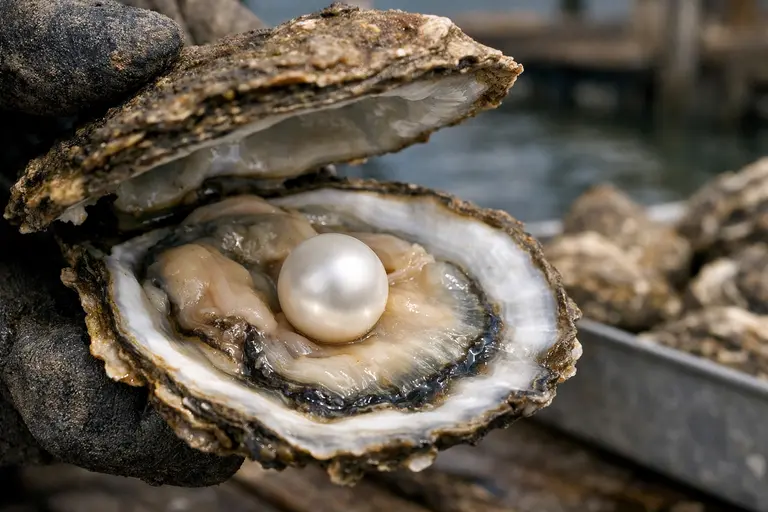
Next, a skilled technician performs the delicate task of implanting either a small mother-of-pearl bead or a tiny piece of soft tissue into the mollusk. The organism then slowly wraps that irritant in thousands of layers of nacre. This is the same material that provides the gem with its signature iridescent glow. This nacre-building stage varies significantly by pearl type. For example, Japanese Akoya pearls typically require about 10 to 18 months underwater.
In contrast, South Sea pearls—the largest and most prized variety—often require three full years because farmers allow extra-thick nacre layers to develop. Consequently, the wait for a high-quality harvest is immense. For foundational science on this process, the Gemological Institute of America (GIA) offers excellent free resources.
Harvesting and Professional Post-Processing
Once the farmers finally harvest the crop, the industrial work continues. Specialized workers clean, sort, grade, and match the pearls with extreme precision. Only after this rigorous sorting do they send the parcels to international auction houses. Jewelry manufacturers then mount the gems into rings and bracelets. As a result, this final manufacturing stage adds another six months to a year to the Cultured Pearl Journey. In total, most pearls take between three and seven years to reach a retail storefront.
Regional Differences in the Cultured Pearl Journey
Pearl farming looks remarkably different depending on the geographic region. Each area utilized unique mollusk species and water conditions to produce a specific aesthetic. Australia produces massive South Sea pearls using the Pinctada maxima oyster. The government there enforces strict environmental rules to protect wild populations.
Japan, conversely, focuses on saltwater Akoya pearls. These are smaller but highly reflective. The modern industry traces its roots back to Kokichi Mikimoto, who pioneered the culturing process in the early 20th century. Meanwhile, China dominates the global freshwater sector. Traditionally, Chinese farmers produced dozens of small pearls from a single mussel. Today, however, they also grow large bead-nucleated pearls that rival expensive saltwater varieties. The Philippines has also earned international fame through its specialization in “Golden South Sea” pearls. Each of these regions adds a unique chapter to the global Cultured Pearl Journey.
Sustainability within the Cultured Pearl Journey
Pearl farming depends entirely on maintaining pristine, clean water. Because of this, responsible producers treat environmental conservation as a business necessity rather than a simple marketing slogan. Australia currently leads the way with strict marine protection rules. Furthermore, several Australian operations have received recognition from the Marine Stewardship Council for their sustainable management.
Fortunately, well-managed pearl farms actually benefit the surrounding environment. Oysters naturally filter the water as they grow, which significantly improves the quality for other marine life. In some regions, these farms even function as protected marine sanctuaries. Consequently, they help to restore damaged biodiversity while producing luxury goods. You may also read our article on Understanding BIS Hallmark to see how certification standards protect quality in other sectors of the jewelry industry.
Digital Traceability in the Cultured Pearl Journey
The jewelry industry has recently started using digital tools to trace each step of the Cultured Pearl Journey. Specifically, consumers now demand to know the exact origin of their luxury goods to avoid “blood gems” or environmental destruction. Leading laboratories have partnered with blockchain companies to develop digital provenance systems.
For instance, several Australian producers now offer QR-based tracking. This allows you to check a pearl’s farming origin and harvest date directly from your smartphone. Although these systems are currently most common in the luxury tier, they will likely become a standard industry requirement by the end of the decade. This transparency ensures that the Cultured Pearl Journey remains as beautiful as the gem itself.
FAQ: Understanding the Cultured Pearl Journey
How many years does a cultured pearl take to grow?
The actual growth inside the oyster takes between 10 months and 3 years. However, the entire Cultured Pearl Journey from the birth of the oyster to the jewelry store takes up to 7 years.
Which country is the leader in pearl production?
China is the volume leader for freshwater pearls. Australia and the Philippines are the leaders for high-value, large-diameter South Sea pearls.
Are cultured pearls considered “real” pearls?
Yes, absolutely. They possess the identical chemical and physical properties as natural pearls. The only difference is that a technician initiates the process instead of a random accident in the wild.
How do I clean my pearls at home?
You should wipe them with a soft, damp cloth after every wear. Specifically, avoid harsh chemicals or perfumes, as they can strip the delicate nacre and ruin the luster.
Why are South Sea pearls so expensive?
They are expensive because they take longer to grow and require a larger, more sensitive oyster. Consequently, the high labor costs and lower success rates drive up the market price.
Disclaimer
This article serves general educational purposes only. Pearl farming methods and sustainability standards fluctuate by region and manufacturer. Always verify certifications with a reputable jeweler or laboratory before making a high-value purchase. The author has no financial affiliation with the companies mentioned.