Introduction
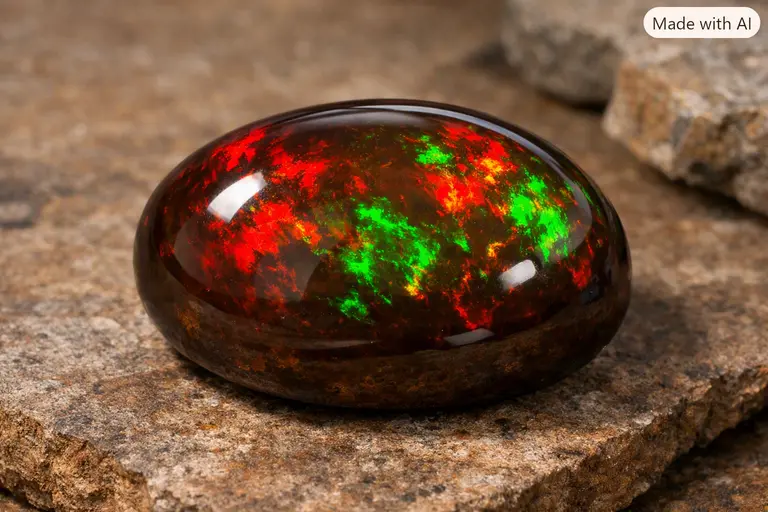
Chocolate opal from Ethiopia stands out as one of the most striking members of the gemstone world. Its body color typically ranges from reddish-brown to deep chocolate brown, and many fine stones also show a vivid play-of-color. Consequently, flashes of electric red, green, and blue often cut across the earthy background. However, you should realize that “chocolate opal” is a trade term rather than a separate mineral species.
Specifically, the Gemological Institute of America (GIA) has documented brown precious opal from Ethiopia, including material described as deep chocolate brown. Even so, buyers should stay cautious because some Ethiopian opal receives color treatments. Therefore, nobody should judge the authenticity or value of a stone by its color alone. In this guide, we explore the origins, treatments, and identification of chocolate opal from Ethiopia to help you make an informed purchase.
Where Does Chocolate Opal from Ethiopia Come From?
Ethiopia remains the primary source linked to the trade name chocolate opal from Ethiopia. The Shewa region, particularly the Mezezo area, produces much of this distinct, brown-bodied material. This deposit, discovered in the early 1990s, was the first major find of precious opal in the country. Still, brown opal also occurs elsewhere in the world, such as in Australia or Mexico.
Therefore, the Ethiopian label describes both the origin and the trade custom rather than an exclusive geological category. In addition, this material appears across a wide size range. In fact, researchers have recorded specimens weighing more than 500 grams. Because the Mezezo deposit occurs in volcanic rock, the stones often have a different structure compared to Australian sedimentary opals.
What Makes These Brown Opals Special?
Chocolate opal from Ethiopia draws massive attention because it pairs a warm body color with bright, neon play-of-color. Specifically, a strong red or green flash against a dark brown background looks especially dramatic. Furthermore, this material sometimes displays “digit patterns.” These are unique, finger-like structures that form within the stone alongside its color play.
Notably, many of these stones are “hydrophane.” This means they are porous and can absorb water. When a stone absorbs water, its transparency and color can change temporarily. Consequently, this behavior makes them fascinating to study, but it also means they require specialized care. To learn more about how opals are categorized, check our guide on gemstone identification methods.
How Buyers Can Identify Genuine Chocolate Opal
Consumers should avoid simple home tests that claim to prove authenticity. For instance, some people suggest that if a stone sticks to your tongue, it is genuine. However, many porous minerals stick to the tongue, so this does not prove that a stone counts as genuine, untreated chocolate opal from Ethiopia.
Therefore, owners should never soak a valuable opal purely to test it. This is because excessive immersion can alter its appearance and, in fragile stones, raise the risk of cracking (crazing). Instead, a qualified gemmologist can examine the material using a microscope. For costly purchases, an independent laboratory report offers far stronger evidence than any home experiment. You can find more information on independent gem labs in our resources section.
Understanding Treatments and Enhancements
Do Ethiopian opals carry treatment? Unfortunately, the answer is often yes. Their hydrophane structure makes treatment possible because the porous material readily absorbs dyes, sugar, or smoke.
Common Color Enhancements
GIA has documented hydrophane opal with artificially induced brown color. In these cases, microscopic examination reveals color concentrated around surface pits and scratches rather than distributed naturally. Moreover, researchers have reported several other methods:
- Smoke Treatment: This darkens the body color to mimic black or chocolate opal.
- Sugar-Acid Treatment: Similar to smoke, this creates dark carbon spots inside the stone.
- Dyeing: Artificial dyes can create any body color, including deep chocolate.
- Oil or Opticon Impregnation: This hides surface-reaching cracks.
Consequently, you should always ask sellers directly whether a stone’s color occurs naturally. If a seller cannot or will not answer, you should consider looking elsewhere.
Is Chocolate Opal from Ethiopia Popular in India?
Chocolate opal from Ethiopia still occupies a niche position in the Indian market. Most Indian consumers traditionally know opal through astrological channels, where white or fire opals are more common. Nevertheless, India’s large gemstone industry, especially the cutting center in Jaipur, creates real openings for unusual colored stones.
As a result, this material is beginning to find a steady audience among Indian independent designers and specialist dealers. Because the brown body color pairs naturally with yellow gold and rose gold, it suits the warm tones often preferred in Indian jewelry. For an overview of the local market, read our Jaipur gemstone trade report.
Care and Maintenance for Your Opal
Because chocolate opal from Ethiopia is often hydrophane, it requires specific care to maintain its beauty. First, you must keep the stone away from harsh chemicals, perfumes, and oils. These substances can seep into the pores and permanently discolor the stone.
Second, avoid ultrasonic or steam cleaners. These high-energy cleaning methods can cause the stone to shatter. Instead, use a soft, damp cloth for cleaning. Additionally, store your opal in a stable environment. Extreme changes in humidity or temperature can lead to “crazing,” which are tiny internal cracks that ruin the stone’s value.
FAQ: Chocolate Opal from Ethiopia
Is chocolate opal a separate mineral?
No. It functions purely as a trade description for precious opal with a brown body color. It does not represent a distinct mineral species like emerald or sapphire.
Does all chocolate opal occur naturally?
No. While natural brown material exists in Ethiopia, many stones are smoke-treated or dyed to achieve that color. Therefore, always request a laboratory certificate for expensive pieces.
Can I wear chocolate opal in an engagement ring?
Opal is relatively soft (5.5 to 6.5 on the Mohs scale). Consequently, if you use it in a ring, choose a protective “bezel” setting to prevent the edges from chipping.
Why did my opal turn clear after I washed my hands?
This is a common trait of hydrophane opal. It absorbed water, which changed its refractive index. Usually, the color will return once the stone dries out naturally over a few days.
Disclaimer
This article offers general educational information for consumers and gemstone enthusiasts. Because treatment detection and valuation require professional examination, readers should seek an independent gemmological opinion before making a high-value purchase. Market prices and demand can also change over time. The author has no financial affiliation with the labs or organisations mentioned.