Gemology

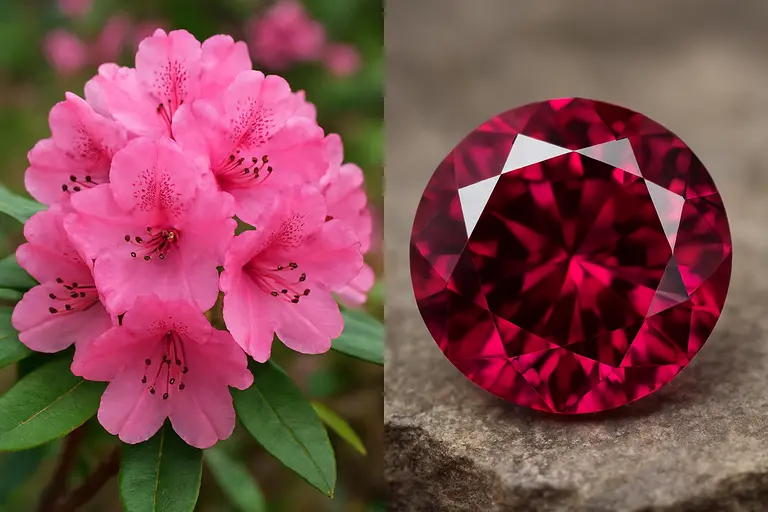
A pink Rhododendron flower next to a faceted Rhodolite Garnet gemstone.

Rhododendron and Rhodolite: The Shared Story of the Rose

Introduction In the vast dictionary of nature, some words bridge the gap between the living and the mineral. Rhododendron and Rhodolite may seem like unlikely neighbors—one is a bush that covers mountains, the other is a crystal mined from the earth. However, they share a vivid color lineage and a naming tale that ties them together […]

Rhododendron and Rhodolite: The Shared Story of the Rose Read More »
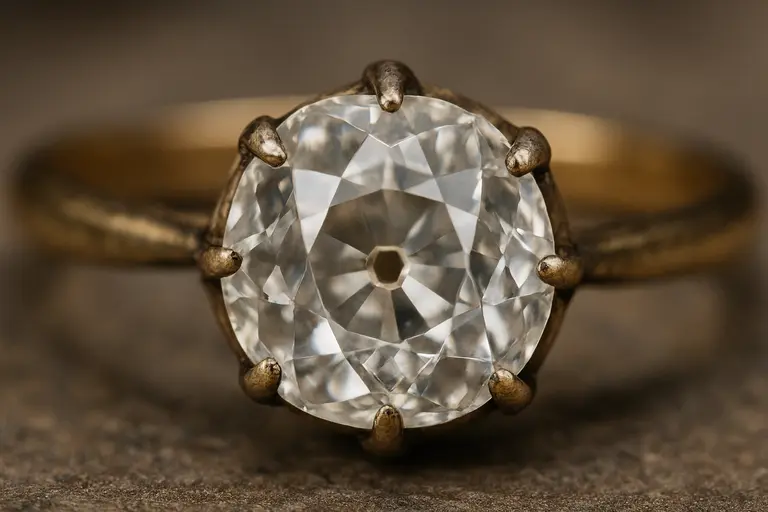
A vintage ring featuring an Old Mine Cut Antique Diamond.

Antique Diamonds Guide: The Modern Obsession

Introduction In today’s jewelry world, modern “Brilliant Cut” diamonds often blend into a sea of sameness. Specifically, they are cut by lasers to mathematical perfection. However, Antique Diamonds stand out with their one-of-a-kind personality. These timeless stones, sourced from estate jewelry collections or repurposed heirlooms, capture history in every facet. Once confined to niche collectors, they have exploded

Antique Diamonds Guide: The Modern Obsession Read More »

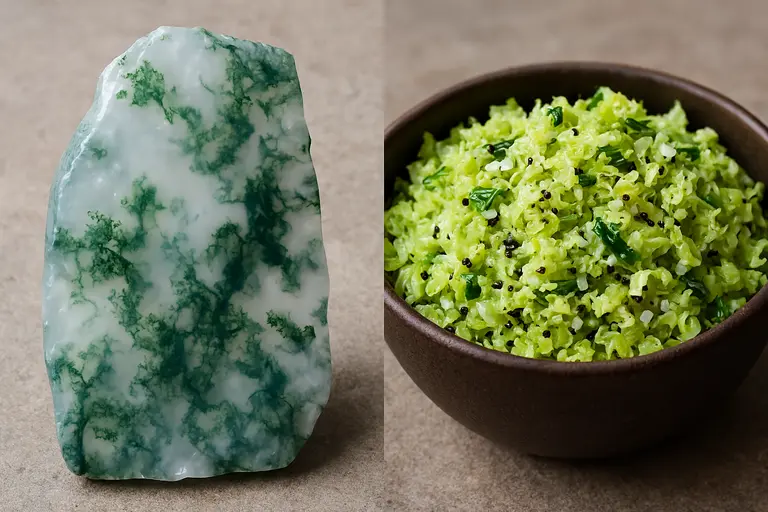
A slice of green Moss Agate next to a bowl of Kerala Cabbage Thoran illustrating Moss Agate and Cabbage Thoran.

Moss Agate and Cabbage Thoran: Nature’s Recipe Guide

Introduction When we look at the textures of Moss Agate and Cabbage Thoran, we find a delightful visual parallel between the mineral kingdom and the Kerala kitchen. Nature often repeats its best designs. However, for those familiar with Kerala cuisine, the visual resemblance points to something much tastier: Kerala Cabbage Thoran. Specifically, the mix of finely shredded

Moss Agate and Cabbage Thoran: Nature’s Recipe Guide Read More »

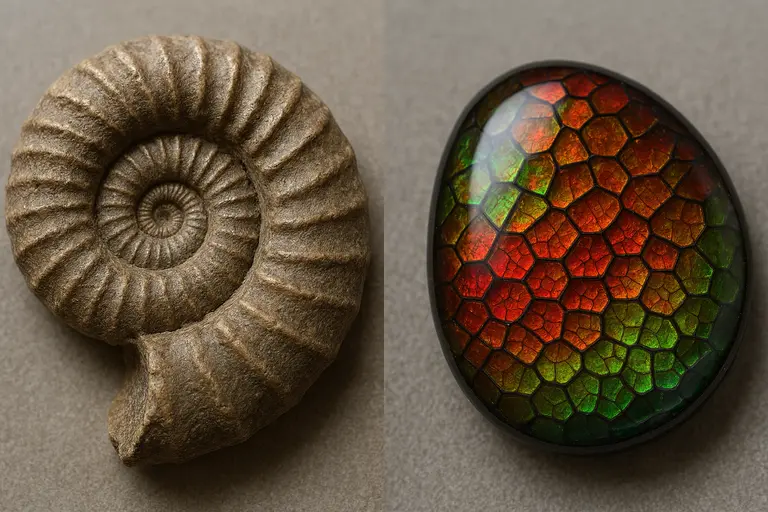
A vibrant red and green Ammolite Gemstone cabochon next to a fossilized ammonite shell.

Ammolite Gemstone: The Organic Jewel Guide

Introduction Discover the magic of the Ammolite Gemstone, one of the rarest gems on Earth. Unlike diamonds or rubies, which are minerals, Ammolite is an Organic Gemstone. It forms from the fossilized shells of ancient Ammonites (sea creatures) that lived 70 million years ago. The CIBJO officially recognized it as a gemstone only in 1981; it is a relatively new addition

Ammolite Gemstone: The Organic Jewel Guide Read More »

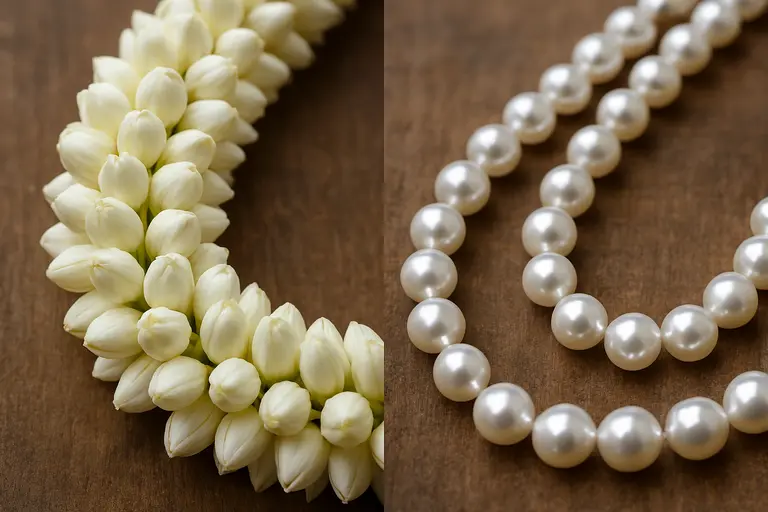
A string of fresh white Madurai Malli buds next to a strand of white pearls illustrating Madurai Malli and Pearls.

Madurai Malli and Pearls: Nature’s White Gems

Introduction In the heat of Tamil Nadu, one scent defines the atmosphere: Madurai Malli. This iconic Jasmine flower captivates with its pearl-like beauty and intoxicating aroma. Often compared to gems in literature, this GI-tagged flower shares striking resemblances with the Queen of Gems. Madurai Malli and Pearls evoke the same feelings of purity, luxury, and heritage. As a

Madurai Malli and Pearls: Nature’s White Gems Read More »

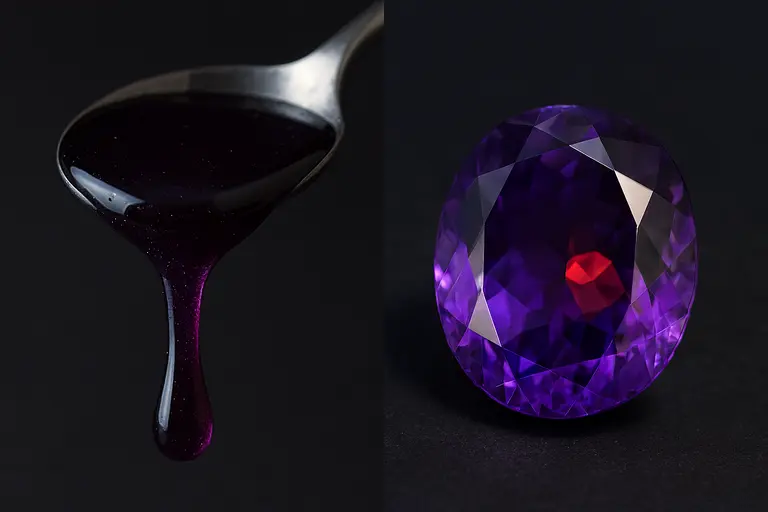
A jar of violet North Carolina Purple Honey next to a cut Four Peaks Amethyst gem.

NC Purple Honey and Four Peaks Amethyst: Expert View

Introduction Nature often paints with the same brush on different canvases. NC Purple Honey and Four Peaks Amethyst come from entirely different worlds—one biological, the other geological. Yet they share fascinating similarities. Both boast a captivating purple hue, extreme rarity, and ties to unique regional minerals. For instance, the mysterious Purple Honey emerges from beehives in

NC Purple Honey and Four Peaks Amethyst: Expert View Read More »

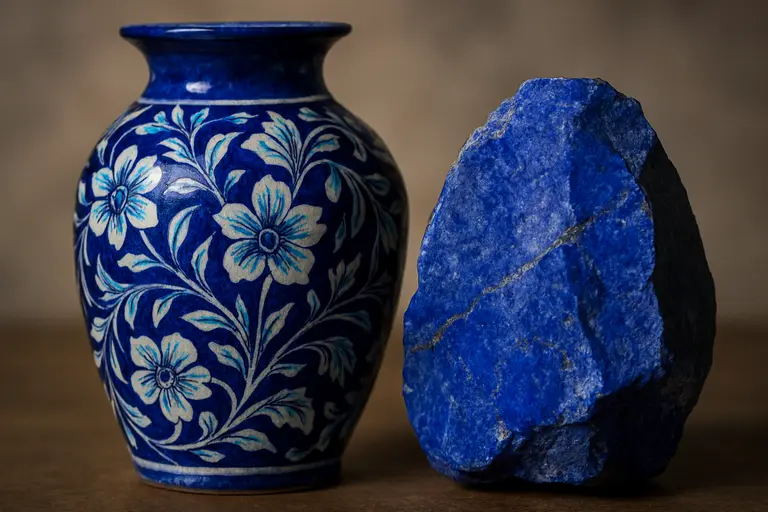
A Jaipur Blue Pottery vase next to a rough Lapis Lazuli stone illustrating Jaipur Blue Pottery vs Lapis Lazuli.

Jaipur Blue Pottery vs Lapis Lazuli: Royal Blues Compared

Introduction In the world of color, few shades command respect like “Royal Blue.” Jaipur Blue Pottery vs Lapis Lazuli share a captivating bond through this very hue. For instance, both dazzle with vibrant blue tones that evoke royalty and divinity. However, they differ completely in materials—one is a precious mineral gemstone mined from the earth, while

Jaipur Blue Pottery vs Lapis Lazuli: Royal Blues Compared Read More »

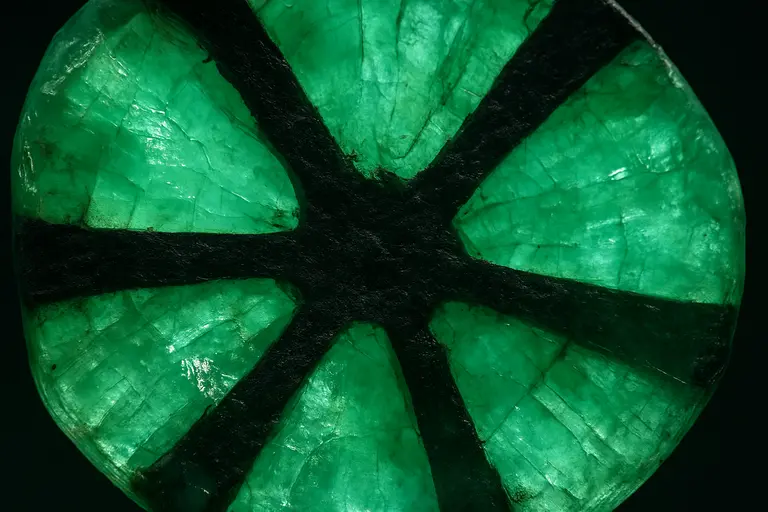
A Trapiche Emerald showing the black six-spoked wheel pattern.

Trapiche Gemstones: Rare Star Patterns Explained

Introduction In the vast world of mineralogy, some stones glitter, while others tell a story of geometry. Trapiche Gemstones captivate collectors with their rare, wheel-like internal patterns. Unlike the moving star of a Star Sapphire (Asterism), these unique minerals feature fixed, radial spokes of inclusions that mimic a sugar mill wheel. At first glance, they look painted by

Trapiche Gemstones: Rare Star Patterns Explained Read More »

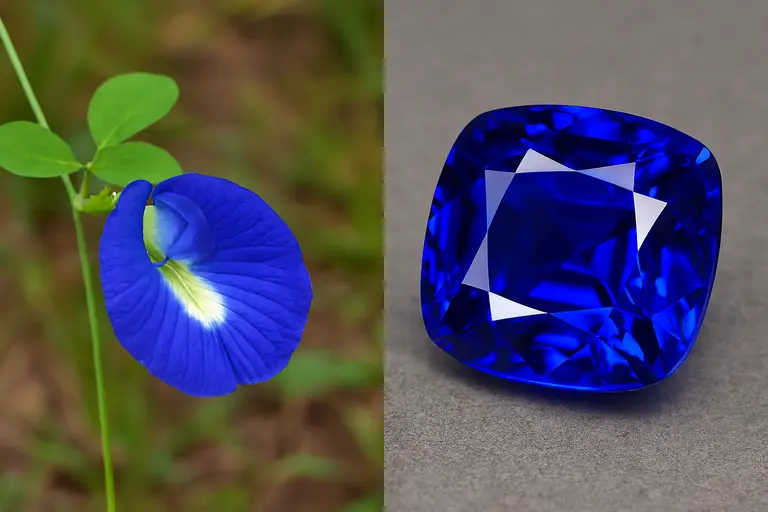
A cup of blue Butterfly Pea tea next to a vivid Cobalt Blue Spinel gemstone.

Butterfly Pea vs Cobalt Blue Spinel: Nature’s Electric Blues

Introduction In the natural world, true blue is rare. However, two specific creations of nature captivate us with an identical, electric shade. Butterfly Pea vs Cobalt Blue Spinel represents a stunning parallel between botany and geology. One is a delicate flower (Sankhupushpam) found in almost every garden in Kerala. The other is a rare mineral found deep

Butterfly Pea vs Cobalt Blue Spinel: Nature’s Electric Blues Read More »

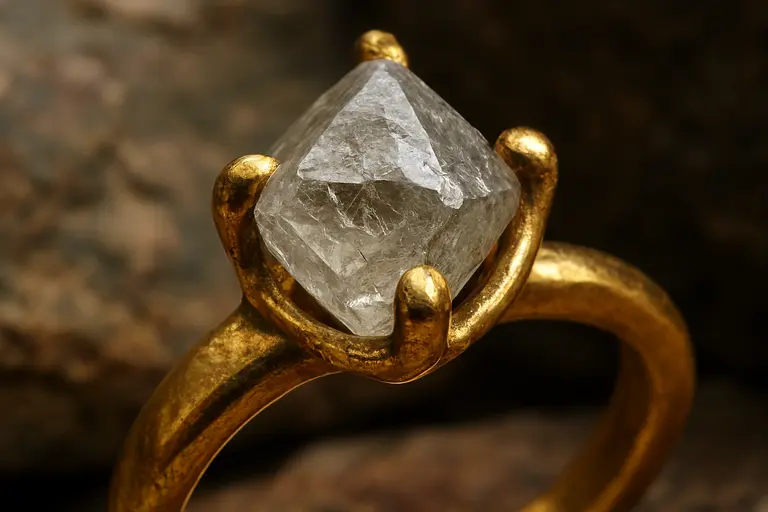
A rough yellow diamond ring from the De Beers GemFair Artisanal Diamonds collection.

De Beers GemFair Artisanal Diamonds: An Expert Review

Introduction The launch of the De Beers GemFair Artisanal Diamonds collection marks a revolutionary shift in the world of high jewelry, where perfection has always been the standard. The De Beers GemFair Artisanal Diamonds debut marks a pivotal moment in 2026. For the first time, the world’s largest diamond company is selling diamonds that were dug by hand, not

De Beers GemFair Artisanal Diamonds: An Expert Review Read More »