Introduction
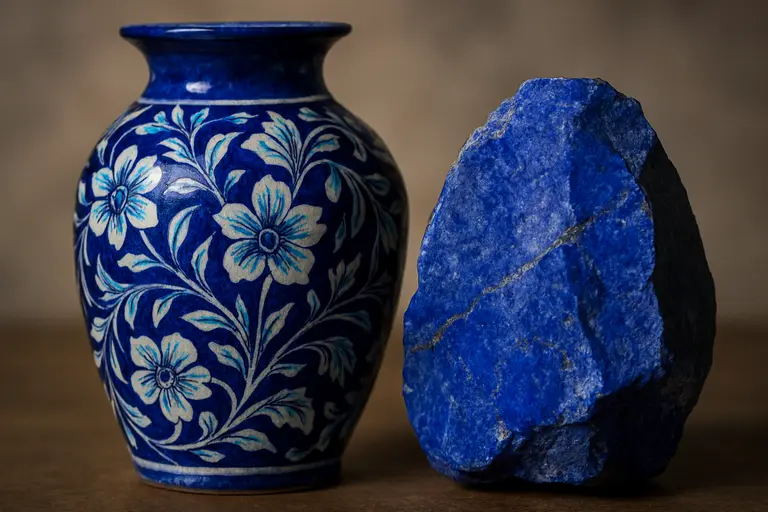
In the world of color, few shades command respect like “Royal Blue.” Jaipur Blue Pottery vs Lapis Lazuli share a captivating bond through this very hue. For instance, both dazzle with vibrant blue tones that evoke royalty and divinity. However, they differ completely in materials—one is a precious mineral gemstone mined from the earth, while the other is a unique ceramic “frit” baked in a kiln.
Moreover, their visual appeal, historical roots, and symbolic prestige connect them deeply. As a Gemologist who loves Indian heritage, I see a parallel here. The artisans of Jaipur managed to replicate the color of the world’s most expensive blue stone using simple chemistry. In this article, we will explore these similarities, their sources, and tips for authenticity. Whether you are a gemology enthusiast or a decor lover, understanding this duo enhances your appreciation for artisanal crafts.
Color Similarities: Jaipur Blue Pottery vs Lapis Lazuli
First, let’s consider their iconic color palette. Both Jaipur Blue Pottery and Lapis Lazuli boast a range of blues, from soft sky tones to intense royal depths.
The Source of the Blue
- Lapis Lazuli: Its natural ultramarine blue comes from the sulfur-rich mineral Lazurite. It often has golden specks of Pyrite (Fool’s Gold) and white streaks of Calcite.
- Blue Pottery: Jaipur artisans use Cobalt Oxide to replicate this vibrancy. As a result, the pottery perfectly mimics the stone’s luminous quality. The Cobalt creates a deep, “inky” blue that rivals the finest Afghan Lapis.
Texture and Luster
Furthermore, their visual textures align remarkably. High-quality Blue Pottery features a smooth, glossy glaze (Vitreous luster). Similarly, polished Lapis Lazuli offers a sleek, reflective surface. This resemblance fools the eye at first glance. For example, a blue pottery bead can look exactly like a lapis bead. If you are interested in blue gems, compare this to my guide on Butterfly Pea vs Cobalt Blue Spinel.
History of Jaipur Blue Pottery vs Lapis Lazuli
Next, delve into their historical ties. Both materials trace back to Persian, Mughal, and Central Asian influences.
- Lapis Lazuli: Adorned ancient palaces and tombs, like the death mask of Tutankhamun in Egypt and the walls of the Taj Mahal.
- Jaipur Blue Pottery: Emerged in the 19th century under Maharaja Sawai Ram Singh II. He brought the Persian technique of glazing tiles to Jaipur.
Consequently, you will find them in royal decor across Rajasthan. Additionally, their cultural roles overlap. Lapis symbolized wisdom and heaven. Blue Pottery graced elite Havelis with motifs of peacocks and florals. Thus, both represent luxury and heritage. Read more about royal tastes in my Traditional Rajasthani Jewellery guide.
The “No-Clay” Secret of Blue Pottery
Here is a fact that surprises most people. Jaipur Blue Pottery is the only pottery in the world that does not use Clay. Instead, it uses a “dough” made of:
- Quartz Stone Powder
- Powdered Glass
- Multani Mitti (Fuller’s Earth)
- Borax and Gum
Why does this matter? This composition makes it chemically closer to a Glass/Stone hybrid than a mud pot. Therefore, it is fragile and brittle, just like a gemstone. It cannot withstand high heat after baking, so you cannot cook in it. It is purely decorative. This fragility reminds me of the Thewa Jewelry glass art.
Sources of Jaipur Blue Pottery vs Lapis Lazuli
Now, let’s examine their origins.
Lapis Lazuli Sources
Traditionally, the finest Lapis hails from the Sar-e-Sang mines in Badakhshan, Afghanistan. They have been mined for over 6,000 years. Other sources include Russia (Baikal) and Chile, but Afghan stones remain the gold standard.
Blue Pottery Materials
In contrast, Blue Pottery relies on local minerals. The Quartz comes from the Aravalli hills around Jaipur. The Cobalt Oxide was historically imported but is now sourced locally. Today, Jaipur is the only place in the world where this specific “Blue Pottery” tradition survives with a GI Tag.
Identifying Real Jaipur Blue Pottery vs Lapis Lazuli
Authenticity matters greatly. For real Lapis Lazuli, check for:
- Pyrite: Tiny, irregular golden specks. If they look like perfect glitter glitter, it is fake.
- Calcite: White streaks are natural. A stone that is 100% uniform blue is often dyed Howlite or Sodalite.
The Acetone Test: Dab a cotton swab in acetone (nail polish remover) and rub the stone. If it turns blue, it is dyed. Real Lapis does not bleed color. Finally, suspiciously low prices signal imitations. For more tips, check my Gemstone Buying Mistakes guide.
Spotting Authentic Jaipur Blue Pottery
Similarly, verify pottery carefully.
- Lightweight: Because it has no clay, authentic pieces feel lighter than ceramic.
- Texture: Look for a subtle “grainy” texture under the glaze.
- Imperfections: Hand-painted details show natural brush strokes. Machine-perfect patterns indicate a decal/sticker fake.
Above all, source from reputable Jaipur artisans like Kripal Kumbh (founded by Kripal Singh Shekhawat) to ensure quality.
Conclusion on Jaipur Blue Pottery vs Lapis Lazuli
In summary, Jaipur Blue Pottery vs Lapis Lazuli proves that humans have always been obsessed with the color of the sky. We mine the earth to find it (Lapis), and when we can’t find enough, we invent chemistry to create it (Pottery). Ultimately, whether you wear the stone or display the vase, you are celebrating a 5,000-year-old love affair with Blue.
FAQ: Jaipur Blue Pottery and Lapis Lazuli
What makes Jaipur Blue Pottery look like Lapis Lazuli?
The use of Cobalt Oxide dye creates a deep, electric blue that is almost identical to the Lazurite mineral in Lapis. The glossy glass glaze mimics the polished stone surface.
Where is the best Lapis Lazuli from?
Afghanistan. Specifically, the Badakhshan province. Stones from here have the intense “Ultramarine” color that artists used to paint the robes of the Virgin Mary in the Renaissance.
Is Jaipur Blue Pottery eco-friendly?
Yes. It uses Quartz powder (a waste product from mining) and recycled glass. It does not require digging up river clay, making it sustainable.
Can I use Blue Pottery for cooking?
No. It is low-fired and contains glass. It is brittle and will crack over a flame. Use it only for serving dry items, flowers, or decoration.
Can I combine them in jewelry?
Absolutely. Many designers in Jaipur pair Lapis beads with Blue Pottery beads in necklaces. It creates a stunning “Texture on Texture” look rooted in Rajasthan.
Author Bio
P.J. Joseph, also known as Saju Elizamma, Gemstone & Gold Consultant serving Kerala, Tamil Nadu, and Karnataka.