
Introduction
Buying a diamond involves more than picking a sparkling stone. Buyers also need reliable facts about quality, treatments, authenticity, and price. However, most shoppers cannot decode these details without expert help. Blue Nile lessons transformed this process by making diamond comparison simple online. The company launched in 1999 and built its reputation on detailed information, digital selection tools, and competitive pricing. Signet Jewelers bought Blue Nile in August 2022 for roughly $360 million. Although the model does not suit every buyer, it offers practical Blue Nile lessons for the entire jewellery trade. By adopting specific aspects of their approach, modern jewellers can improve consumer confidence and simplify the complex world of gem purchasing. Check out our Guide to buying diamonds to learn more.
How Blue Nile Changed Diamond Retail
Applying Blue Nile Lessons to Online Diamond Business
Founder Mark Vadon felt frustrated while he shopped for an engagement ring. His experience inspired a company that put information and online comparison at the centre of the purchase. As a result, shoppers could study specifications and weigh their options before they spoke to any salesperson. Consequently, Blue Nile lessons helped turn online diamond retail into a credible alternative to the traditional jewellery store. Moreover, its growth showed how technology can open up information in an industry that traditionally relied on personal relationships.
Blue Nile Lessons in Transparency and Customer Confidence
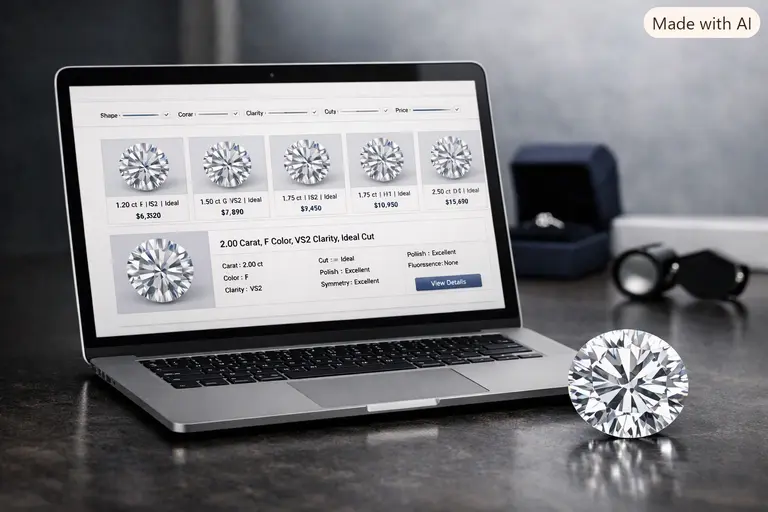
Blue Nile offers detailed diamond specifications, educational resources, and independent grading reports for eligible stones. Its tools also let customers choose stones and settings for engagement rings. Furthermore, its supplier-connected inventory model has historically given buyers a broad selection without forcing the company to stock every listed diamond. However, suppliers, technology, and logistics still demand heavy investment. An online price does not automatically mean the lowest price. Therefore, shoppers should compare quality, grading reports, setting costs, return terms, and after-sales support. Visit the Blue Nile website to see its approach to online jewellery shopping.
Blue Nile Lessons for Gemologists and Laboratories
Gemologists as independent advisors
Gemologists should explain technical information in plain language. Instead of treating expertise as a barrier, they can help customers read grading reports, spot treatments, and judge durability. Moreover, independent advice helps buyers separate measurable quality from marketing claims.
Diamond and coloured stone laboratories
Blue Nile shows the commercial value of trustworthy product information. Independent grading reports help buyers assess specific characteristics. However, these reports do not promise investment returns or future resale prices. Coloured gemstone laboratories face tougher challenges because origin, treatment, and quality each need different testing methods. Therefore, laboratories should improve consistency, state uncertainty clearly, and separate scientific findings from professional opinion. If you want to dive deeper into industry standards, check out GIA education.
Blue Nile Lessons for Diamond Traders and Jewellers
Digital Inventory and Blue Nile Lessons in Pricing
Traders and wholesalers can widen their reach by keeping digital inventories accurate and current. As a result, retailers can compare suitable stones without storing every option. However, listings must match the actual stones, and traders should disclose treatments, grading details, and return terms. Similarly, jewellers can itemize metal prices, gemstone costs, making charges, and taxes on their invoices. They do not need to reveal confidential supplier deals to do so. The Rapaport Group publishes diamond market information and price references. Its price list serves as a market guide, not a universal transaction price.
Combining Blue Nile Lessons with Jewellery Craftsmanship
Blue Nile proves that digital tools can simplify selection and customization. Indian jewellers can borrow the idea through online catalogues, three-dimensional design previews, appointment-based consultations, and digital order tracking. Nevertheless, physical stores keep real advantages. Customers can inspect pieces, test ring fit, discuss family traditions, and build lasting relationships. In fact, Blue Nile itself has opened showrooms in the United States, which shows that online and in-person shopping work together. Therefore, independent jewellers should compete through craftsmanship, repairs, honest advice, and personal attention. Learn how to find these qualities in our Guide to choosing a trusted jeweller.
What India Can Learn From Blue Nile Lessons
India’s jewellery market rests on gold ownership, weddings, regional designs, family traditions, and skilled artisans. Consequently, businesses should adapt these Blue Nile lessons instead of copying them wholesale. Retailers can issue clearer invoices, explain diamond grading, disclose treatments, and publish simple return and exchange policies. Meanwhile, digital platforms can help small manufacturers, independent gemologists, and artisans reach buyers far beyond their towns. Above all, ordinary consumers should compare the complete purchase, not the headline price. A cheaper diamond may not deliver the same quality, documentation, service, or return protection.
Frequently Asked Questions
Is Blue Nile every consumer’s best friend?
Not necessarily. Blue Nile helps shoppers compare diamonds and explore designs conveniently. However, some customers prefer face-to-face advice, physical inspection, and personal ties with local jewellers.
Does Blue Nile sell watches?
No. Blue Nile focuses on diamonds, engagement rings, wedding bands, and fine jewellery. Signet Jewelers, however, owns other retail brands with different products.
Can Indian jewellers adopt the Blue Nile model?
Yes. They can introduce digital catalogues, clear invoices, customization tools, and online consultations. However, they should fit these services to Indian buying habits and local craftsmanship.
What should consumers check before buying a gemstone?
Consumers should check the stone’s identity, its grading or identification report, disclosed treatments, dimensions, return policy, and total price.
Disclaimer
This article offers general educational information, not individual gemological, legal, or investment advice. Business models and retail policies can change. Buyers should verify current terms with the retailer and seek independent professional advice when appropriate.

Disclosure: This post contains Blue Nile affiliate links. If you make a purchase through them, I may earn a small commission at no extra cost to you.