Introduction
For centuries, historical figures frequently mistook fine red spinel for ruby. For instance, the famous “Black Prince’s Ruby” in the British Imperial State Crown is actually a beautiful red spinel. Modern gemological testing eventually confirmed its true identity, yet the confusion persists in the minds of many casual jewellery lovers. Today, collectors and designers increasingly seek out this resilient gemstone. However, fine material remains relatively scarce, especially in vivid colours and larger sizes. As a result, prices for some popular varieties continue to rise. Still, you do not need a collector’s budget to buy well. Once you understand the properties, colours, and quality factors of spinel, you can choose a stone with confidence. Before you begin shopping, please explore our gemstone buying basics for more essential background information.
Understanding Spinel and Its Colours
Physical Properties of Spinel
Spinel possesses the chemical formula MgAl₂O₄ and belongs to the cubic crystal system. Unlike ruby and sapphire, which are corundum, this gemstone is an entirely separate mineral species. It boasts a refractive index near 1.718 and a Mohs hardness of 8. Therefore, it resists scratches exceptionally well, making it a reliable choice for daily jewellery wear. Trace elements create its wide colour range; for example, chromium and vanadium produce rich reds, pinks, and oranges, while cobalt and iron create deep, sought-after blues.
Selecting Your Preferred Hue
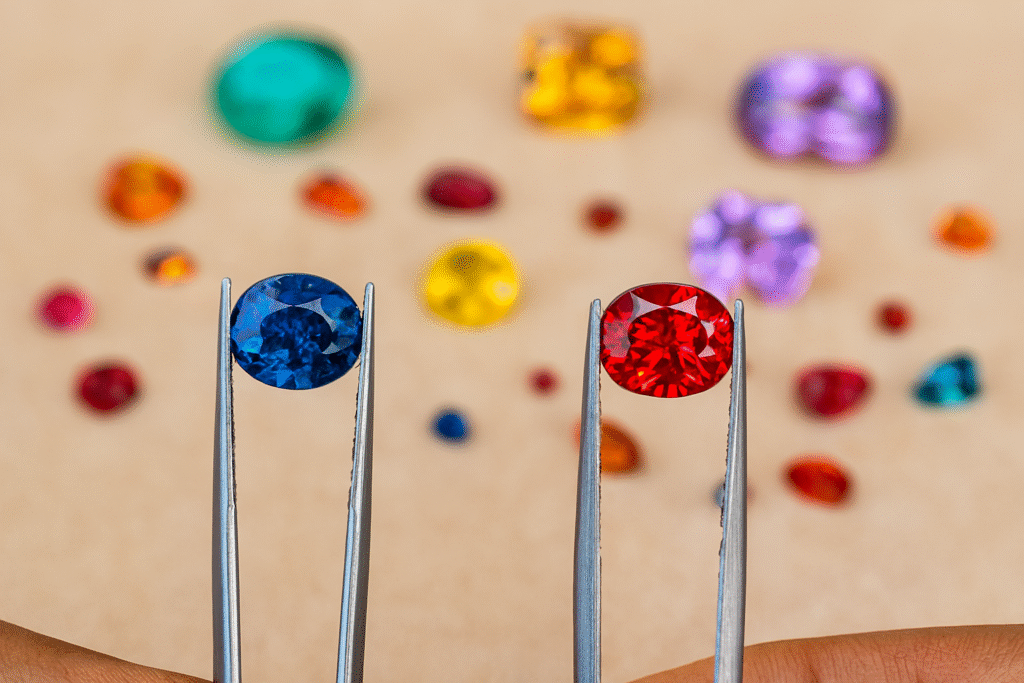
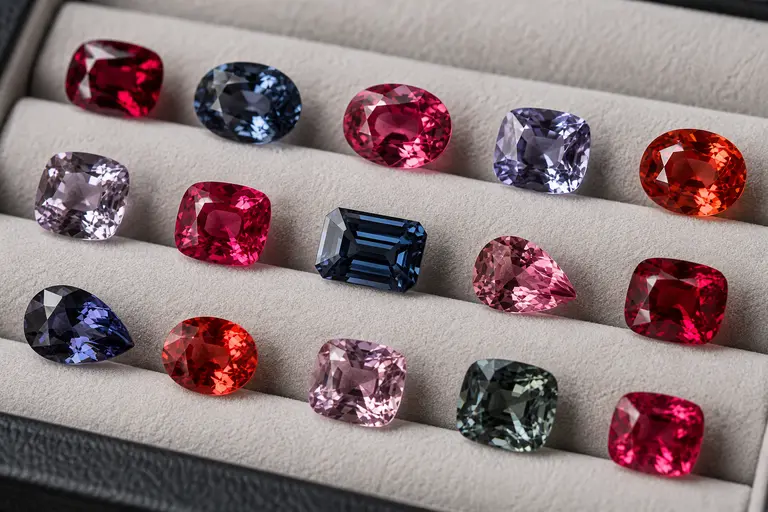
Vivid red, cobalt blue, strong pink, and bright orange typically attract the most market attention. Nevertheless, colour preference remains deeply personal. For instance, a soft lavender spinel may delight you more than a costly, intense red one. Therefore, you should always judge the stone in front of you rather than following fleeting colour trends.
Why Geographic Origin Matters
Regional Reputation and Value
Geographic origin significantly influences how dealers and collectors value gemstones. Myanmar and Vietnam have earned a strong reputation for producing high-quality red spinel. Similarly, Tanzania and Vietnam have gained praise for their blue spinel varieties. As a result, stones with documented origins from these regions often sell at a premium price. However, origin never guarantees individual quality. Two spinels from the same region can differ widely in colour, clarity, and precision of the cut.
The Role of Scientific Analysis
A 2026 Gems & Gemology study from the Gemological Institute of America (GIA) examined red and orange spinel samples from Mogok in Myanmar and from Lang Chap and An Phu in Vietnam. Researchers found that trace-element analysis successfully separated the studied red samples by location. However, orange samples from Mogok overlapped chemically with both Vietnamese sources. Thus, scientists must interpret origin results carefully and continue testing. Gemologists study inclusions and chemistry as geological clues, but visual inspection alone cannot reliably name a country of origin.
Natural and Synthetic Spinel
Distinguishing Between Origins
Natural spinel forms over long geological periods. In contrast, manufacturers grow synthetic spinel in laboratories using methods such as flame fusion and flux growth. Because synthetic spinel closely resembles natural spinel, the naked eye often cannot separate the two. However, laboratory testing provides conclusive identification. Synthetic spinel serves legitimate roles in modern jewellery and technology. However, sellers must clearly disclose laboratory-grown stones to the customer. Moreover, you should not assume that natural spinel is always untreated. Always ask about treatments and request an independent report when natural origin matters to you.
Spinel in Everyday Jewellery
Wearability and Maintenance
At Mohs 8, spinel suits rings, earrings, and pendants perfectly. However, remember that hardness differs from toughness. Hardness measures resistance to scratching, while toughness measures resistance to chipping and breaking. Therefore, even a hard stone can suffer damage from a sharp, direct knock. For this reason, you should choose a protective setting for daily-wear rings. In addition, clean your spinel using mild soap, lukewarm water, and a soft brush. Also, avoid harsh chemicals and sudden temperature changes, as these can affect the stone’s long-term brilliance.
Practical Buying Advice
Assessing the Individual Stone
Judge the individual stone before you pay for a brand name or source. First, carefully examine the colour, transparency, visible inclusions, and the quality of the cut. Next, compare similar stones from several reputable sellers. Also, ask whether the spinel is natural or synthetic, and whether the seller knows of any treatments. For a substantial purchase, request a report from a recognised gemological laboratory. Browse our jewellery buying checklist before you visit any store. Finally, stay realistic. A famous source may raise interest, but it cannot promise better quality or investment returns. Ultimately, the right spinel matches your personal taste, budget, and intended use.
Frequently Asked Questions
Is spinel suitable for everyday jewellery?
Yes. Its Mohs hardness of 8 suits many designs. However, a protective setting remains important because hardness does not prevent impact damage.
Is spinel the same as ruby?
No. Ruby belongs to the corundum family, whereas spinel is a separate mineral. Although their reds can look alike, gemological testing easily tells them apart.
Does spinel occur only in red?
No. It also appears in pink, orange, purple, blue, grey, and black. Trace elements in its crystal structure create this impressive variety.
Does a famous origin guarantee better quality?
No. Origin can lift market interest and price. However, each stone still needs a fair check of colour, clarity, cut, and overall size.
Is natural spinel always untreated?
No. Sellers commonly offer it untreated, but you should confirm the status. Therefore, a reliable laboratory report always helps.
Disclaimer
This article offers general gemstone education. It does not replace professional appraisal or laboratory identification. Consult a recognised laboratory for identification. The author has no financial affiliation with the brands or organizations mentioned.