Introduction
Buying fine jewellery is exciting but learning how to avoid fake gemstones is essential because modern imitations look increasingly convincing to the untrained eye. In its Summer 2026 issue of Gems & Gemology, the Gemological Institute of America (GIA) studied glass-ceramics that successfully imitate natural stones. Researchers used standard tests and advanced laboratory techniques to separate these materials from natural gems, laboratory-grown stones, and conventional glass. However, most buyers do not own specialised laboratory equipment to spot fake gemstones. Therefore, the 99% who buy jewellery for family occasions, personal use, or financial security need practical, reliable protection. Fortunately, you do not need to become a gem expert to shop safely. Instead, you should understand the product, verify important claims, and document every transaction thoroughly before you spend significant money. For practical shopping advice, please read our guide to buying gemstones wisely.
Understanding Fake Gemstones Before You Buy
Distinguishing Real Stones from Fake Gemstones
First, you must learn the three main categories. Natural gemstones form through slow geological processes. Laboratory-grown gemstones grow under controlled conditions, and they share the same chemical composition and crystal structure as their natural counterparts. Simulants, in contrast, imitate a gemstone’s appearance without sharing its material identity.
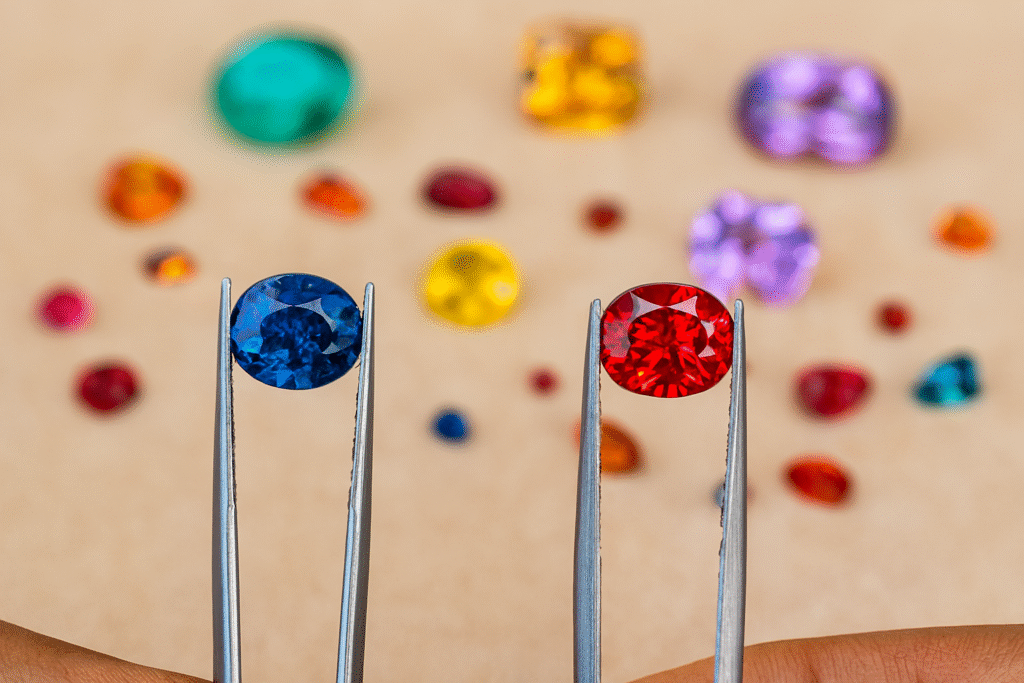
The GIA study examined glass-ceramics in a silicon-aluminum-magnesium-zinc system. The study notes that manufacturers can produce these materials in almost any colour and transparency. Consequently, a beautiful red stone is not automatically a ruby, and a vivid blue stone is not necessarily a sapphire. Likewise, you should never confuse laboratory-grown gemstones with glass imitations, because the two have vastly different physical properties. You can read the GIA study on glass-ceramic gemstone imitations for the full scientific background.
Protecting Yourself from Fake Gemstones Online
Checking Listings to Avoid Fake Gemstones
Photographs cannot reliably show whether a gemstone is natural, treated, laboratory-grown, or simulated. In fact, lighting, professional editing, and camera settings can easily change a stone’s apparent colour and clarity. Therefore, you must read the complete product description before you buy. Check the variety, carat weight, dimensions, disclosed treatments, and any associated laboratory report. If the seller uses vague terms, always request clarification in writing.
Next, review the return policy. Do not assume every retailer offers a generous fourteen-day window. Instead, confirm the deadline, potential exclusions, return shipping costs, and conditions for independent testing. Get written confirmation that you can return a stone if its identity differs materially from the description. Also, choose a payment method with dispute protections. Credit cards and established platforms may offer remedies, though no payment method guarantees a refund in every dispute. Finally, keep all invoices, screenshots, and seller messages as records.
Shopping Safely to Avoid Fake Gemstones
Using Reports to Identify Fake Gemstones
A seller’s reputation matters, but it does not prove gemstone identity. Similarly, a shop-printed certificate is not necessarily an independent laboratory report. For an expensive purchase, therefore, consider a report from an independent gemological laboratory. However, check the report’s scope first; a report may identify a stone and disclose detectable treatments without establishing geographic origin or market value.
When online verification exists, use the issuing laboratory’s official website. Then, enter the report number and compare the recorded details with your stone. Even so, a valid report number alone does not prove that the report belongs to your specific stone. At gem fairs and tourist destinations, avoid rushed decisions and claims of exclusive bargains. Proximity to a mine does not prove origin, and a rough appearance does not prove a stone is natural. Before you pay, obtain a clear invoice that records the gemstone description, price, and disclosed treatments.
Visual Clues That May Suggest Fake Gemstones
Why Appearance Alone Cannot Spot Fake Gemstones
Some buyers assume flawless gemstones must be fake, while others believe visible inclusions prove natural origin. However, neither assumption holds true. Natural gemstones can show excellent clarity, while manufactured materials often contain bubbles or fractures. Furthermore, manufacturers can deliberately add flaws to make glass-ceramics look more natural. Likewise, colour, sparkle, and weight cannot identify every gemstone, and amateur home tests can mislead you or even damage your jewellery.
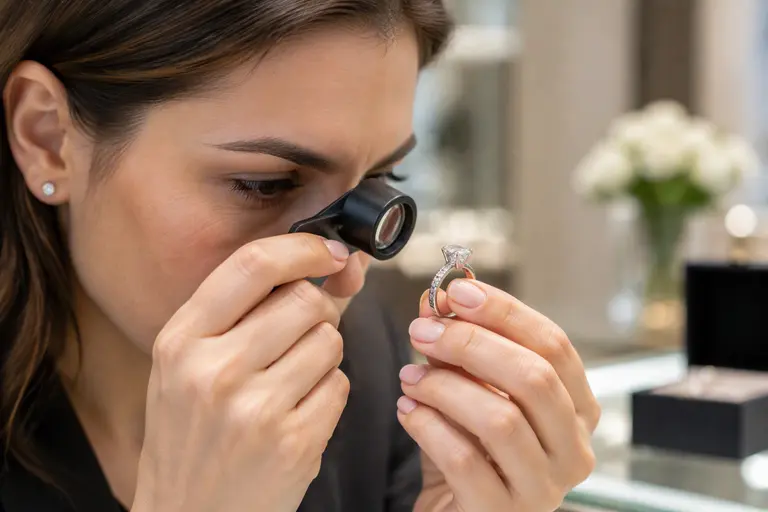
The GIA study reported a single refractive index between 1.60 and 1.63 for the glass-ceramics it examined. However, these findings apply only to that specific material system, not to every glass-ceramic. Therefore, never treat one measurement or visual clue as universal proof. Instead, hire a suitably equipped gemological professional when a purchase involves substantial money.
Choose Transparency Over Bargains
Holding Sellers Accountable for Fake Gemstones
Before you complete a transaction, ask the seller to describe the gemstone accurately on the invoice. If the stone is glass, glass-ceramic, laboratory-grown, or another simulant, the invoice should say so clearly. Next, compare prices only after you confirm comparable identities, treatments, weights, and quality levels. A low price does not automatically signal fraud, and equally, a high price does not prove authenticity. If the seller avoids reasonable questions or pressures you to pay immediately, postpone the purchase. Then, consult an independent gemologist. For further reading, visit Saju Elizamma and explore our gemstone and jewellery articles.
Frequently Asked Questions
Can I identify glass-ceramic gemstones with my naked eye?
No. Visual inspection may raise concerns, but it cannot reliably identify every glass-ceramic. Proper gemological testing provides the only reliable evidence.
Does a laboratory report guarantee an authentic purchase?
No. Verify the report through the issuing laboratory, then confirm that it matches your stone. Also, check the scope of the report.
Should I avoid buying gemstones at tourist destinations?
Not necessarily. However, research the seller, resist pressure tactics, and demand accurate documentation. Arrange independent verification before paying for high-value items.
What is the safest approach for ordinary buyers?
Understand the product category, verify important claims, and keep written records. Above all, never rush an expensive purchase without proper documentation.
Disclaimer
This article offers general educational information. It does not replace professional gemstone identification or legal advice. Verify all terms before you buy. The author has no financial affiliation with the brands or organizations mentioned.