Introduction
Jewellery serves many budgets, tastes, and traditions. For example, some families buy gold for weddings, while others choose affordable pieces for everyday wear. Pandora jewellery, the Danish company, focuses on accessible luxury. On 1 October 2026, it opened a US$150 million crafting facility in Ho Chi Minh City; Pandora jewellery officially calls it the world’s largest fine jewellery crafting site. However, Indian jewellers do not need to copy this business model. Instead, they can adapt smart practices to their own customers and markets. By observing these global trends, local brands find fresh ways to build loyalty and scale their production.
How Pandora Jewellery Built Its Iconic Brand
Personalisation Strategies in Pandora Jewellery
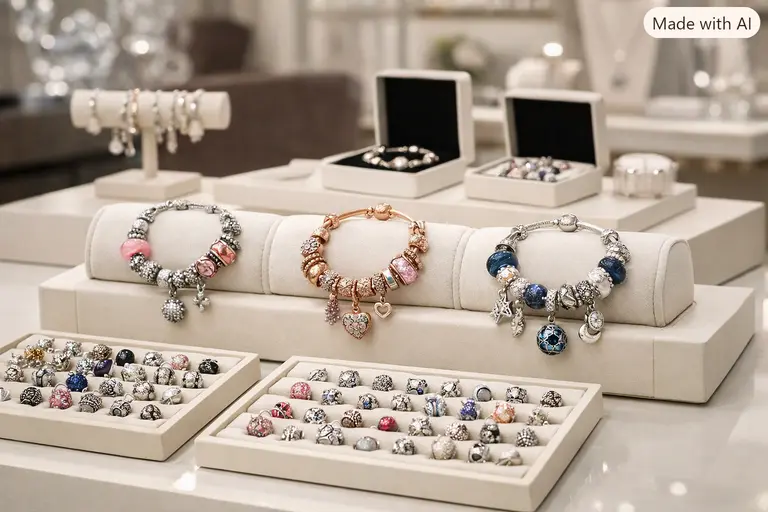
Pandora built its identity around customisable charm bracelets. Customers add charms that represent their interests, relationships, and memories. As a result, they build a collection slowly instead of buying a new piece for every occasion. Moreover, friends and family choose single charms as gifts. Indian jewellers can use the same idea without copying any specific design. For instance, they could offer personalised pendants, interchangeable elements, or collections inspired by regional art. Consequently, customers gain more reasons to return to the store.
Fair Pricing and Clear Pandora Jewellery Design
Pandora pairs recognisable designs with prices that suit ordinary shoppers. Therefore, its model differs from high-jewellery houses that sell rare, expensive pieces to a few buyers. Likewise, consistent designs help customers spot the brand in any store or country. Indian newcomers follow a similar path by choosing a clear market position. For example, some might specialise in lightweight gold, while others focus on sterling silver or affordable coloured gemstones. Above all, fair pricing needs dependable quality, accurate descriptions, and transparent charges.
Pandora Jewellery Manufacturing and Sustainability
What the New Pandora Jewellery Factory Shows
The new facility covers 7.5 hectares and can produce up to 60 million jewellery pieces each year. Pandora expects it to employ up to 7,000 people when fully operational. Furthermore, the company designed the site to run on 100% renewable electricity and use 100% recycled gold and silver. This site will also raise the manufacturing capacity of Pandora jewellery by about 50%. Additionally, it holds LEED Gold certification, a leading standard for sustainable buildings. Of course, small businesses do not need a factory this size. Instead, they can manage stock carefully, cut production waste, and build reliable bonds with manufacturing partners. In addition, they can keep clear records of metal purity, gemstone identity, supplier details, and production costs.
Materials and Honest Pandora Jewellery Labels
Pandora also plans to use the facility for platinum-plated jewellery as it diversifies its materials. However, platinum-plated jewellery differs from solid platinum jewellery, so shoppers must read labels carefully. Similarly, recycled metal helps recover resources, but it does not remove every environmental impact. Therefore, Indian businesses should explain metal composition, plating, and gemstone treatments in plain language. Honest insights empower customers to compare products and choose with absolute confidence. Discover how this transparency drives circularity in watches and jewellery.
Can Indian Jewellers Compete with Pandora Jewellery?
How Indian Jewellers Build on Pandora Jewellery Strengths
India offers deep craftsmanship, regional design traditions, and wide retail experience. For example, Tanishq and Malabar Gold & Diamonds reach customers through large store networks, while GIVA and CaratLane meet demand for modern jewellery. Of course, these brands serve different segments, so their models do not match Pandora’s perfectly. Nevertheless, they compete for overlapping shoppers through everyday jewellery, personalisation, and online retail. Besides, India’s skills in diamond processing and coloured gemstones open doors at home and abroad. Still, manufacturing skill alone does not win customers. Brands must also earn trust, keep quality steady, and build good distribution.
Practical Steps for Newcomers in Pandora Jewellery Markets
First, newcomers should identify a specific customer need. For instance, they could serve working professionals who want light jewellery. Next, they should build a recognisable collection instead of a random assortment. Furthermore, an online store helps customers discover products, while exhibitions and partner outlets let them examine pieces before buying. Accurate photographs and itemised prices also strengthen customer confidence. Finally, repairs, personalisation, and new launches bring customers back, so a newcomer can grow without relying on discounts. For more on how to build this kind of long-term loyalty, check out these key lessons from global trade fairs.
A Different Route to Global Recognition for Pandora Jewellery
Pandora succeeded through its own mix of branding, design, manufacturing, and distribution. Likewise, Indian brands can succeed by keeping their own identity. For example, a brand could reinterpret regional craftsmanship, temple-inspired motifs, or traditional gemstone jewellery for modern buyers. Then, it could present those designs abroad with professional service and steady quality. Yet cultural knowledge alone does not guarantee growth; businesses must test demand and control costs. Ultimately, Indian newcomers do not need to become another Pandora. Instead, they should make products that customers recognise, trust, and buy again.
Frequently Asked Questions
Which company owns the world’s largest fine jewellery crafting facility?
Pandora owns and operates the Vietnam facility in Ho Chi Minh City, which opened on 1 October 2026. It can produce up to 60 million pieces each year.
What can Indian jewellery startups learn from Pandora?
They can build a distinctive brand, encourage repeat purchases, and improve production efficiency. In addition, they can share transparent prices and product details.
Can small Indian jewellery businesses compete internationally?
Yes, they can target specific customers through distinctive designs and reliable quality. However, international growth demands steady investment and a clear grasp of target markets.
Must Indian brands copy Pandora’s charm bracelets?
No. Instead, they can create other repeat-purchase ideas, such as personalised pendants or coordinated collections.
Does Pandora’s business model suit every jewellery company?
No. Each company must first weigh its customers, materials, price range, and production capacity.
Disclaimer
This article offers general educational and business information. Factory specifications and sustainability details come from Pandora’s published statements. The examples and suggestions illustrate possible strategies and do not guarantee commercial success. Companies should verify current market data, costs, and applicable regulations before they make business decisions. The author has no financial affiliation with the brands or organizations mentioned.