
Introduction
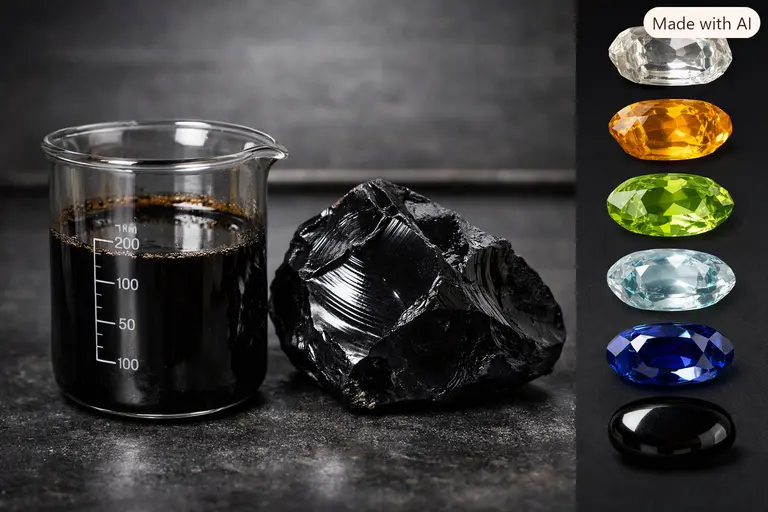
People often call petroleum “black gold.” However, crude oil displays a much wider range of colours than that common nickname suggests. For example, some light crudes look pale yellow, while others appear golden, brown, or nearly black. Composition explains most of this variety. In particular, heavy components such as resins and asphaltenes darken the liquid and thicken its consistency. As a result, two crude oil samples from different geological sources often look completely different. To help you visualize the diverse spectrum of petroleum, this article compares these unique oil shades to familiar stones you might find in a Gemstone colour guide. However, keep in mind that looks can be deceiving—colour alone is never enough to determine an oil’s true quality or utility.
How Crude Oil Colors Appear at the Source
Pale yellow and nearly clear variants
Very light crudes and condensates can look colourless, straw-coloured, or pale yellow. Condensate represents a particularly light petroleum stream; therefore, we should not treat it as just another grade of heavy crude. Visually, these shades resemble goshenite, white topaz, or clear quartz. Of course, this comparison stays strictly visual, because these gemstones share nothing chemically with petroleum.
Golden and amber shades
Light crudes also appear golden, honey-coloured, or amber. Accordingly, citrine, heliodor, and amber echo these tones well. Moreover, sample thickness changes the look significantly. For instance, a thin sample appears lighter than the same oil in a deep container; consequently, depth and lighting always influence our perception of the product.
Brown and black shades
Heavier crudes turn brown, reddish-brown, or almost black. Specifically, complex molecules absorb more light, which reduces transparency. For that reason, almandine garnet, spessartine garnet, and brown tourmaline suit the brown range. Meanwhile, schorl, jet, and black obsidian suit the darkest crudes. Jet has an organic origin, whereas obsidian forms as volcanic glass. Therefore, these stones show visual similarity only, not shared composition.
From Crude Oil to Refined Products
Refineries separate crude oil into fractions based on physical properties, and they then process those fractions into finished products. Consequently, a dark crude can yield a pale fuel. Furthermore, additives and deliberate fuel marking can change the final look of the product.
Gasoline and aviation fuel
Undyed gasoline looks colourless to pale yellow. For instance, ASTM D156 covers the colour of refined products such as undyed motor gasoline, jet fuel, and kerosine. Importantly, ASTM D156 states that colour is not always a reliable guide to product quality. Aviation turbine fuel and kerosine, meanwhile, look clear to pale straw. Therefore, very pale citrine, aquamarine, and clear quartz make fitting comparisons. Still, fuel-marking rules differ between countries, so no grade has one universal colour.
Diesel and lubricating oils
Diesel ranges from pale yellow to deeper amber, depending on its specific formulation. Accordingly, yellow sapphire, heliodor, and citrine match that range. Likewise, fresh lubricating oils run from very pale yellow to dark amber because the base oil and additive package shape the colour. As a result, amber, tiger’s-eye, and brown tourmaline work well as visual comparisons. In contrast, used engine oil darkens in service because of oxidation and contaminants. However, colour alone cannot tell you when to change the oil.
Why Petroleum Color Changes
Colour comes from the way composition interacts with visible light. First, complex heavy molecules absorb more light, so petroleum rich in them looks darker. Second, thickness matters, because a thin layer of dark oil lets more light pass than a deep sample does. Likewise, ambient lighting changes what the eye sees. Thus, treat colour as an observation, not a chemical description.
Can Color Identify Oil?
Colour offers a useful first impression, but it never gives a full identification. Therefore, professionals rely on standard measurements. For example, ASTM D1500 sets a visual method for the colour of lubricating oils, heating oils, diesel fuel oils, and petroleum waxes, while D156 provides the Saybolt method for lighter products. As a result, a colour reading should never replace other required laboratory tests.
Natural, Treated, and Imitation Oils
Buyers who want to separate genuine from counterfeit products face the same limit. For instance, crude oil traders may glance at appearance first. Nevertheless, commercial deals depend on specifications, laboratory results, documentation, and independent inspection. Similarly, consumers should not trust an engine oil just because it looks clear, golden, or amber. Instead, packaging, traceability, and an authorized supply chain give far stronger proof. In addition, buyers can check the licensing directory on the American Petroleum Institute (API) engine oil page for products that carry official marks.
What Consumers Should Remember
For the 99 percent who simply want to understand petroleum better, one rule helps most: do not judge oil by colour alone. After all, a pale liquid is not automatically pure, and a dark liquid is not automatically poor. Likewise, golden engine oil is not automatically genuine. Instead, consider the product type, specification, manufacturer, packaging, and intended use. Ultimately, looking at gemstones is a great way to picture the visual variety of these liquids, but it can never replace actual scientific testing—as explored further in this related Saju Elizamma article.
Frequently Asked Questions
What colours can crude oil have?
In short, crude oil ranges from nearly clear and pale yellow through golden, brown, and reddish-brown to black. Moreover, composition, sample thickness, and lighting all shape its look.
Does black crude oil mean poor quality?
No. Although black colour often signals heavier crude, density, sulfur content, and viscosity also decide commercial value.
Which gemstones resemble crude oil colours?
Pale crude resembles clear quartz or white topaz, while golden crude resembles citrine or amber. Similarly, brown crude resembles garnet, and black crude resembles schorl, jet, or obsidian.
Can colour reveal fake engine oil?
No. Colour cannot reliably expose counterfeit or adulterated oil. Instead, check the packaging, traceability, specifications, and supply chain.
Why does crude oil look darker than gasoline?
Crude oil contains heavy components that strongly affect colour. However, refining separates those components. As a result, light products look much clearer.
Disclaimer
This article uses gemstone comparisons to describe visual characteristics only. Petroleum colour varies widely based on composition, sample thickness, lighting, processing, and regional additives. Therefore, visual observation should never replace technical specifications, laboratory analysis, safety procedures, or professional advice. Fuel colouring rules also vary between countries. The author has no financial affiliation with the brands or organizations mentioned.