Introduction
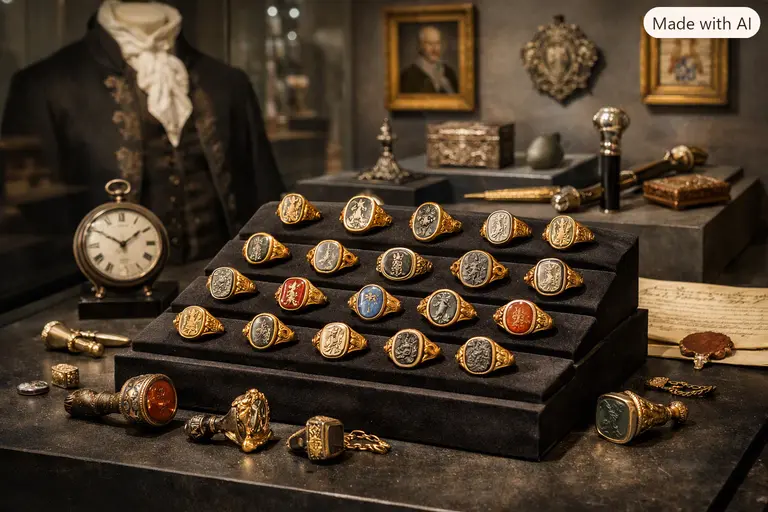
Most people think of jewellery as beauty, wealth, and style. However, throughout history, jewellery for men has served as a vital tool for expressing identity, rank, belief, and profession. The exhibition Decoration and Symbols: What Adorns Men explores this long story at the Landesmuseum Württemberg in Stuttgart. It runs from 17 October 2026 to 25 April 2027 at the Old Castle. Moreover, its ten sections move from the Stone Age to today and cover crowns, rings, watches, tattoos, and belt buckles. As a result, curious readers can enjoy this exhibition on jewellery for men just as much as experts do. Throughout human civilization, accessories have told a story. By looking closely at these historic artefacts, we can see exactly how men’s jewellery served as a powerful language of signs and status. Explore our Jewelry and Identity Guide to uncover the hidden meanings behind the style.
Why Jewellery for Men Matters
The exhibition treats adornment as more than decoration. Instead, it presents jewellery for men as a language of signs. Visitors therefore ask why certain objects came to signal authority, faith, work, or personal identity. Even a casual visitor can read a ring, a crown, or a buckle like a short story. In short, a jewel never stands alone, because its meaning changes with the wearer and the society around them. By observing these objects, we recognize how symbols of status evolve across different cultures and eras.
What Gemstone Lovers Can Learn About Jewellery for Men
Gemologists usually study a stone’s identity, treatments, and quality. Historical jewellery, however, adds a human layer. For example, a gemstone once showed rank, protected a family, or backed political power. Consequently, this history helps everyday buyers understand why certain colours and shapes still feel meaningful. In other words, a stone carries a story as well as a price. Meanwhile, you can read our guide to buying gemstones with confidence before your next purchase.
What Watch Fans Can Discover in Jewellery for Men
A watch sits between technology, tool, and jewellery. Therefore, it fits this exhibition well. A watch tells time, yet it also signals taste, career, and achievement. Similarly, signet rings and buckles once mixed daily use with personal style. Notably, the museum dedicates one section to the watch as a technical marvel and a statement piece. Many men today still choose a watch to say who they are without speaking. For more ideas, see our comprehensive watch guides.
Where Technology Meets Tradition in Jewellery for Men
People have always placed useful objects on the body. Over time, accessories took on tasks such as identification, protection, and timekeeping. Today, smartwatches and fitness rings continue that habit. Furthermore, the exhibition’s interactive features show how museums can blend old objects with modern tools. Thus, designers and technologists find fresh ideas in the past. We see how the basic human desire to adorn remains constant, even as our tools become digital.
Comparing Indian Traditions to Jewellery for Men
The Stuttgart show draws mainly on central European collections, yet it also adds international and contemporary views. Therefore, readers can use it as a starting point for comparison. Male adornment has shaped royal, ceremonial, and religious life in India for millennia. The National Museum in New Delhi describes a collection that spans five thousand years, from Harappan beads to Mughal treasures. For instance, its jewellery gallery includes a 19th-century Rajasthani turban ornament of gold, diamonds, and emeralds. Readers in Keralam and across India can therefore compare Indian and European traditions instead of assuming one universal pattern.
Smart Lessons for Collectors of Jewellery for Men
Collectors should remember that context matters. An antique jewel or watch tells only part of its story, so materials, technique, wear, and provenance all count. However, age does not prove authenticity or high value. Owners often repair, reset, or reassemble old pieces from parts of different periods. For that reason, buyers should examine construction closely and ask a qualified specialist for advice. Remember, restoration is not always a flaw. While poor alterations mask history, careful conservation safeguards it. In short, you must understand a piece before you can accurately judge its value—learn how to evaluate your finds in our Collecting Tips Article
.
A Cultural Trip to Explore Jewellery for Men
This exhibition does not belong only to specialists. Instead, it links jewellery for men with everyday questions about fashion, belief, technology, and society. Travellers from India and elsewhere can add Stuttgart to a cultural itinerary between 17 October 2026 and 25 April 2027. Above all, it asks a simple question: why do people wear objects on their bodies, and what do those objects say about them?
Frequently Asked Questions
When does the exhibition run?
It runs from 17 October 2026 to 25 April 2027 at the Landesmuseum Württemberg in Stuttgart, Germany.
What period does it cover?
It traces men’s adornment from the Stone Age to today through ten sections.
Why does it matter to jewellery and watch lovers?
It links adornment with identity, power, belief, and function. Therefore, it gives useful context to anyone who works with gems, watches, or design.
What can Indian visitors learn?
They can compare the show with India’s well-documented traditions. For example, the National Museum’s collections include sarpeches, rings, bracelets, and watches.
Is it useful for ordinary travellers?
Yes. Its themes reach beyond the trade, so anyone can explore how jewellery for men connects with fashion, history, and technology.
Disclaimer
This article combines confirmed exhibition details with historical context and our own analysis. The Landesmuseum Württemberg supplied the dates, location, and themes. The Indian examples and the comments on collecting, watches, and technology are our interpretation, not statements from the organizers. Please check the official museum website for admission, opening hours, and accessibility before you travel. The author has no financial affiliation with the brands or organizations mentioned.