Introduction
Indeed, a fresh and exciting chapter has opened in the colored-stone world. On August 27, 2024, the Gemological Institute of America (GIA) and the Gübelin Gem Lab independently confirmed a massive development. Specifically, they revealed that Ethiopia now produces copper-bearing tourmaline that meets the widely accepted international definition of Paraiba tourmaline.
This finding matters immensely because Paraiba tourmaline ranks among the most desired and expensive colored gemstones in existence. Originally, Brazilian material won global fame for its vivid, neon “electric” glow. Later, Nigeria and Mozambique added their own important supplies to the global market. Today, however, Ethiopia enters the same elite conversation.
Even so, the name itself often confuses ordinary buyers. This is because “Paraiba” originally described a single Brazilian locality. Today, however, gemologists also use the term as a variety name for any copper-bearing elbaite tourmaline that matches the accepted chemical definition. Consequently, the Ethiopia Paraiba Tourmaline discovery speaks directly to everyday jewelry shoppers. If you are new to the world of colored stones, our guide to colored gemstone basics offer essential background on how these treasures are valued.
A Major Ethiopia Paraiba Tourmaline Breakthrough
The path to this discovery involved rigorous scientific testing. Rumors regarding copper-bearing tourmaline from Ethiopia began circulating within the gemstone trade earlier in 2024. As a result, both the GIA and Gübelin launched separate, intensive investigations to verify the origin and chemistry of the material.
GIA and Gübelin Confirm Ethiopia Paraiba Tourmaline
Gübelin first noticed unusual material in May 2024. This happened because several stones submitted for testing carried chemical traits that did not match existing Brazilian, Mozambican, or Nigerian data sets. Meanwhile, the GIA began examining Ethiopian-origin material in June and, by July, they had received more than 100 rough and cut stones for exhaustive study.
Although these two world-class laboratories worked independently, they still reached the same conclusion. Specifically, the Ethiopian material qualifies as genuine Paraiba tourmaline due to its significant copper and manganese content. Consequently, the Ethiopia Paraiba Tourmaline source is now officially recognized across the global industry.
The Unique Ethiopia Paraiba Tourmaline Chemistry
Interestingly, the chemistry tells the most compelling part of this story. While individual stones vary in their exact makeup, the Ethiopian material overall shares a specific chemical “fingerprint.” Specifically, researchers measured elevated levels of vanadium, lead, and gallium. These trace elements are the keys to identifying where the stone was born deep within the Earth.
Chemical Markers for Ethiopia Paraiba Tourmaline
In particular, GIA researchers measured vanadium levels above 60 ppm (parts per million). Furthermore, they found lead between roughly 170 and 6,000 ppm and gallium around 280 to 900 ppm. Notably, these markers separate Ethiopian stones from Paraiba mined in Brazil or Mozambique. Therefore, a skilled gemologist can now use these chemical markers to confirm the stone’s African origin.
This discovery also corrects a common assumption in the trade. Many believed that a laboratory would always need highly advanced LA-ICP-MS (Laser Ablation) equipment to spot the Ethiopian signature. However, Gübelin recently reported that a high-quality ED-XRF system can often detect these same characteristics. Nevertheless, equipment alone never guarantees an accurate origin call. A lab still needs solid reference data and expert human interpretation to be 100% certain.
Color Range of Ethiopia Paraiba Tourmaline
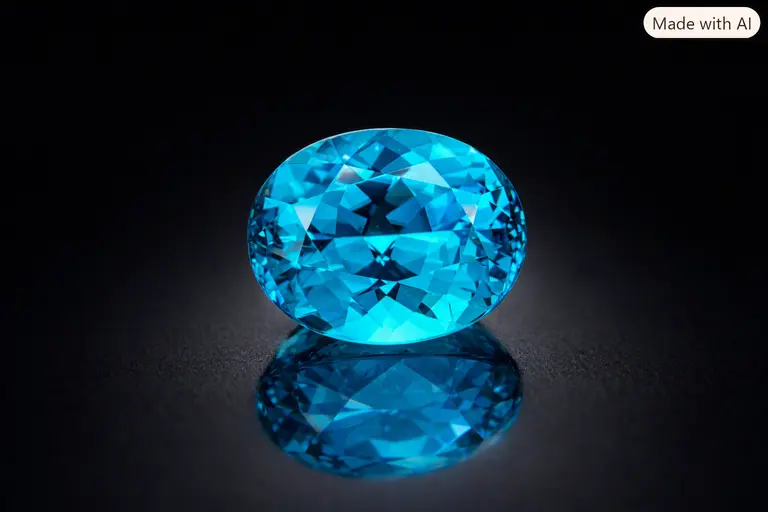
Many jewelry buyers picture only neon-blue or bluish green “Windex” colors when they hear the word “Paraiba.” However, the Ethiopia Paraiba Tourmaline discovery reveals a much broader palette than many expected. The Ethiopian material includes a wide range of hues:
- Vivid Blues and Aquas
- Deep Bluish-Greens
- Soft Violets and Purples
- Rare Colorless copper-bearing stones
- Distinctive Color Zoning
Furthermore, some stones display visible color zoning, where one part of the crystal is blue and another is purple. Still, carrying the Paraiba label never guarantees exceptional beauty on its own. This is because two Paraiba stones can differ enormously in their internal clarity and overall visual “glow.” Consequently, the consumer must still judge each stone based on its individual merit. To understand how to vet these stones, see our guide to gemstone identification.
Global Impact of Ethiopia Paraiba Tourmaline
Ethiopia now stands alongside Brazil, Nigeria, and Mozambique as a recognized source of this copper-bearing treasure. This expansion of the “Paraiba map” is a significant event for global supply chains. Additionally, this gives Ethiopia another valuable entry in its gemstone sector. The country is already world-renowned for its opals and emeralds.
How might prices respond to this Ethiopia Paraiba Tourmaline discovery? Historically, origin has shaped Paraiba pricing significantly. Brazilian stones usually carry a heavy collector premium due to their “first-source” status. However, origin is only one factor in the value equation. Color saturation, clarity, size, and lab documentation influence value just as strongly. Therefore, Ethiopian origin will not automatically mean a “discount” price. Instead, the market will gradually settle prices based on the genuine quality and rarity of the individual pieces.
Indian Labs and Ethiopia Paraiba Tourmaline
Because India hosts a massive gem-cutting and trading sector in cities like Jaipur and Mumbai, this discovery carries real local relevance. Indian laboratories must now update their internal databases to include the unique vanadium and gallium markers found in Ethiopian stones. This ensures that Indian exporters can provide accurate origin determination for their global clients.
Furthermore, Indian jewelry designers now have access to a fresh source of one of the world’s most vibrant gems. The variety of colors found in Ethiopia—especially the purples and violets—provides new creative opportunities for high-end “East meets West” jewelry collections. As a result, the Ethiopia Paraiba Tourmaline will likely become a staple in Indian luxury boutiques over the coming years.
FAQ: All About Ethiopia Paraiba Tourmaline
Is Ethiopian tourmaline officially Paraiba?
Yes. Both GIA and Gübelin have confirmed that the material meets the international chemical requirements for the Paraiba variety name due to its copper and manganese content.
How does it look compared to Brazilian stones?
While some Ethiopian stones match the neon-blue of Brazil, the new source also produces a wide range of violets and purples that are quite distinctive.
Will this discovery lower Paraiba prices?
Furthermore, while more supply generally helps the market, the extreme rarity of copper-bearing tourmaline means prices will likely remain high for top-quality stones.
Can gem labs distinguish Ethiopia from Mozambique?
Yes. By using ED-XRF or LA-ICP-MS testing, labs can identify the elevated lead, gallium, and vanadium levels that are unique to the Ethiopian deposit.
Should I buy a stone just because it is Paraiba?
No. Always judge the stone’s beauty first. A low-quality Paraiba is often less valuable than a high-quality “common” tourmaline.
Conclusion
The confirmation of the Ethiopia Paraiba Tourmaline source marks a historic moment for the gemstone industry. It proves that the Earth still hides magnificent treasures in unexpected locations. For the collector and the jeweler, this new source provides a broader palette of colors and a new story to tell. Ultimately, while the science of trace elements helps us identify these stones, it is their electric beauty that continues to capture our imagination. As more material enters the market, Ethiopia will undoubtedly cement its place as a cornerstone of the global gemstone trade.
Disclaimer
This article serves general educational purposes only. It does not offer gemstone valuation, investment guidance, or purchasing advice. Paraiba tourmaline prices vary widely based on quality and market conditions. Because Ethiopian production remains new, reference data will keep expanding. Always consult an independent, qualified gemological laboratory for significant purchases. The author has no financial affiliation with the labs or organisations mentioned.