Introduction to the Clarity of the Umngot River
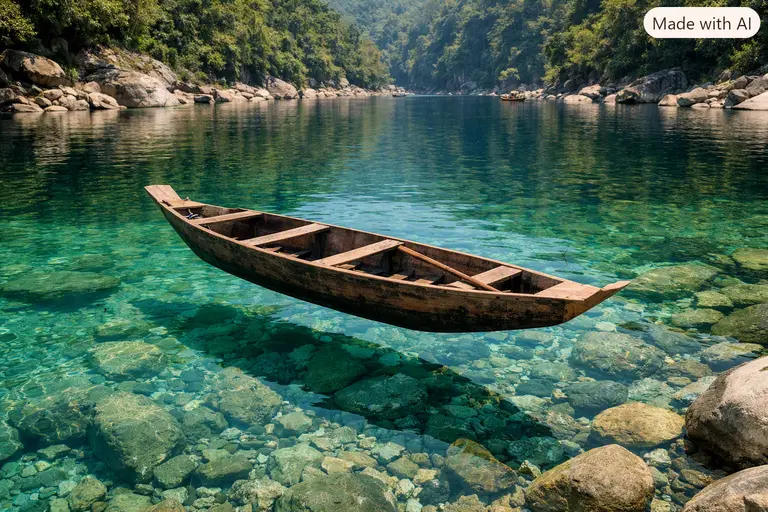
The clarity of the Umngot River at Dawki, Meghalaya, represents one of nature’s most breathtaking displays in Northeast India. In fact, a 2026 Press Information Bureau (PIB) release officially recognizes it as one of the primary ecological wonders of the continent. Visitors often remark that boats gliding across the surface appear to float on a sheet of flawless glass. However, users should understand that this “cleanest river” status is a result of specific geological and social conditions rather than a random occurrence.
Therefore, to truly appreciate the clarity of the Umngot River, we must look at the unique mountain catchment, the seasonal rainfall patterns, and the light industrial pressure in the region. This pristine state is a rarity in the 21st century. By examining how this transparency is maintained, we can identify better conservation strategies for other waterways across the country. To see how other high-value “natural” assets are graded and protected, you can read our guide on grading standards for juice and gemstones.
The Geography of Dawki: River vs. Lake
First, a quick geographic correction avoids common traveler confusion. The Umngot is a fast-flowing river, while Dawki is the nearby town and vital border crossing into Bangladesh. Still, photographs of its calm, emerald stretches often lead people to mistakenly call the spot “Dawki Lake.” This name misrepresents the actual hydrology of the area.
The river originates in the high Jaintia Hills and East Khasi Hills. Specifically, the water remains clear because the river flows through a terrain of hard, metamorphic rock that does not easily erode. You can learn more about the specific topography through the official Government of Meghalaya portal. This geological foundation is as important to the river’s identity as the Sanskrit gem knowledge was to ancient Indian trade history.
Natural Factors Driving the Transparency
The clarity of the Umngot River depends entirely on the low concentration of suspended particles. Water looks cloudy when fine soil or silt particles scatter light. Fortunately, the Umngot winds through dense primary forests and rocky canyons that act as a natural filtration system.
Low Sediment and Seasonal Rainfall
The forest floor absorbs the initial impact of rainwater, preventing the massive runoff that usually carries silt into river systems. Consequently, the water reaching the main channel is already pre-filtered by nature. Furthermore, the region faces significantly less industrial pressure than India’s larger river basins. However, the monsoon season from May to September can still turn the water murky. Drier spells allow the sediment to settle quickly, returning the river to its glass-like state. This seasonal resilience is a key feature of hidden networks in nature and business that maintain long-term stability.
The Visual Impact of the Rocky Riverbed
The riverbed plays a vital visual role in the “floating boat” illusion. In the shallow sections near the Shnongpdeng village, smooth white and grey stones stay clearly visible. Because sunlight travels farther through low-sediment water, the riverbed appears remarkably close to the surface. This high visibility allows photographers to capture the “invisible” water effect that has made the Umngot famous on global social media platforms. For travelers, visit Meghalaya Tourism for the best viewing dates.
The Gemstone Comparison: Aquamarine or Diamond?
Gemologists frequently ask which gemstone the Umngot resembles. At first glance, the shallow water looks like a flawless, “D-color” diamond because of its total transparency. However, once sunlight interacts with deeper pools and the green shadows of the forest, the color shifts.
The water then adopts the soothing, blue-green tones of a high-quality aquamarine. Specifically, clean aquamarine offers the closest overall color match because it shares the same subtle teal undertone. In contrast, light blue topaz captures only the blue and misses the natural organic green depth. This visual brilliance is similar to the colours of Keralam gems, where the environment dictates the beauty of the view.
Community Responsibility and PIB 2026 Data
Natural advantages alone cannot protect the clarity of the Umngot River indefinitely. According to the 2026 PIB report, the local Khasi and Jaintia communities act as the primary guardians of the water. Because the local economy depends entirely on tourism built around the water’s reputation, the village councils enforce a strict “zero-plastic” policy.
Boatmen and tour operators share a direct stake in conservation. If a visitor drops trash, the local guides often stop the boat to retrieve it immediately. This localized oversight is a prime example of the “industry sheepdog” concept we explored in our guide to industrial quality control. By ensuring that human impact remains minimal, the community preserves its greatest financial asset. This is a vital lesson in building India’s global brands, where the product’s integrity is the brand’s soul.
What Keralam Can Learn From the Umngot
Keralam, with its own vast network of rivers and backwaters, can draw significant lessons from the Dawki example.
- Upstream Protection: Prevention costs far less than restoration. Protecting the forest catchments of rivers like the Periyar is the first step.
- Financial Incentive: When local residents benefit from clean water through eco-tourism, they protect the environment more fiercely than any government official.
- Carrying Capacity: Tourism must respect ecological limits. Overcrowding can lead to invisible contaminants that threaten the very beauty people come to see.
- Scientific Monitoring: While transparency is a good sign, authorities must monitor chemical levels to ensure the water is safe for the long term. This disciplined analysis is the foundation of critical thinking in modern gemology.
FAQ About the Clarity of the Umngot River
Why is the Umngot River so clear?
The clarity results from a combination of hard-rock geology that prevents silt, dense forest buffers that filter rainwater, and a local community that strictly prevents plastic pollution.
Can I swim in the Umngot River?
Yes, swimming and cliff jumping are popular activities. However, you should wear a life jacket and follow the instructions of local guides to protect both yourself and the riverbed.
Is the water safe to drink directly?
While the clarity of the Umngot River suggests purity, you should never drink untreated river water. It may still contain natural bacteria or microorganisms that can cause illness.
When is the best time to see the floating boat effect?
The best time is between November and February. During these months, the rainfall is minimal, and the water reaches its peak transparency.
How do I reach the Umngot River from Shillong?
You can hire a private taxi or take a shared sumo from Shillong to Dawki. The journey takes approximately three to four hours through some of the most scenic landscapes in Meghalaya.
Disclaimer
This article serves general educational purposes. While the Umngot is recognized for its purity, water clarity can change based on weather and human activity. The author has no financial affiliation with the tourism boards or government agencies mentioned. Always check current local travel advisories before visiting Dawki. Data reflects the situation as of August 2026.