Introduction to Borosilicate Glass Jewelry
Jewelry designers constantly search for materials that successfully combine visual beauty, structural strength, and everyday comfort. As a result, borosilicate glass jewelry has earned a prestigious place on the list of modern essentials. Most people first recognize this material from laboratory equipment or heat-resistant cookware; however, skilled artisans now shape it into intricate rings, earrings, and pendants that anyone can wear with total confidence.
Unlike ordinary fashion glass, borosilicate glass resists sudden temperature changes and holds up exceptionally well to daily wear. Because of this unique property, it suits individuals who demand jewelry that looks elegant yet survives the rigors of real life. At the same time, every handcrafted piece carries small variations that reflect the artisan’s hand. Consequently, no two pieces ever look exactly alike. If you enjoy exploring modern, resilient materials, you might also like our guides on titanium jewelry and stainless steel jewelry, which explain why these metals continue to gain massive popularity.
What Defines This Unique Material?
Borosilicate glass jewelry begins as a specialized type of glass composed primarily of silica and boron trioxide. Together, these two ingredients create a material that significantly outperforms the ordinary soda-lime glass found in bottles and windowpanes. Specifically, it offers superior strength and incredible heat resistance.
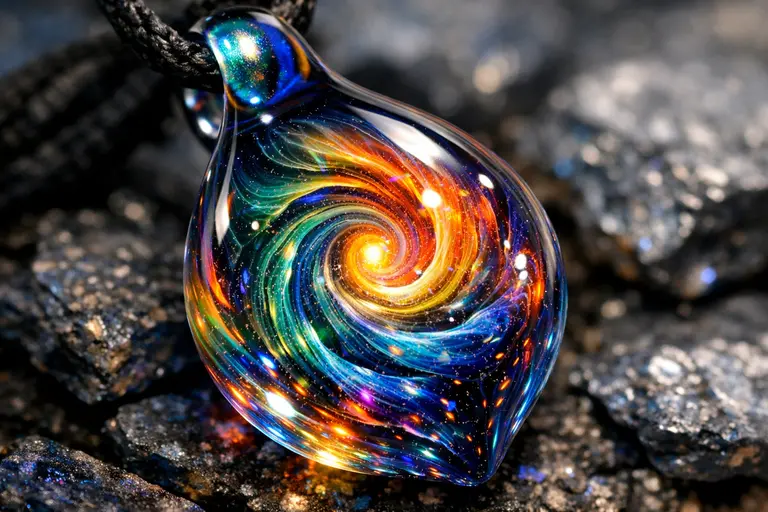
Scientific glassware manufacturers have used this glass for decades; however, jewelry artists value it for entirely different aesthetic reasons. They specifically prize its crystalline clarity, its durability, and its ability to hold intricate, three-dimensional shapes without adding unwanted weight to the wearer. Independent artisans around the world now transform this glass into countless contemporary styles. For instance, some designs favor clean, minimalist lines, while others feature colorful swirls and metallic accents. As a result, buyers can easily find a piece that fits either a casual afternoon or a formal evening gala.
Why Is It Popular in 2026?
Several cultural trends have pushed borosilicate glass jewelry into the global spotlight. First, many modern shoppers now choose unique handmade goods over mass-produced accessories. Consequently, the artisan glass sector has built a loyal, dedicated following. Second, social media platforms have introduced millions of users to the hypnotic process of glassblowing. Therefore, unique rings and pendants regularly catch the attention of fashion-conscious buyers worldwide.
Younger shoppers, in particular, gravitate toward jewelry that reflects their specific personality. Because artisans shape each piece by hand, every design carries small, natural variations that provide real character. This stands in stark contrast to factory-made jewelry, which simply repeats the same pattern endlessly. Furthermore, wearer comfort remains a priority. Since borosilicate glass stays surprisingly lightweight, even bold statement pieces remain easy to wear for a full day. Understanding these hidden networks in nature and business helps us appreciate why artisanal chains remain so resilient.
The Durability of Borosilicate vs. Traditional Glass
Durability stands out as the most significant advantage of this medium. While no glass is truly unbreakable, borosilicate glass resists chipping and cracking far better than ordinary decorative glass. Specifically, it handles sudden temperature swings with ease. For example, stepping from an air-conditioned room into hot outdoor air typically will not damage a borosilicate pendant. This is the same chemical quality that allows synthetic gems in fiber optics to function under high-stress environments.
Skin-friendliness adds another strong selling point. Because the glass stays non-porous and chemically stable, it will not react with your skin or release harmful metals. Furthermore, its smooth surface resists moisture and stays exceptionally easy to clean. That said, some pieces pair the glass with metal findings like sterling silver or gold. Therefore, shoppers with metal allergies should still check these components before finalizing a purchase.
The Artisan Technique: Flameworking
Making borosilicate glass jewelry demands immense skill, patience, and a steady hand. Rather than pouring molten glass into generic factory molds, most artisans shape each piece individually through flameworking, also known as lampworking. During this process, the artisan heats solid glass rods with a specialized oxygen-and-fuel torch.
Because borosilicate glass melts at roughly 1,648°C, the torch flame must burn intensely hot to soften the material. The artist then rotates, stretches, and sculpts the glowing glass by hand while it remains in a molten state. Every small movement dictates the final look; therefore, most handmade rings end up subtly different from one another. Instead of turning out identical copies, these artisans create individual works of wearable art. Many artists also incorporate silver or gold “fuming”—where they vaporize precious metals in the flame to create iridescent colors inside the glass.
Global Production and the Indian Market
Borosilicate glass jewelry comes from specialized artisan studios across the globe. Small workshops handle this production best because the flameworking process requires high-level precision.
- Europe: Countries like Spain and the UK have built vibrant communities of glass artists who focus on sculptural and minimalist styles.
- United States: The US is home to one of the largest independent glass artist networks, driving innovation in color and form.
- Italy: While Murano is famous for traditional glass, many Italian studios are now adopting borosilicate glass to meet modern demand.
India also produces high-quality borosilicate glass jewelry, although the industry remains smaller than the traditional glass sector. Firozabad in Uttar Pradesh, often called “India’s Glass City,” has produced glass goods for generations. Recently, several manufacturers there have expanded into borosilicate production, creating durable beads and bangles for international markets. This expansion is a key part of building India’s global brands through specialized expertise. For a deep dive into glass history, visit the Corning Museum of Glass.
FAQ About Borosilicate Glass Jewelry
Is borosilicate glass jewelry easy to break?
No, it is significantly tougher than standard glass. It resists impact and thermal shock; however, you should still avoid dropping it on hard stone or tile surfaces, as extreme force can still cause breakage.
Can I wear borosilicate glass rings every day?
Yes, you certainly can. Because the material is harder than traditional glass and resistant to scratches, it handles daily tasks much better than other “art glass” alternatives.
Is the color in the glass painted on?
Never. In high-quality borosilicate glass jewelry, the color comes from metallic oxides mixed into the glass itself or from “fuming” precious metals. Consequently, the colors will never fade, peel, or wash off.
How do I clean my glass jewelry?
You should clean your pieces using mild dish soap and lukewarm water. Gently dry the glass with a soft, lint-free cloth to maintain its original high-gloss shine.
Is this jewelry environmentally friendly?
Yes, borosilicate glass is a sustainable choice because it is 100% recyclable and incredibly long-lasting. By choosing durable artisan pieces, you reduce the waste associated with “fast fashion” accessories.
Disclaimer
This article serves general educational purposes only. Product quality and materials can vary among individual artisans. Therefore, always review the seller’s specific material disclosures and care instructions before you buy. Consult a qualified jeweler if you have specific questions about metal sensitivities in jewelry findings. The author has no financial affiliation with the brands mentioned.