Introduction to Czech and Indian Glass Beads
Glass beads have fundamentally shaped global jewelry design for several centuries. Currently, two specific regions lead the world in production: the Czech Republic and India. Professional designers, high-fashion houses, and independent craft businesses depend on these two sources every single year. Whether you create bespoke handmade accessories or manage a large-scale manufacturing firm, understanding the origins of your materials helps you make smarter inventory decisions. Specifically, Czech and Indian glass beads offer distinct advantages in terms of precision, texture, and cultural narrative. Consequently, this guide explores both industries in detail to help you select the best materials for your 2026 collections. You should also read our guide on gemstone buying mistakes to understand how quality standards apply to all jewelry components, including glass.
The Czech Glass Bead Industry: Precision in the Crystal Valley
The Czech Republic produces the world’s most consistent and technically precise glass beads. Most of this industrial activity takes place in the “Crystal Valley” region of Northern Bohemia. The town of Jablonec nad Nisou has served as Europe’s leading hub for bead exports for several generations. Because of its deep history, the region maintains a level of technical mastery that few can rival.
How the Czech Cottage Industry Operates
The Czech industry thrives because it successfully blends large-scale industrial efficiency with specialized hands-on craftsmanship. Initially, large factories like Preciosa Ornela produce raw glass rods. Afterward, smaller family-owned workshops take over the specific finishing tasks. These tasks include pressing, faceting, and hand-painting. Furthermore, this collaborative approach preserves centuries-old skills that modern machines simply cannot replicate on their own. As a result, Czech products carry a global reputation for extreme reliability and uniform sizing.
Popular Styles in Czech Glass Beads
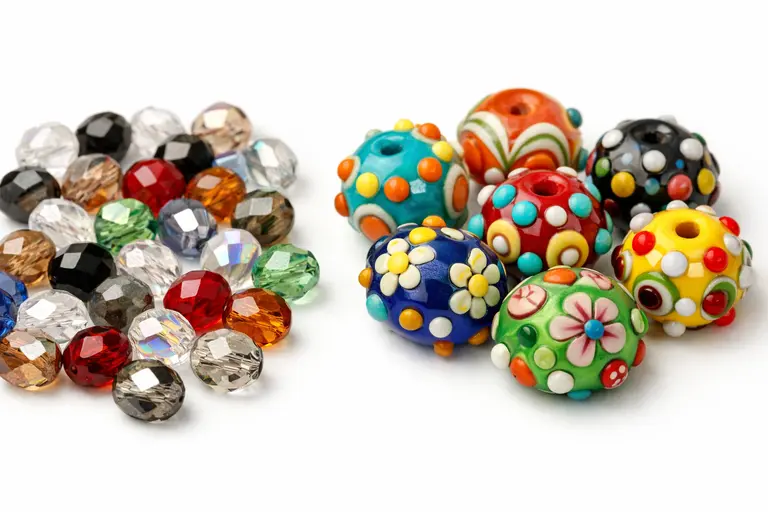
Czech manufacturers are particularly famous for their “fire-polished” beads. During this process, workers cut facets into pressed glass and then reheat them in high-temperature furnaces. Consequently, the heat softens the surface just enough to create a brilliant, mirror-like shimmer. In addition, they produce intricate “pressed glass” beads in complex shapes like leaves, flowers, and multi-hole geometric forms. Moreover, their seed beads (rocailles) remain the gold standard for luxury embroidery and loom-weaving projects due to their incredible uniformity. To explore more about these regional traditions, you can visit the Crystal Valley Czech Republic official site.
India’s Traditional Glass Bead Industry: Heritage and Artistry
India brings an entirely different creative energy to global bead production. The country possesses one of the oldest glass-working traditions in human history. Today, the majority of this production originates in the state of Uttar Pradesh. While the Czech industry focuses on precision, the Indian sector celebrates the beauty of natural variation and human touch. This makes Czech and Indian glass beads complementary rather than competitive in a designer’s toolkit.
Firozabad: The Industrial Glass City
Firozabad leads the way as India’s “Glass City.” Large industrial furnaces here produce the glass tubes and raw materials that supply thousands of smaller studios across the region. Because of its massive scale, Firozabad forms the backbone of India’s entire glass supply chain. However, the city does not just produce raw materials; it also manufactures high volumes of machine-cut beads used in the global apparel industry. For technical standards on glass production, refer to Technical Glass Beads.
Handcrafted Mastery in Purdilnagar
Equally important is Purdilnagar, often described as the artistic soul of the Indian bead trade. For over 400 years, this town has served as a hub for handcrafted glass. Local artisans utilize “lampworking” and furnace methods to melt recycled glass into vibrant, soulful beads. Specifically, they use open flames and handheld tools to shape each piece individually. As a result, these beads carry an organic charm that appeals to designers of ethnic and bohemian jewelry. Varanasi also plays a critical role by connecting these rural artisan networks to international markets.
Czech vs. Indian Glass Beads: Making the Right Choice
Both industries provide genuine value, but they serve different aesthetic needs. Czech manufacturers focus on technical excellence. For instance, if your project requires perfect symmetry—such as intricate bead weaving—you should choose Czech rocailles. Their consistent hole sizes ensure that your needles pass through easily every time.
On the other hand, Indian beads specialize in artisanal character. If you are building a collection focused on “slow fashion” or “tribal aesthetics,” Indian lampwork beads are the superior choice. Many professional designers actually combine Czech and Indian glass beads in a single piece. They use Czech beads for the structural foundation and Indian beads as the artistic focal point. This creates a rich, layered texture that tells a global story. You may also read our article on Understanding BIS Hallmark to see how certification protects other sectors of the Indian jewelry market.
Quality Standards and Purchasing Tips
When you source Czech and Indian glass beads in 2026, you must prioritize authenticity and ethical labor practices. For Czech beads, always look for the “Preciosa” or “Bohemian Crystal” branding to ensure you receive genuine Crystal Valley quality. For Indian beads, try to source directly from reputable export houses in Varanasi or verified cooperatives in Purdilnagar.
Furthermore, you should always request a sample before placing a large wholesale order. This allows you to test the durability of the finishes and the consistency of the glass color. Finally, verify that the supplier complies with international safety standards regarding lead and cadmium content. By following these steps, you protect your brand’s reputation and ensure the longevity of your designs.
FAQ: Czech and Indian Glass Beads
Why are Czech glass beads considered superior for embroidery?
Their extreme uniformity in size and shape makes them perfect for high-end embroidery. Consequently, they lay flat on the fabric and create a professional, even finish that machine-made garments require.
Which Indian town is the best for handmade lampwork beads?
Purdilnagar in the Hathras district is the most famous hub. Artisans there have practiced the art of torching and shaping glass for over four centuries.
What is the “Crystal Valley” in the Czech Republic?
It is a designated region in Northern Bohemia where glassmaking and jewelry production have flourished since the 16th century. It is now a UNESCO-recognized cultural heritage site.
Are Indian glass beads more affordable than Czech ones?
Generally, yes. Because Indian production often utilizes recycled glass and artisanal labor, the price per kilogram is usually lower. However, rare lampwork designs can still command premium prices.
Can I mix both types of beads in one jewelry piece?
Absolutely. Many designers mix them to achieve a balance between structural precision (Czech) and artistic focal points (Indian).
Disclaimer
This article is for educational purposes only. Manufacturing locations, supplier availability, and trade regulations fluctuate over time. Always verify current certifications and pricing with authorized distributors before making commercial purchases. The author holds no financial affiliation with the companies mentioned.