
Introduction to Titanium Jewelry Popularity in India
Gold has long dominated Indian jewelry boxes. Historically, it stands for wealth, tradition, and essential financial security. However, today’s modern buyers also demand comfort, durability, and avant-garde design. This significant shift in consumer mindset is exactly why titanium jewelry popularity in India is winning massive attention across the country.
Titanium first built its prestigious reputation in the aerospace, medical, and high-end engineering fields. Designers originally valued it for its remarkable strength and low weight. Now, jewelry makers use those same qualities to craft pieces that traditional precious metals simply cannot replicate. Although titanium will never fully replace gold for weddings or investment purposes, it offers unique advantages that gold and platinum cannot match. Consequently, artisans can create bold, lightweight jewelry that stays comfortable throughout the day. This evolution mirrors the themes found in our steel jewellery buying guide, where durability meets modern style.
Design Factors for Titanium Jewelry Popularity in India
Jewelry makers appreciate titanium because it removes many physical limitations tied to traditional precious metals. For example, gold produces beautiful jewelry, but large, statement pieces quickly become uncomfortably heavy. Platinum, meanwhile, offers outstanding durability, yet it weighs even more than gold. Titanium, by contrast, combines exceptional strength with a feather-light feel.
In fact, titanium weighs roughly one-quarter as much as gold and about one-fifth as much as platinum. As a result, designers can create oversized earrings and dramatic necklaces without sacrificing the wearer’s comfort. At the same time, titanium’s high strength-to-weight ratio allows jewelers to craft thin yet durable frames. These structures hold their shape for years, even under daily stress. Meanwhile, delicate settings continue to secure diamonds and coloured gemstones without bending. This technical precision is handled by the same type of industry sheepdogs in tech and jewelry who maintain quality standards in global manufacturing.
Anodized Colors and Titanium Jewelry Popularity in India
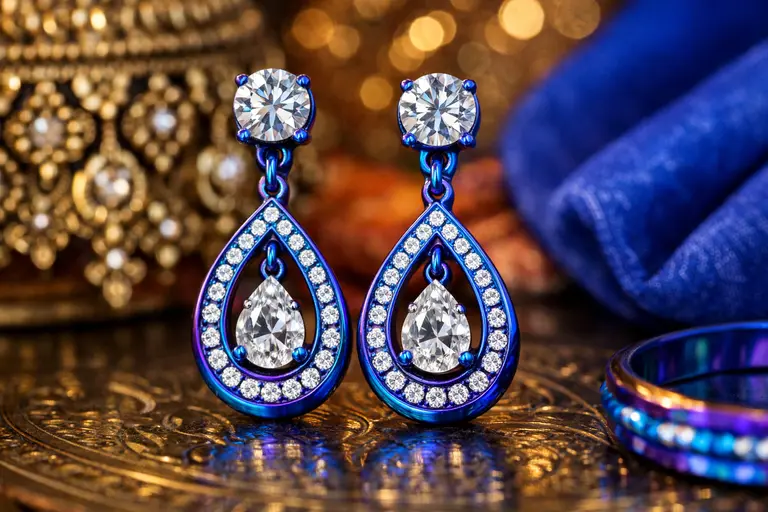
One of titanium’s most fascinating qualities involves its ability to display vivid colours without using paint or toxic plating. Instead, jewelers rely on a process called anodization. During this procedure, they place the titanium in an electrolyte solution and pass a controlled electric current through it. Essentially, this process changes the thickness of the metal’s natural oxide layer. As light reflects off that layer, it produces striking interference colours.
As a result, titanium can display brilliant blues, purples, magentas, and deep greens. Since these colours form part of the surface itself, they do not peel like traditional lacquer. Furthermore, designers can adjust the electrical voltage to fine-tune each specific shade. This gives them impressive creative freedom when pairing metal with expensive gemstones. For instance, a designer might combine blue titanium with aquamarine or golden-toned titanium with yellow diamonds. This creates pieces that feel intentionally coordinated rather than randomly assembled. For those interested in the physics of color, you can read our guide on color-change gemstones.
Light Physics and Titanium Jewelry Popularity in India
To understand why this happens, we must look at the crystal structure of the metal. In titanium jewelry, the oxide layer acts as a prism. This substitution creates a sensitive balance where even a slight change in voltage causes a total visual flip. Consequently, the gemstone acts like a natural filter. Furthermore, other minerals follow similar principles. This fascinating science directly contributes to titanium jewelry popularity in India, as it offers colors that yellow gold cannot achieve.
Wearer Comfort and Titanium Jewelry Popularity in India
Many people admire bold statement jewelry, yet they often avoid it because of the physical strain. Fortunately, titanium solves this problem directly. Since the metal is exceptionally light, even substantial cuffs remain comfortable for hours. Similarly, large earrings place far less strain on earlobes, which prevents the stretching associated with heavy gold jhumkas.
Equally important, titanium jewelry is generally nickel-free and highly biocompatible. Consequently, it rarely triggers allergic reactions or skin irritation. For this reason, implant-grade titanium has become the gold standard for fresh body piercings in major Indian cities like Mumbai and Bengaluru. Buyers are clearly prioritizing their biological health, a trend we also see in the rise of biohacking for healthy aging.
Why the Market Boosts Titanium Jewelry Popularity in India
Currently, several high-end Indian jewelry houses have already introduced titanium collections. Brands like Estaa and Jaipur Gems are leading this transition by featuring titanium alongside natural diamonds. Likewise, men’s jewelry brands now offer titanium rings that pair modern styling with everyday toughness.
That said, buyers should understand that the Bureau of Indian Standards (BIS) does not currently hallmark titanium. Specifically, BIS hallmarking covers only gold and silver under the current HUID programme. Therefore, you must rely on the reputation of the manufacturer. Reputable brands identify their titanium using recognized grades, such as commercially pure Grade 2 or the stronger Grade 5 alloy. In addition, high-quality pieces typically follow international standards for biocompatibility. This focus on standardisation is a key part of building India’s global brands in the luxury sector.
Investment Value and Titanium Jewelry Popularity in India
Resale value differs sharply between titanium and gold. Because titanium’s worth lies mainly in its engineering properties rather than its raw weight, most neighborhood jewelers do not buy it back as scrap. However, if a piece contains certified natural diamonds or gold inlays, those specific components retain their independent value.
Bodies like the Gemological Institute of America (GIA) verify the stones within these modern settings. Ultimately, titanium will not replace gold’s cultural and financial role in India. Instead, it complements traditional collections by offering modern design for a design-conscious generation. For related buying guidance, readers can explore our guide on gold purity or learn more in our complete guide to understanding the BIS hallmark.
FAQ About Titanium Jewelry Popularity in India
Is titanium jewelry expensive compared to gold?
The raw metal is much more affordable than gold. However, because titanium is very hard, it requires specialized machinery and skilled labor to finish. Therefore, high-end titanium jewelry often costs as much as gold due to the intense craftsmanship involved.
Can titanium jewelry rust in India’s humid climate?
No. Titanium is exceptionally resistant to corrosion. In fact, it is frequently used in naval engineering because it does not react to saltwater or humidity.
Can I get my titanium ring resized?
Resizing titanium is extremely difficult. Most local jewelers cannot stretch or compress it like they do with gold. Consequently, you should always confirm your exact ring size before placing an order.
Is titanium safe for people with metal allergies?
Yes, titanium is one of the most hypoallergenic metals available. Because it is biocompatible, it is the same metal used for dental implants and joint replacements.
Does the color on titanium jewelry fade?
Anodized colors are durable, but they are still surface layers. In high-friction areas, such as the bottom of a ring, the color may gradually wear down to the natural grey of the titanium over several years.
Disclaimer
This article serves general educational purposes only. The author has no financial affiliation with the jewelry brands mentioned. Material grades and hallmarking regulations may change over time; therefore, readers should verify certifications with a reputable jeweler before making a purchase. Always consult a professional for investment advice.