Introduction to Decorative Watchmaking Techniques
A watch often seems like a simple functional tool. You glance at it, read the time, and move on with your day. Yet, the finest mechanical watches do something far more remarkable; they carry centuries of handcraft on the wrist. Decorative watchmaking techniques transform a functional object into a wearable piece of art that any curious person can learn to appreciate.
Understanding these techniques is crucial, especially if you plan to purchase a serious timepiece one day. When you know what artisans put into a polished bridge or an enamel dial, the price starts to make sense. Moreover, you begin to see subtle details that most people walk straight past. To see how these artistic values compare across other luxury sectors, you can read our guide on master perfumers and gem graders. By exploring the science behind the finish, you gain a new perspective on luxury.
Defining Decorative Watchmaking Techniques
Decorative watchmaking covers all the artistic finishing that goes onto a watch’s movement, dial, and case. In Switzerland, the trade calls this specialized work Métiers d’Art, a French phrase meaning “artistic crafts.” Historically, some of these finishes also served a practical purpose by protecting metal from oxidation. Today, however, artisans apply them almost entirely to demonstrate skill and create visual beauty.
Because each step requires careful manual work, even two watches from the same limited edition will carry subtle differences. Consequently, that individuality becomes the primary reason for a collector to invest in a specific piece. Furthermore, these techniques are often passed down through , where apprenticeship is the only way to master the craft.
Movement Finishes and Decorative Watchmaking Techniques
Many luxury watches now feature a sapphire crystal case back. As a result, you can see the mechanical movement turning inside. Manufacturers therefore, decorate these internal components with the same care they give to the external dial. The most recognizable finish is Côtes de Genève, or Geneva stripes. Artisans engrave elegant parallel wave patterns across the bridges to create a sense of depth.
Anglage: Essential Decorative Watchmaking Techniques
Another essential technique is anglage, sometimes called chamfering. Specifically, the watchmaker bevels every sharp edge on the bridges and polishes those bevels to a mirror shine. Because the tight inner angles remain almost impossible for machines to perfect, collectors treat hand-finished anglage as a reliable mark of quality.
Black polishing, however, takes finishing to another level entirely. When a watchmaker completes this process correctly, a steel surface reflects light so completely that it appears jet black from certain viewing angles. This requires an perfectly flat surface achieved through hours of manual rubbing on a tin plate. Furthermore, artisans heat steel screws to produce a brilliant blue color through controlled oxidation. These blued screws add both beauty and a sense of tradition to any high-end movement.
Traditional Decorative Watchmaking Techniques for Plates
Perlage, or circular graining, covers the main plate with thousands of tiny, overlapping circles. While this pattern historically reduced the visible effects of moisture, it now simply adds a textured shimmer to the movement. Similarly, “frosting” creates a soft matte texture on gold or brass components. Although this finish appears frequently in antique pocket watches, several independent watchmakers still preserve it today.
Dial Art and Decorative Watchmaking Techniques
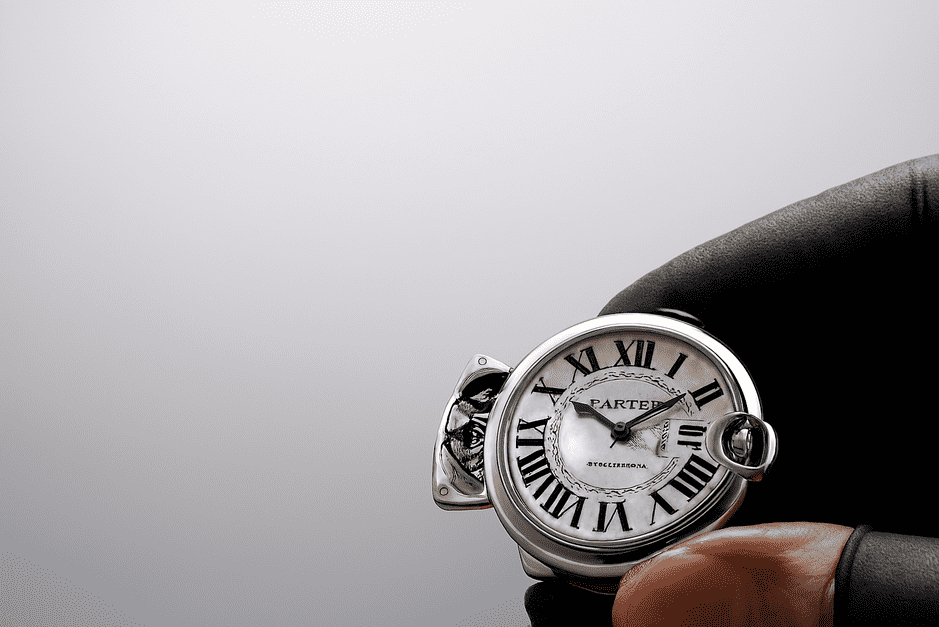
While movement finishing remains hidden behind the watch, decorative dial work catches your eye immediately. Consequently, leading manufacturers invest heavily in keeping these centuries-old crafts alive to differentiate themselves in a competitive market.
Guilloché: Iconic Decorative Watchmaking Techniques
Guilloché, also known as engine turning, is perhaps the most renowned dial technique. Abraham-Louis Breguet popularized it in 1786 by using manually controlled rose-engine lathes to cut repeating geometric patterns into metal. In contrast, Grand Feu enamelling demands even more patience. Artisans apply powdered glass to a precious metal dial and then fire it repeatedly at temperatures above 800°C. Even a single air bubble ruins the entire piece. Nevertheless, a successful enamel dial can hold its brilliance for generations without fading.
Manual Decorative Watchmaking Techniques on Cases
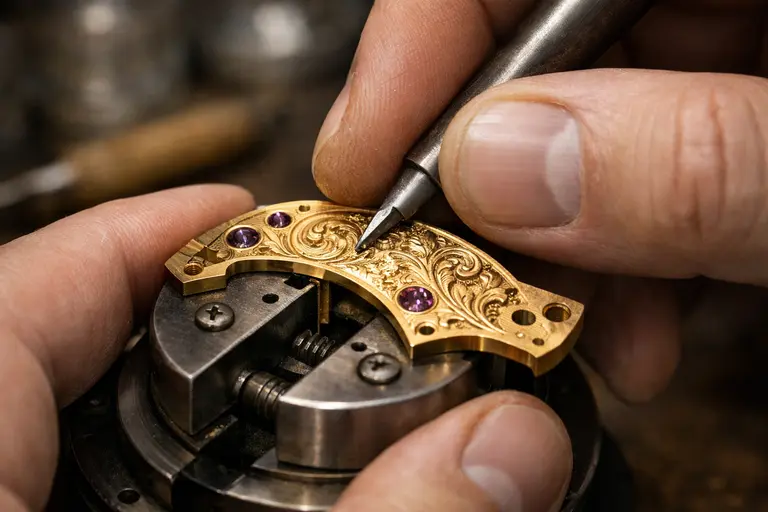
Similarly, cloisonné enamel uses fine gold wires to separate sections of colored glass, creating a miniature stained-glass effect. Hand engraving adds yet another dimension to the watch case. Master engravers carve intricate patterns directly into the metal using traditional tools called burins. These decorative watchmaking techniques ensure that every square millimeter of the watch reflects a commitment to artistic excellence. For a deeper look at the standards involved, visit the Fondation de la Haute Horlogerie (FHH).
India’s Use of Decorative Watchmaking Techniques
The world of decorative watchmaking is no longer exclusive to Switzerland. In India, the Jaipur Watch Company produces limited-edition timepieces featuring hand-painted Pichwai art and traditional Meenakari enamel. These pieces showcase how regional Indian crafts can be integrated into high-end mechanical movements.
Likewise, Titan’s Nebula collection has introduced handcrafted gold cases and marble dials to the global stage. These brands demonstrate that India’s artistic traditions translate naturally into serious horological design. This development is part of the larger movement of building India’s global brands through specialized expertise and heritage.
FAQ: All About Decorative Watchmaking Techniques
Does decorative finishing make a watch more accurate?
No, it does not. These techniques focus entirely on the aesthetic beauty and craftsmanship of the watch rather than its timekeeping performance.
Why are hand-finished watches so much more expensive?
The cost reflects the hundreds of hours of labor required from a master artisan. Unlike machine finishing, manual work allows for tighter angles and more complex patterns that no robot can achieve.
Can I see these decorations without a loupe?
While many finishes like Geneva stripes are visible to the naked eye, you should use a 10x jeweler’s loupe to appreciate the precision of anglage or engraving.
Is the blued color on screws just paint?
In high-end watchmaking, no. The blue color results from heating the steel to a specific temperature (around 290°C), which creates a natural oxide layer.
Which brands specialize in decorative watchmaking techniques?
Patek Philippe, Vacheron Constantin, and Breguet are the historic leaders. However, independents like Philippe Dufour and Kari Voutilainen are also world-renowned for their finishing.
Disclaimer
This article is for educational purposes only. Watch values and market conditions change over time. The author has no financial affiliation with the watch brands mentioned. Always verify the authenticity and condition of a luxury timepiece before making a purchase. Reach out to certified professionals for investment advice.