
Introduction to the Historic Jewels of the Kollur Mookambika Temple
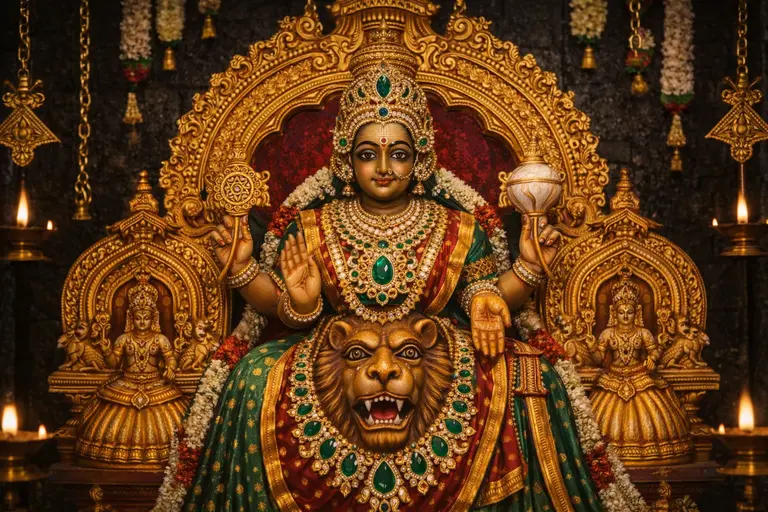
The Kollur Mookambika Temple in Karnataka holds a prestigious place in South Indian spiritual life. Every year, thousands of devotees travel to the Western Ghats to seek the blessings of Sri Mookambika Devi. While faith draws most pilgrims to Kollur, many also arrive curious about the temple’s remarkable treasury. Indeed, the historic jewels of the Kollur Mookambika Temple represent an equally fascinating legacy of royal patronage and ancient craftsmanship.
Over the centuries, kings, queens, and merchants have offered precious ornaments to the goddess. As a result, the temple has accumulated an impressive collection of gold, gemstones, and royal gifts. These treasures tell a story of devotion that runs much deeper than mere material value. Furthermore, the jewels reflect the long relationship between religion and art in Indian history. Therefore, they continue to fascinate historians and curious travelers alike. To understand more about the wider context of Indian metalwork, refer to our comparison of Portuguese and Indian filigree jewelry.
Royal History of the Historic Jewels of the Kollur Mookambika Temple
The temple treasury grew slowly over many centuries because South Indian rulers viewed temples as essential spiritual centers. Consequently, dynasties like the Vijayanagara and Keladi rulers regularly donated valuable items to express their faith. Rulers often presented these jewels after significant military victories or periods of prosperity.
Such gifts demonstrated gratitude to the deity while also affirming the ruler’s role as a protector of dharma. As different dynasties rose and fell across the region, each successor continued this practice of sacred giving. Therefore, the treasury gradually became a layered collection that mirrors centuries of South Indian history. This historical continuity is a hallmark of excellence, much like the world’s oldest company lessons for Keralam that emphasize longevity.
Famous Emeralds in the Historic Jewels of the Kollur Mookambika Temple
Among the most celebrated historic jewels of the Kollur Mookambika Temple is a massive, palm-sized emerald. Queen Chennammaji of the Keladi dynasty gifted this precious green gemstone to the goddess. According to temple tradition, this emerald still adorns the deity during special festivals and remains the most striking ornament in the collection.
Because of its rarity and size, devotees regard the emerald as a miraculous possession. Moreover, it symbolizes the enduring devotion of the Keladi royalty. Stories surrounding this gemstone remain a living part of local culture, passed down through generations of priests. To learn more about the state’s royal heritage, visit the official Karnataka Tourism website.
Gold Masks as Historic Jewels of the Kollur Mookambika Temple
The treasury houses two distinct and highly important golden masks. First, the Emperor Krishnadevaraya of the Vijayanagara Empire gifted a gold facial mask to the Goddess. Second, Queen Chennammaji presented a separate gold face mask for the Jyothirlinga. Both objects continue to serve in active ceremonial use today.
Additionally, the treasury holds several notable necklaces. The Maharaja of Mysore presented a magnificent Navaratna necklace, which features nine different gemstones representing planetary influences. Similarly, the King of Travancore donated a spectacular ruby necklace. These donations show how rulers from across the subcontinent chose to honor the goddess with their finest materials. This traditional preference for uncut beauty is similar to why Indian designers choose raw diamond and Polki jewelry.
The Gajamukta and Historic Jewels of the Kollur Mookambika Temple
The temple tradition also mentions the legendary Gajamukta, commonly known as the “elephant pearl.” According to ancient beliefs, this is an extremely rare object that forms inside the head of an elephant. Ancient Indian literature describes it as one of the most auspicious treasures in existence.
However, modern science does not verify the existence of such pearls forming naturally inside animal skulls. Scholars therefore treat the Gajamukta as a legendary or symbolic object. Nevertheless, the story continues to capture the imagination of visitors. This mystery adds a layer of spiritual allure to the historic jewels of the Kollur Mookambika Temple, regardless of scientific debate.
Modern Swords as Historic Jewels of the Kollur Mookambika Temple
Beyond ancient gemstones, the temple has received ceremonial swords from modern leaders. Former Karnataka Chief Minister Gundu Rao donated a silver sword to the shrine. Similarly, the legendary Tamil Nadu Chief Minister M.G. Ramachandran (MGR) gifted a gold sword weighing one kilogram.
More recently, Tamil Nadu Chief Minister C. Joseph Vijay donated a silver sword weighing 1.6 kilograms during his visit. These gifts prove that the tradition of ceremonial offerings remains vibrant in the 21st century. Consequently, the temple treasury reflects both the generosity of ancient kings and the commitment of modern public figures. For a look at the technical oversight of high-value items, see our article on industry sheepdogs in tech and jewelry.
Verifying the Historic Jewels of the Kollur Mookambika Temple
Many visitors naturally wonder about the authenticity of such a vast collection. The historic jewels of the Kollur Mookambika Temple are indeed authentic. They consist of genuine gold and precious stones accumulated over hundreds of years. Furthermore, temple authorities maintain detailed records of every significant donation.
Because the temple operates under government oversight, officials periodically document and review the treasury. They actively work to preserve these objects as part of India’s cultural heritage. For more information on temple administration, visit the Religious and Charitable Endowments Department of Karnataka.
Ongoing Traditions of the Historic Jewels of the Kollur Mookambika Temple
The tradition of donating jewels survives for several personal and spiritual reasons. First, many devotees offer ornaments after fulfilling a vow. Families donate gold to express gratitude for recovery from illness or a child’s educational success. Second, some devotees connect specific gemstones with astrological remedies.
Third, charitable giving holds a central place in the “honeybee” business model, where value is transformed and shared. You can explore this further in our piece on the three business models: ants, spiders, and honeybees. Finally, adorning the deity with jewels carries profound religious meaning. Therefore, this practice continues to welcome new participants every year.
FAQ: Historic Jewels of the Kollur Mookambika Temple
Which king gifted the gold mask to the Goddess?
Emperor Krishnadevaraya of the Vijayanagara Empire gifted the primary gold facial mask to Mookambika Devi during the peak of his reign.
Can public visitors see the emerald of the Goddess?
The temple displays the major jewels, including the emerald, only during significant festivals and the Vijayadashami celebrations. On normal days, the deity wears simpler gold ornaments.
Is the gold sword of MGR still in the temple?
Yes. The temple preserves the gold sword gifted by M.G. Ramachandran as part of its ceremonial collection and brings it out during special rituals.
How does the temple protect these valuable jewels?
The temple uses a multi-layered security system involving local police, temple guards, and government-monitored strongrooms to protect the historic jewels of the Kollur Mookambika Temple.
Can an ordinary person donate jewelry to the temple?
Absolutely. While kings gave massive treasures, ordinary devotees regularly donate small gold coins, chains, and silver articles as a mark of their devotion.
Disclaimer
This article is for educational purposes only. Historical traditions and oral accounts may differ from official records. The author has no financial affiliation with the temple or the government departments mentioned. Readers should consult official temple sources for the most current information.

Pingback: Ayodhya Travel Guide: Why Every Indian Should Visit -