
Introduction to Trade Skills That Stay Ahead of AI in India
Artificial intelligence is reshaping the global job market much faster than most young Indians expected. As a result, many students and school leavers are now looking beyond traditional university degrees toward hands-on careers. Specifically, finding trade skills that stay ahead of AI in India has become a top priority for the next generation of workers. Several specialized trades—including gems and jewelry, watchmaking, and food service—depend heavily on human touch, sensory judgment, and creative problem-solving. Indeed, AI still cannot replicate these unique qualities reliably.
However, no career is completely immune to change. Instead, the workers who will thrive are those who combine traditional craft skills with modern digital tools. Furthermore, India adds millions of young people to its workforce every year; therefore, choosing a path that blends human skill with smart technology use is essential. These skilled trades also offer a faster and more affordable route into the workforce. Many vocational programs include apprenticeships, so students begin earning income much sooner than university graduates. Consequently, for anyone looking to build a stable career without heavy debt, these trades are worth serious consideration.
Why Traditional Trade Skills Stay Ahead of AI in India
AI excels at processing massive datasets and automating repetitive digital tasks. However, it still struggles significantly with work that requires physical precision, tactile feedback, and real-world adaptability. Consider a jeweler setting a delicate gemstone or a watchmaker diagnosing a fault in a vintage movement. Each of these professionals makes dozens of fine judgments based on years of experience—not fixed algorithms.
Moreover, they interact directly with clients, building trust through personal service. As a result, skilled tradespeople occupy a space that automation cannot easily enter. Additionally, trade careers provide a clear pathway for individuals who learn better by doing rather than studying abstract theory. This practical resilience is a core theme in our discussion on the world’s oldest company lessons for Keralam, where tradition and longevity go hand-in-hand. Organizations such as the Gem and Jewellery Skill Council of India (GJSCI) actively support this vocational training across the country.
Jewelry Design: Trade Skills That Stay Ahead of AI in India
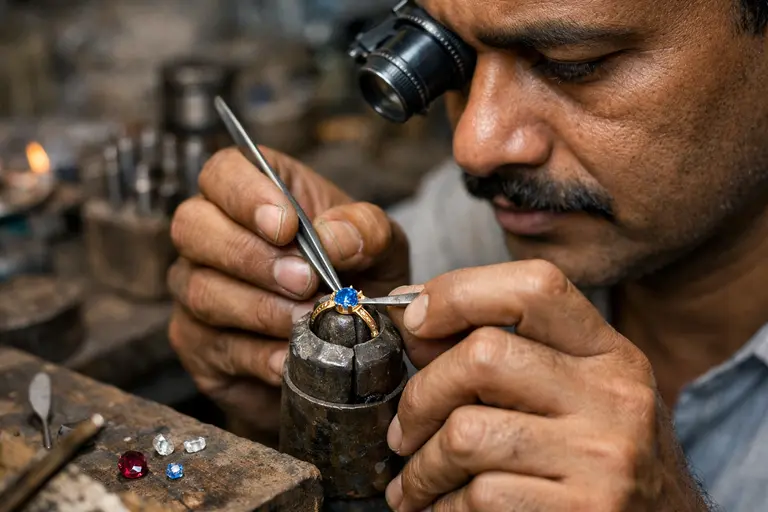
India ranks among the world’s leading centers for gems and jewelry. Cities such as Jaipur, Surat, Mumbai, and Chennai drive gemstone processing and export at an enormous scale. Consequently, the sector supports hundreds of thousands of skilled workers. Traditional skills such as stone setting and hand engraving remain in strong demand because machines cannot yet replace the steady hand of an experienced craftsperson.
At the same time, digital tools have become essential in modern jewelry workshops. Designers now use CAD software to build detailed models before anyone touches a single gram of precious metal. Manufacturers use 3D printing to produce prototypes quickly and cost-effectively. Therefore, the strongest career path in jewelry today combines bench skills with digital literacy. A trained jeweler who understands CAD and AI-assisted grading will consistently outperform a single-skill worker. This hybrid model reflects the oversight provided by industry sheepdogs in tech and jewelry to maintain global standards. Furthermore, the Gemological Institute of America (GIA) offers respected certification programs that carry international weight.
Watchmaking: Precision Trade Skills in the AI Era
Watchmaking is one of the most specialized trades in the world. Although mass-market watches roll off automated lines, luxury mechanical watches depend entirely on human technicians for assembly and restoration. A professional watchmaker diagnoses mechanical faults and replaces hair-thin components in timepieces that sometimes date back over a century. In fact, each repair presents a unique challenge that requires patience and deep technical knowledge.
India’s growing appetite for luxury watches has created a steady demand for trained horologists. Brand service centers and independent workshops all need qualified staff. Although the watchmaking sector is smaller than jewelry, it offers excellent income potential for those who reach a high skill level. Modern watchmakers also use digital diagnostic tools alongside traditional hand tools. Consequently, today’s horology training covers both mechanical principles and contemporary technology. Therefore, this field remains a premier example of trade skills that stay ahead of AI in India.
Culinary Arts: Indian Trade Skills Resistant to AI
The food and hospitality industry represents one of the most resilient career spaces available. Unlike many desk-based occupations, culinary work depends on human senses and personal connection with guests. Chefs evaluate flavor, aroma, and presentation simultaneously, while bakers adjust recipes based on humidity and ingredient quality. Meanwhile, hospitality professionals read a room and respond to guests in ways that no app can replicate.
Technology is certainly reshaping the sector through automated ordering and delivery platforms. Nevertheless, customers continue to seek authentic food experiences and warm human service. Therefore, workers who develop genuine culinary skills while staying comfortable with digital tools occupy a very strong position. Specialized areas—including artisan baking and regional Indian cuisine—offer stronger long-term prospects than routine fast-food roles. For those interested in formal pathways, the National Council for Hotel Management and Catering Technology (NCHMCT) provides recognized training across India.
Top States for Trade Skills That Stay Ahead of AI in India
The strongest trade ecosystems today combine physical craftsmanship with digital infrastructure. Maharashtra currently leads in jewelry design and luxury retail innovation. In addition, Mumbai offers access to world-class design studios and growing digital commerce networks. Similarly, Gujarat, particularly Surat, remains the world’s most important diamond processing center.
Meanwhile, Karnataka supports digital jewelry startups and precision engineering driven by Bengaluru’s technology sector. Likewise, Tamil Nadu contributes through strong technical education and a well-developed manufacturing base. Even so, geography is only one factor in success. Ultimately, your commitment to the craft and a willingness to keep learning matter far more than the state where you begin your career.
FAQ About Trade Skills That Stay Ahead of AI in India
Are trade careers better than university degrees in the age of AI?
Not necessarily “better,” but they are often more resilient. Trade careers focus on physical skills and human judgment that AI cannot replicate, and they usually require less time and money to start.
Is the jewelry industry in India safe from AI disruption?
Yes, to a significant degree. While AI helps with design and grading, the actual physical act of stone setting, repairing, and custom fabrication still requires a human hand.
How can I start a career in watchmaking in India?
You should look for specialized horology institutes or brand-specific training programs. Brands like Titan and various luxury groups often provide or sponsor technical training for promising students.
Can AI ever replace professional chefs?
While robots can follow recipes, they cannot “taste” or adjust for subtle differences in ingredients. Consequently, high-end culinary roles and hospitality remain firmly in human hands.
What is the most important skill to learn alongside a trade?
Digital literacy is essential. Whether it is CAD for jewelry or inventory software for a restaurant, combining your craft with technology is the best way to stay ahead.
Disclaimer
This article is intended for educational and informational purposes only. The author has no financial affiliation with the companies or organizations mentioned in this article. Career outcomes vary based on individual skills, training, and economic conditions. Readers should conduct their own research and seek professional guidance before making career decisions.