Introduction to AI in Watchmaking
Artificial intelligence and automation are fundamentally changing almost every global industry in 2026. Specifically, AI in Watchmaking is no longer a futuristic concept; it is a present reality. Today, brands actively utilize robots, smart software, and data-driven tools to design, build, and service timepieces faster than ever before. However, many enthusiasts still ask a critical question: should companies fully embrace machines, or should they protect the human craft that makes horology meaningful?
This is not a new debate. Historically, the watch industry survived the Quartz Crisis of the 1970s and the rise of the smartphone. Yet, traditional mechanical watchmaking survived because it offered something technology could not replace. Today, AI in Watchmaking represents the next major turning point. Therefore, the real challenge for brands is not whether to adopt technology, but how to use it without losing the “soul” of the object. You should also read our guide on gemstone buying mistakes to understand how the same standards of quality and authenticity apply to high-value mechanical investments.
How AI in Watchmaking Drives Automation
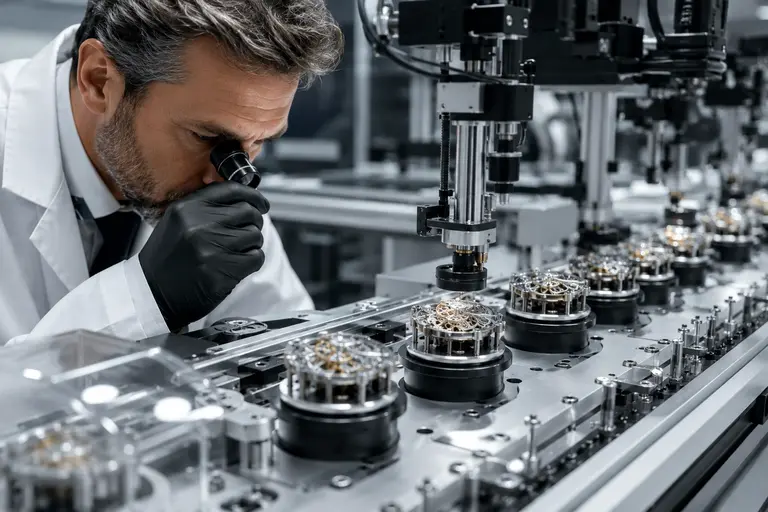
Modern watch brands face immense pressure to deliver consistent quality at competitive prices. To meet these massive global demands, many manufacturers now use CNC machines and specialized robotics to shape components with sub-micron precision. Additionally, AI-powered inspection systems now scan finished parts using high-resolution cameras. These systems instantly flag microscopic defects that even the most trained human eyes might miss.
Supply Chain Benefits of AI in Watchmaking
Furthermore, AI in Watchmaking is making supply chains significantly more efficient. Brands can now track components in real-time and predict stock shortages before they happen. Customer service is also evolving rapidly. Automated systems now handle warranty registrations and shipping updates around the clock. Consequently, human staff can focus on the complex, artistic work that defines the brand. For a broader look at how the industry manages these shifts, the Federation of the Swiss Watch Industry (FH) publishes essential reports on trade standards.
Why Craftsmanship Matters Despite AI in Watchmaking
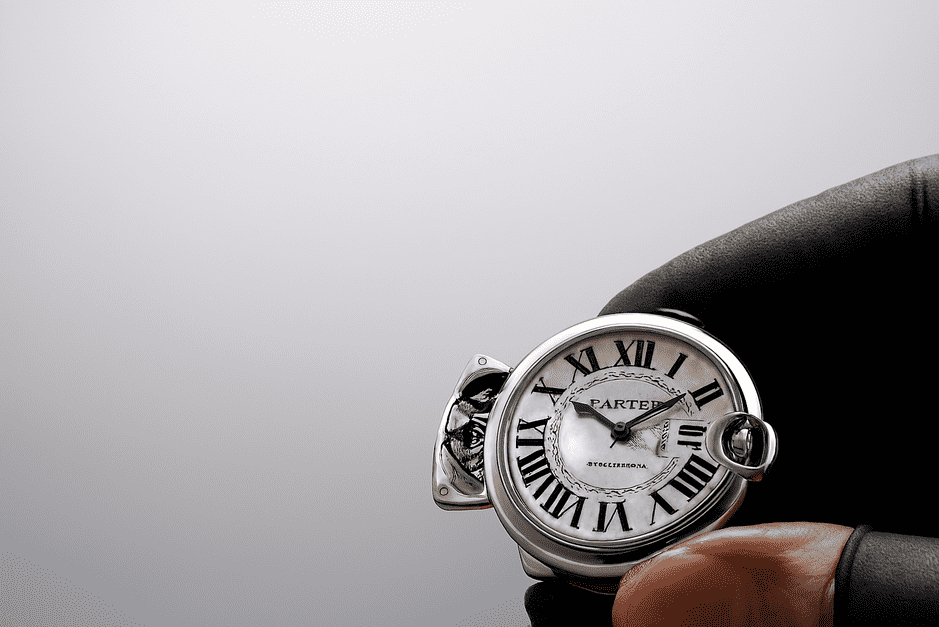
Despite these technological leaps, most people do not purchase a luxury mechanical watch simply for accurate timekeeping. A smartphone performs that task better and for a much lower cost. Instead, buyers connect emotionally with the object. They deeply appreciate the history and human effort involved in the creation of a balance spring or a hand-polished bridge.
Consequently, human craftsmanship still plays a vital role in the high-end market. Specifically, tasks like “anglage” (edge-beveling) and “perlage” (circular graining) still rely on the steady hand of a master. These steps add a level of character that a machine cannot fully replicate. Moreover, many collectors in 2026 actively seek out these traces of human involvement. As a result, successful brands now operate a hybrid model. They automate repetitive tasks while preserving handwork, where the customer can see the difference. Organizations like WOSTEP continue to train the next generation of skilled artisans to ensure this tradition survives.
Human vs. AI in Watchmaking Aesthetics
One of the most intriguing trends in contemporary craft culture is the notion that imperfection is beautiful. Machines produce flawless, identical results every time. By contrast, handmade items carry subtle variations that feel alive. In Japanese culture, the concept of “wabi-sabi” celebrates the beauty of natural imperfections and the passage of time.
In watchmaking, this philosophy appears most clearly in vintage pieces. For example, enthusiasts prize “tropical” dials on vintage Rolex and Omega pieces—dials that have shifted color due to decades of sunlight exposure. These marks of time have become more desirable precisely because they are unique. Therefore, in a world filled with perfect, mass-produced objects, watches that carry the marks of human hands will likely grow more valuable. You may also read our article on Understanding BIS Hallmark to see how verified human standards still define trust in the jewelry and metal sectors.
The Human-AI Partnership in Watchmaking
The future of AI in Watchmaking does not have to be a competition between people and algorithms. Instead, it functions best as a partnership. Machines excel at speed, precision, and processing massive datasets. Meanwhile, humans excel at creativity, storytelling, and emotional intelligence.
When automation handles error-prone tasks, skilled watchmakers gain more time to focus on the high-level artistry that makes a watch worth owning. Brands that treat AI as a collaborative tool—rather than a total replacement—will lead the industry forward. Specifically, AI can help optimize new sustainable materials or simulate wear resistance over a hundred years. Consequently, this technology actually supports the longevity of mechanical watches.
The Future of AI in Watchmaking
Nobody can predict the future with total certainty; nevertheless, several trends are already emerging in 2026. On one side, highly automated brands will likely offer increasingly personalized watches at accessible prices. AI design tools will soon allow buyers to customize dials and cases through an app with ease.
On the other side, luxury horology will grow even more focused on heritage. As robotic products become the global norm, handcrafted watches will become the ultimate symbols of individual achievement. Ultimately, a watch is more than a device that measures time. It represents personal taste and a connection to a design tradition that spans centuries. Therefore, the brands that combine genuine human creativity with the smart use of technology will be best positioned to thrive.
FAQ: AI in Watchmaking
Will AI in Watchmaking make watches cheaper?
For mass-market brands, yes. Automation reduces production costs and material waste. However, high-end independent watches will likely maintain their prices because they emphasize human labor.
Can a machine perform hand-finishing?
While robots can polish surfaces, they cannot yet replicate the “soul” or the slight artistic variations found in manual anglage. Most collectors can still tell the difference under a loupe.
Should I buy an AI-designed watch?
If you value innovative geometry and precision at a fair price, an AI-designed watch is a great choice. If you prefer traditional aesthetics, look for brands that limit AI to the testing phase.
Is AI used in the “right to repair” movement?
Yes. AI is helping independent watchmakers by providing automated diagnostic tools and 3D-printing files for discontinued parts, making it easier to maintain vintage watches.
How does AI affect the resale value of a watch?
Generally, the more human involvement a watch has, the better its long-term resale value. However, AI-driven transparency in supply chains (like blockchain) helps verify authenticity, which supports the overall market.
Disclaimer
This article is for informational purposes only. It reflects industry observations as of June 2026. Future technological developments are speculative and subject to change. Always consult official brand documentation and certified watchmakers before making high-value investments. The author has no financial affiliation with the brands or tech firms mentioned.