
Introduction to Hidden Ocean Treasures and Explorers
For thousands of years, ships carried gold, silver, gemstones, spices, and other precious cargo across the world’s oceans. Storms, wars, piracy, and navigation failures, unfortunately, sent many of these vessels to the seabed. As a result, countless hidden ocean treasures and explorers continue to capture the public imagination today. Thousands of wrecks still lie hidden beneath the waves, waiting for someone to find them.
Today, researchers use advanced technology, artificial intelligence, and underwater robotics to locate lost ships and their cargo. However, finding treasure does not automatically make someone its owner. Instead, international maritime laws decide who can recover, preserve, or legally claim any discovery. Together, history, science, engineering, and archaeology drive modern ocean exploration. Moreover, every discovery helps researchers understand ancient trade routes and cultural exchanges. Consequently, the relationship between hidden ocean treasures and explorers remains one of the most exciting fields of research in the world today.
How Modern Explorers Locate Hidden Ocean Treasures
Modern treasure hunters rarely search blindly. Instead, they spend years studying shipping manifests, captain’s logs, insurance records, and historical weather reports. As a result, they can narrow vast ocean regions into smaller and more promising search zones. For example, if an 18th-century manifest shows a ship carrying heavy bullion, it will likely be found in a different terrain than a vessel carrying lightweight spices.
Once researchers identify a target area, they deploy advanced equipment. First, side-scan sonar sends acoustic signals across the seabed, creating detailed images of the ocean floor. Consequently, unusual shapes that resemble shipwrecks become much easier to spot. Furthermore, these sonar maps allow teams to avoid hazardous rocky outcroppings. To understand how these discoveries impact global wealth, read our article on gold demand shifting from jewelry to investment.
Technologies Driving Deep-Sea Discovery
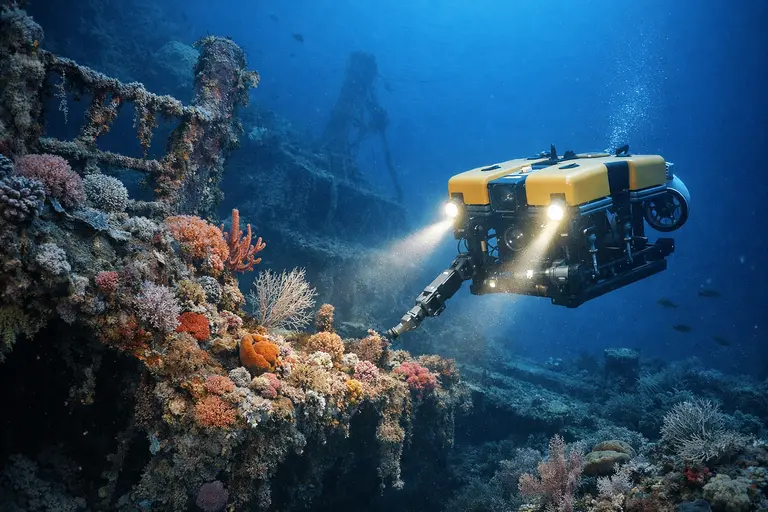
Beyond sonar, specialized sensors play a critical role. Magnetometers detect disturbances in the Earth’s magnetic field caused by iron objects such as anchors, cannons, and ship fittings. In addition, Autonomous Underwater Vehicles (AUVs) travel close to the seabed and collect high-resolution data. Afterward, teams deploy Remotely Operated Vehicles (ROVs) equipped with high-definition cameras and robotic arms.
Therefore, explorers can inspect wrecks and recover delicate artefacts from extreme depths without putting divers at risk. These robotic “sheepdogs” of the deep ensure that every item is handled with surgical precision. This level of technical oversight is similar to how industry sheepdogs in tech and jewelry maintain order in complex environments. For a global perspective on shipwreck conservation, visit the UNESCO Underwater Cultural Heritage page.
Maritime Law: Who Owns These Hidden Ocean Treasures?
Many people assume that “finders keepers” applies at sea. However, maritime law rarely supports that simplistic idea. Under the Law of Salvage, salvors may receive a substantial reward for recovering property; nevertheless, ownership usually remains with the original owner or their sovereign state. Therefore, a salvage company can earn significant compensation while surrendering the recovered artefacts to a national museum.
By contrast, the Law of Finds can grant ownership to the finder. Even so, courts apply this rule only when they determine that the original owner clearly abandoned the property. Consequently, successful ownership claims under this doctrine remain relatively uncommon for famous historical wrecks. Furthermore, many governments classify historic shipwrecks as cultural heritage sites. Because of this, recovered objects often enter public collections rather than private hands. A telling example is the “Black Swan” project, where courts ruled that Spain retained full ownership of a massive coin haul because the vessel was a naval ship.
India’s Maritime History and Submerged Wealth
India holds one of the world’s richest maritime histories. For centuries, merchants from Rome, Arabia, Persia, and China traded with Indian ports. Consequently, India’s coastal waters hold enormous archaeological potential. Off the coast of Dwarka, marine archaeologists discovered submerged structures and anchors that suggest an ancient port city. Similarly, investigations in the Gulf of Khambhat revealed underwater formations and ancient materials.
In addition, underwater surveys near Mahabalipuram uncovered submerged structures linked to the famous legend of the “Seven Pagodas.” Meanwhile, in Goa, archaeologists documented Portuguese shipwreck remains containing cannons and trade ceramics. Furthermore, historians believe many undiscovered shipwrecks still rest beneath the Arabian Sea. Roman merchants once transported gold and silver to Indian ports in exchange for spices and gemstones. As a result, some wrecks may still contain precious metals that no one has touched in centuries. Therefore, India’s seabed serves as a vast, underwater museum of global trade history.
The Role of Artificial Intelligence in Future Searches
Artificial intelligence is already transforming the way researchers explore the oceans. Traditionally, experts spent years examining sonar images by hand; however, AI systems now analyse enormous datasets far more quickly. As a result, researchers can identify potential shipwrecks far more efficiently than ever before.
Moreover, AI improves predictive drift models by combining historical weather records and ocean currents. Consequently, search teams can pinpoint target areas with much greater accuracy. At the same time, computer vision systems help underwater robots recognize artefacts automatically amidst the debris. Therefore, future expeditions may locate hidden ocean treasures and explorers may document cargoes that human analysts would otherwise overlook entirely. Indeed, the intersection of big data and maritime history is just beginning to yield results.
FAQ About Hidden Ocean Treasures and Explorers
How much treasure remains on the ocean floor?
While no one knows the exact amount, historians believe thousands of undiscovered shipwrecks still contain valuable cargo. Specifically, the value of unrecovered gold and silver is estimated in the billions of dollars.
Can private individuals search for hidden ocean treasures?
Yes, but they must comply with local and international laws. In most cases, explorers need government permits and must prove they have the archaeological expertise to handle sensitive sites.
Do treasure hunters become wealthy?
Sometimes, but legal disputes and high operating costs frequently reduce profits. Indeed, many “treasure” finds result in long-term court battles over ownership.
What is the most valuable shipwreck ever discovered?
Many experts consider the San José Galleon, found off the coast of Colombia, to be the most valuable. It is believed to carry gold, silver, and emeralds worth billions.
How does AI assist in ocean exploration?
AI helps by processing sonar data and predicting the location of wrecks based on current and weather patterns. Consequently, it reduces the time and cost of deep-sea expeditions.
Disclaimer
This article is intended for general educational purposes only. The author has no financial affiliation with the companies mentioned. Maritime law, salvage rights, and cultural heritage regulations vary by country and by individual circumstances. Therefore, readers should consult qualified legal or archaeological professionals before participating in any recovery activity.